Cherry Blossom Season in Japan: Dates & Staying Connected
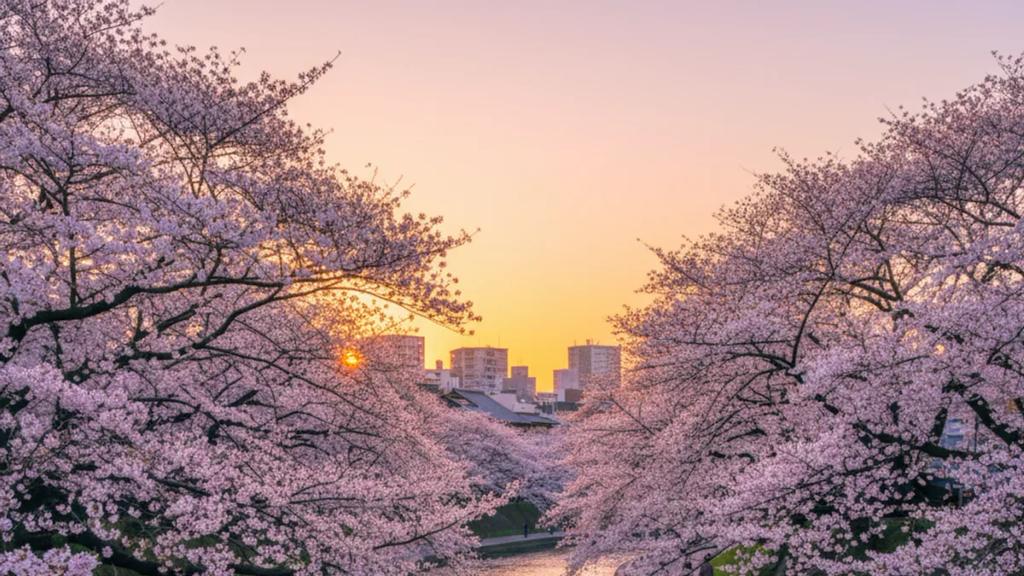
Cherry blossom season in Tokyo and Kyoto typically peaks between late March and early April, but there is no fixed date - the bloom moves every year with the weather, and full bloom lasts barely a week. That is the defining fact of a sakura trip: you book flights months ahead for a target you cannot fully predict, then track the bloom forecasts daily as the "sakura front" sweeps north. Between forecast-checking, picnic coordination in serious crowds, and Japan's tourist-unfriendly physical SIM market, a Japan eSIM from £1.75 is one of the most useful things you can pack.
When exactly is cherry blossom season in Japan?
There is no official start date, and anyone selling you one is guessing. The Somei Yoshino cherry - the variety that dominates Tokyo and Kyoto - usually opens in Tokyo in late March, reaches full bloom about a week later, and drops within roughly a week of that. Kyoto runs a few days behind, and the gap between warm and cold years can be two weeks or more.
This is why the bloom forecast is the trip. From January onward, Japanese forecasters (the Japan Meteorological Corporation, Weathernews, and others) publish city-by-city predictions of first and full bloom, updated weekly and then near-daily as spring arrives. Timing strategy:
- Book the last week of March into the first week of April - the statistical sweet spot for Tokyo and Kyoto.
- Track the forecast from January and stay flexible inside your window: if Tokyo blooms early, points north may still be peaking.
- Full bloom plus the following few days is the magic window - petals falling like snow ("hanafubuki") is arguably better than full bloom itself.
- One rainy, windy day can strip the trees, so when the forecast says go, go.
What should a first-time hanami visitor actually expect?
Crowds and costs, honestly. This is Japan's single most popular travel window: flights and hotel rates in Tokyo and Kyoto spike well above normal, and decent hotels for peak week sell out months ahead. Book early and expect a premium.
Hanami itself - picnicking under the blossoms - is free and gloriously public. The classic Tokyo spots each have a personality:
- Ueno Park: around 1,000 cherry trees and the rowdiest hanami culture - blue tarps, office parties, shoulder-to-shoulder crowds. Groups send someone ahead early to claim a spot.
- Meguro River: roughly 800 trees arching over a canal for nearly 4 km, with lantern-lit evening illuminations. Beautiful and brutally busy - the narrow banks move at shuffle pace on peak evenings.
- Shinjuku Gyoen: the calm option. A paid-entry national garden (500 yen) with many varieties, so the season stretches longer - but alcohol is banned and gates close in the early evening.
Konbini picnic supplies are a legitimate strategy: bento, snacks, and drinks from a convenience store and you have done hanami like a local.
Why does your phone matter more than usual during sakura season?
Three reasons stack up. First, the forecast habit: you will check bloom maps and spot updates daily, because your plans genuinely change with them. Second, coordination in crowds: Ueno and the Meguro River at full bloom are shoulder-to-shoulder, and finding your group among thousands of identical blue tarps is a live-location-and-photos problem - and in the densest corridors on a peak weekend, even Tokyo's excellent networks slow exactly when you are trying to regroup.
Third, and most important: Japan is genuinely hard for tourist physical SIMs. Voice SIMs require Japanese residency and ID, so visitors are limited to data-only SIMs from airport counters and vending machines - queues after a long-haul landing, fiddly swaps, prices set for a captive audience. What actually helps:
- Agree a physical meeting point at each spot (Ueno's Saigo Takamori statue, a named Meguro bridge) before you split up.
- Send texts and voice notes, not calls, when the crowds are thickest.
- Download offline maps of Tokyo and Kyoto before peak days.
- Upload the petal videos from hotel Wi-Fi, not from the middle of the crowd.
What is the best connectivity setup for cherry blossom season?
A Japan eSIM installed before you fly. You skip the airport SIM queue, sidestep the residency problem, and land at Narita or Haneda already online - which matters when your first act on arrival is checking whether the bloom forecast moved while you were in the air. Roaming daily passes commonly run 5-12 EUR per day; a prepaid Japan eSIM gives you a fixed data bundle on a Japanese host network at local rates:
| Data | Duration | Price |
|---|---|---|
| 1GB Data | 7 Days | £1.75 |
| 3GB Data | 15 Days | £4.32 |
| 5GB Data | 30 Days | £5.98 |
| 10GB Data | 30 Days | £9.97 |
| 20GB Data | 30 Days | £16.62 |
| 50GB Data | 30 Days | £25.68 |
| 1 Day | 1 Day | £2.59 |
| 2 Days | 2 Days | £5.19 |
| 3 Days | 3 Days | £7.78 |
| 4 Days | 4 Days | £10.20 |
| 5 Days | 5 Days | £12.93 |
| 6 Days | 6 Days | £15.67 |
| 7 Days | 7 Days | £18.41 |
| 8 Days | 8 Days | £19.78 |
| 9 Days | 9 Days | £21.83 |
| 10 Days | 10 Days | £23.20 |
| 11 Days | 11 Days | £25.25 |
| 12 Days | 12 Days | £27.30 |
| 13 Days | 13 Days | £28.67 |
| 14 Days | 14 Days | £30.04 |
| 15 Days | 15 Days | £32.09 |
| 16 Days | 16 Days | £33.46 |
| 17 Days | 17 Days | £34.15 |
| 18 Days | 18 Days | £35.51 |
| 19 Days | 19 Days | £37.57 |
| 20 Days | 20 Days | £38.94 |
| 21 Days | 21 Days | £40.30 |
| 22 Days | 22 Days | £40.99 |
| 23 Days | 23 Days | £41.67 |
| 24 Days | 24 Days | £42.36 |
| 25 Days | 25 Days | £43.04 |
| 26 Days | 26 Days | £43.73 |
| 27 Days | 27 Days | £44.41 |
| 28 Days | 28 Days | £45.09 |
| 29 Days | 29 Days | £45.78 |
| 30 Days | 30 Days | £47.15 |
Dual SIM keeps your home number live for calls, texts, and bank codes while data runs on the Japanese network. Install the QR code at home on Wi-Fi, toggle the line on when you land, and you are online on the train into Tokyo.
A sakura trip is data-hungrier than it looks: daily forecast checks, navigation between spots, translation apps, live location sharing, and a relentless stream of blossom photos and videos. Estimate what two weeks of that burns:
How do you get around Tokyo and Kyoto during peak bloom?
Trains, always. Tokyo's metro and JR lines reach every major blossom spot (Ueno has its own JR station; the Meguro River is a short walk from Nakameguro), and Kyoto is a bus-and-subway city. Load a Suica or Pasmo card into your phone's wallet and you tap through everything - but topping up and transit routing need data, another job for the eSIM.
Between cities, the Shinkansen puts Kyoto roughly 2 hours 15 minutes from Tokyo - which is how flexible sakura-chasers hedge the forecast: if Tokyo peaked early, ride towards the blossoms. From Narita, the Narita Express or Skyliner reaches the city in under an hour; Haneda is closer still.
What if you miss peak bloom?
It happens even to well-planned trips, and it is not a disaster. Arrive too early and plum and early cherry varieties (like kawazu-zakura) are already out, with Shinjuku Gyoen's mixed varieties covering a longer window. Arrive too late and you can chase the sakura front north - it keeps moving through April - or catch late-blooming double-flowered varieties in the cities. The falling-petal phase right after peak is genuinely one of the best stretches of the season anyway.
Honest framing: treat the blossoms as the theme of the trip, not the entire point. Tokyo and Kyoto in spring are superb regardless.
The bottom line
Cherry blossom season in Tokyo and Kyoto lands somewhere between late March and early April, moves every year, and peaks for barely a week - so the forecast is the trip. Book the statistical window, track the bloom maps daily, and agree a meeting point before the crowds swallow your group. A Japan eSIM from £1.75 installed at home means you clear Narita or Haneda already checking the bloom map, with no airport SIM queue and no roaming line on next month's bill.
When is the best time to see cherry blossoms in Tokyo?
Statistically, the last week of March into the first week of April. The exact week shifts every year with the weather, so track the bloom forecasts (published from January and updated through spring) rather than fixed dates.
How long do the cherry blossoms last?
About two weeks from first opening to petals gone, with full bloom lasting roughly a week - less if rain or wind arrives. The few days right after peak, when petals fall like snow, are widely considered the most beautiful phase.
Can tourists buy a SIM card in Japan?
Only data-only SIMs - voice SIMs require Japanese residency and ID. Airport counters sell tourist data SIMs at a premium after a queue; a Japan eSIM from £1.75 installs before you fly and puts you online the moment you land, home number kept via dual SIM.
How much data do I need for a cherry blossom trip?
A two-week trip with forecast checking, navigation, translation, live location sharing, and heavy photo uploads typically lands in the 5-10GB range - more if you upload video daily. Fixed-data Japan eSIM plans can be topped up if the petal footage adds up.
Is hanami free?
Mostly yes. Picnicking in Ueno Park, along the Meguro River, and in most public parks costs nothing - bring konbini food and claim a spot early. Shinjuku Gyoen charges 500 yen (and bans alcohol), and evening illuminations at some temples and gardens are ticketed.
Land in Japan already tracking the bloom
A Japan eSIM from eSIMpass installs before you fly - local-rate data for forecast checking, crowd coordination, and petal photos, with your home number kept via dual SIM and no airport SIM queue.
Get Your Japan eSIM