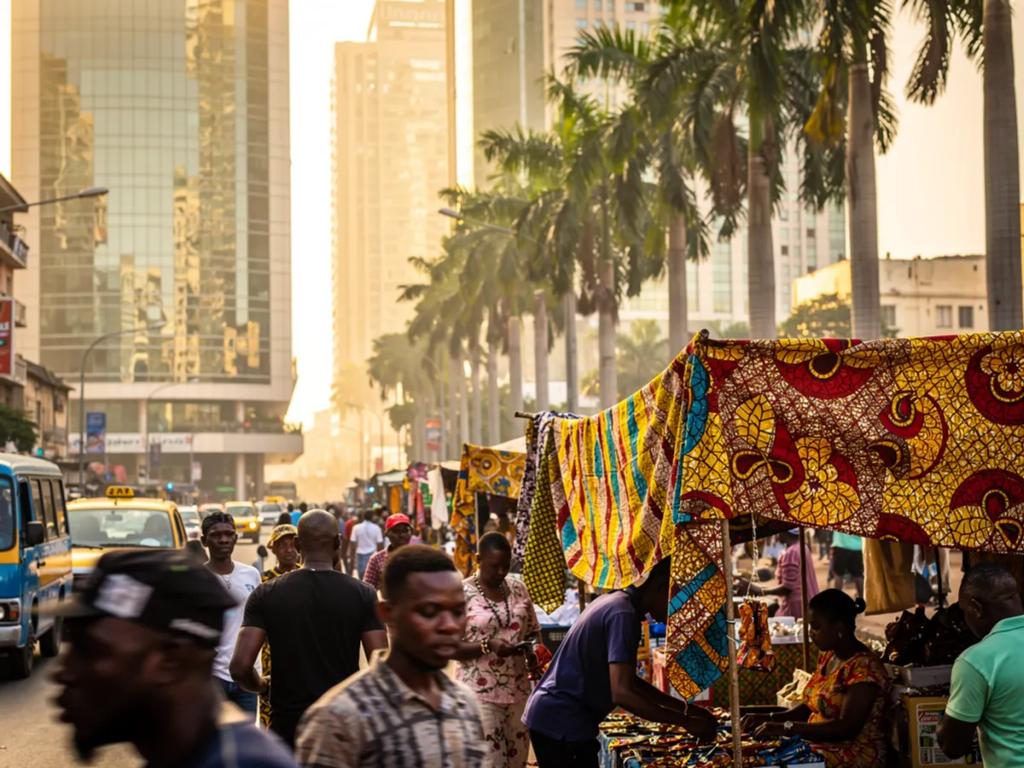
Abidjan runs on Orange Cote d'Ivoire, MTN and Moov Africa, and your eSIM rides one of them as its host. Orange has the largest network and is the safest default. The city is well covered - 4G across the built-up districts and 5G reaching Plateau and Cocody - and Abidjan is one of the better-connected cities in West Africa. What will actually shape your trip is a piece of paper you need before you board.
A yellow fever vaccination certificate is mandatory to enter Cote d'Ivoire, for travellers of all nationalities. It is checked on arrival, and it is not something that can be resolved at the airport.
The vaccine needs to be given at least 10 days before travel to be valid, and the certificate is now issued for life. So this is a decision you make a fortnight out, not the week of.
Alongside it:
- Most nationalities need an e-visa, applied for online in advance and finalised on arrival at Abidjan airport. Apply early; it is not a visa-on-arrival system despite the airport step.
- Malaria prophylaxis is strongly advised - Abidjan is a year-round transmission area. Talk to a travel clinic well before you fly.
None of this is difficult. All of it is time-bound, which is why it belongs at the top rather than in a footnote.
West Africa moved to mobile money early and completely. Orange Money, MTN MoMo and Moov Money are how an enormous share of everyday transactions happen in Abidjan - paying a taxi, settling a bill, sending money across town.
The catch for a visitor is registration: a mobile money wallet is tied to a local SIM registered with identity documents, which a traveller on a travel eSIM will not have.
So the practical position is:
- Carry cash. The West African CFA franc is the currency, and Abidjan is substantially a cash economy outside hotels and supermarkets.
- The CFA is pegged to the euro at a fixed rate - 655.957 to one - which makes the mental arithmetic unusually easy if you think in euros, and is worth knowing because the rate does not move.
- Cards work in the larger hotels, malls and supermarkets in Plateau, Cocody and Marcory, and nowhere much else.
Your data here goes on maps, messaging and ride-hailing rather than on payments.
On the lagoon. Abidjan is built around the Ebrie Lagoon and crossing it is part of daily life - by bridge, by the communal pinasse boats, or by the newer water taxi services. Mid-water, coverage dips, though never for long: the crossings are short and the shores are dense.
Banco National Park. A genuine patch of primary rainforest inside the city limits, a few kilometres from the centre. Under that canopy there is very little, which is remarkable given what surrounds it.
Grand-Bassam, the UNESCO-listed former colonial capital about 40 km east, is covered in town and thinner along the beach road.
Assinie, the beach and lagoon resort area further east towards the Ghanaian border, has real gaps once you are among the lagoons and the sandbars - which is broadly the point of going.
Adjame market is not a coverage problem but a practical one: it is one of the busiest markets in West Africa, extremely crowded, and not the place to be navigating with a phone held out.
- Yango is the ride-hailing app that has taken hold in Abidjan, and it is the simplest option for a visitor - a recorded fare and a tracked route.
- The local taxis are worth understanding too. Metered orange taxis (taxis compteurs) cross the city; woro-woro are shared taxis colour-coded by commune and cost very little, but you need to know the routes. Agree the fare with an orange taxi if the meter is not running.
- A translation app unless you speak French. Cote d'Ivoire is francophone and Abidjan is one of the largest French-speaking cities in the world; English is not widely spoken outside international business.
- Maps, offline. Traffic is heavy and routes change; the bridges across the lagoon are the choke points and knowing which one you are aiming for matters.
- WhatsApp, which is the default channel for arranging almost everything.
Felix Houphouet-Boigny International (ABJ) is at Port-Bouet, about 15 km south of Plateau - 20 minutes on a clear road and considerably more in traffic.
Have your yellow fever certificate and e-visa documentation accessible rather than buried, since both are checked. Arrange your transfer in advance or use Yango from the terminal; agreeing a fare in the arrivals hall after a long flight is not where you want to be negotiating.
Change some money on arrival. The CFA is not widely available outside the region, and you will want cash immediately.
Ordinary city amounts, weighted towards navigation and messaging.
For a week, 1GB per 3 days is comfortable. Add headroom if you are working - hotel and co-working wifi in Plateau and Cocody is decent but not always fast, and tethering is a common fallback. Plans top up from your dashboard.
Light and breathable, always. It is humid year-round and there is no cool season.
Smarter than you might expect. Abidjan dresses well - this is a business capital and a fashion-conscious city, and turning up to a restaurant in beach clothes reads badly. Ivorian tailoring is excellent and locally made shirts and dresses are a good souvenir.
Rain gear from May to July. The main rainy season delivers serious downpours that flood streets quickly.
Long sleeves and trousers in the evening, which is as much about mosquitoes as about style.
Something for the harmattan in December and January, when Saharan dust hazes the city and irritates eyes and throats.
The Plateau skyline from across the lagoon, at dusk - the towers that earned Abidjan its "Manhattan of West Africa" nickname, with pirogues in the foreground.
St Paul's Cathedral, the extraordinary modernist cathedral in Plateau, designed by Aldo Spirito - a swooping concrete form quite unlike any other church.
Grand-Bassam, the crumbling French colonial quarter on the coast, UNESCO-listed and photogenic in a faded, salt-worn way.
The lagoon crossings, from the deck of a pinasse.
Banco National Park, and specifically the open-air laundry (fanico) at its edge, where hundreds of launderers work the river in a scene that is genuinely unlike anywhere else.
Cocody's markets and the Village Ki-Yi, for the art scene the city is increasingly known for.
Abidjan is the economic capital, but not the political one - Yamoussoukro, about three hours north, has been the official capital since 1983, and holds the Basilica of Our Lady of Peace, the largest church in the world.
The city is one of the most populous French-speaking cities anywhere, at over six million in the metropolitan area.
Coupe-decale, the music that has defined Ivorian pop for two decades, was born among the Ivorian diaspora in Paris and came home.
And attieke - fermented cassava couscous, the national staple - was granted UNESCO intangible cultural heritage status, which Ivorians will tell you about with justified enthusiasm.
MASA, the Marche des Arts du Spectacle d'Abidjan, is one of Africa's major performing arts markets and fills the city every two years.
FEMUA, the Festival des Musiques Urbaines d'Anoumabo, in April - the biggest music festival in the country.
The Abissa festival in Grand-Bassam in late October and November, a N'Zima celebration that takes over the old town for a week.
The dry season, December to February, is the most comfortable time to visit, though it is also when the harmattan haze is thickest.
The love: Abidjan is energetic, stylish and far more cosmopolitan than most visitors expect. The food is superb - attieke with grilled fish, garba, alloco, kedjenou - the music scene is genuinely important rather than a tourist attraction, and the lagoon setting gives the city a shape and a light that few West African capitals have. It is also a comfortable place to land in the region, with good hotels, real infrastructure and a growing art and design scene.
The complaints are practical. Traffic is severe, and the bridges over the lagoon turn a short hop into an hour. It is humid and hot without relief. It is expensive - Abidjan surprises people with hotel and restaurant prices that are closer to Europe than to its neighbours. The health preparation is real - yellow fever, malaria, and a travel clinic visit weeks ahead. And ordinary urban caution applies, particularly around the big markets and at night; visitors are advised not to walk with valuables on display.
Give yourself Grand-Bassam for a day and Assinie for a weekend, eat everything, and budget more time for crossing the city than the map suggests.
Yes - it is mandatory for all travellers and checked on arrival. The vaccine must be given at least 10 days before travel for the certificate to be valid, and certificates are now issued for life. Most nationalities also need an e-visa applied for online in advance, and malaria prophylaxis is strongly advised.
Realistically no. Mobile money wallets are tied to a locally registered SIM with identity documents, which a travel eSIM does not give you. Carry CFA francs - Abidjan is largely a cash economy outside hotels, malls and supermarkets in Plateau, Cocody and Marcory.
Orange Cote d'Ivoire has the widest coverage and is the safest host, with MTN and Moov both solid across the city. Expect good 4G throughout the built-up districts and 5G in Plateau and Cocody.
Very little. It is genuine primary rainforest inside the city limits, and the canopy blocks it almost completely - which is a strange and rather good experience twenty minutes from the towers of Plateau.