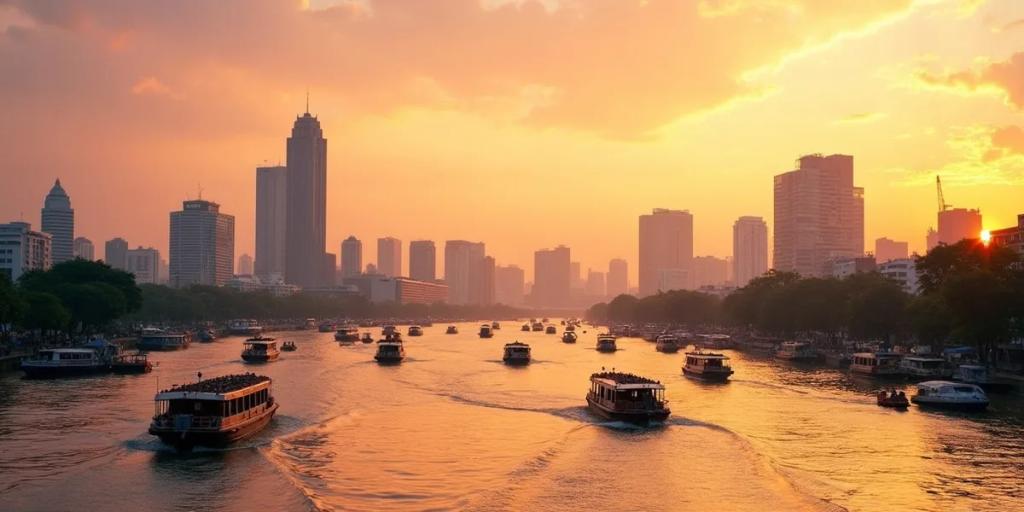
Bangkok is one of the best-connected megacities in Asia. Since the 2023 True-dtac merger the market is effectively two network groups - AIS, and True Corporation running both the TrueMove H and dtac brands on a combined network - and both blanket the city with dense 4G and fast-expanding 5G. Your eSIM rides one of these as its host network, and in the places you will actually be - Sukhumvit, the old town around the Grand Palace, Chinatown, the riverside - signal is strong and speeds are genuinely quick. The AIS vs TrueMove H vs dtac comparison has the full network breakdown if you are curious.
Almost nowhere, honestly. The elevated BTS Skytrain is out in the open air, so data works the whole ride - Bangkok traffic below you, full bars above it. The underground MRT is covered in stations and most tunnel sections, with the occasional stutter between deep stops, so load your route before the gates. The one everyday dead zone is the same as any city: the inner floors of the mega-malls (Siam Paragon, IconSiam, CentralWorld) can thin your signal to a bar, but those malls run free Wi-Fi anyway. On the Chao Phraya river and the Khlong Saen Saep canal boats you are in open air with the skyline in view - coverage holds fine.
- Grab is the everything app - rides, food delivery, even motorbike taxis through traffic. It shows the fare up front, which matters here (more on that below). Bolt also operates in Bangkok and often undercuts Grab on price; savvy travellers keep both installed and compare.
- LINE is Thailand's messaging app - hotels, tour operators and guesthouses will happily coordinate over it, so expect to install it.
- Transit payments are split: the MRT lines take contactless Visa/Mastercard straight at the gate, but the BTS Skytrain still does not - you need a Rabbit card (sold at any BTS station counter) or a single-journey ticket. Google Maps over your data untangles which line is which.
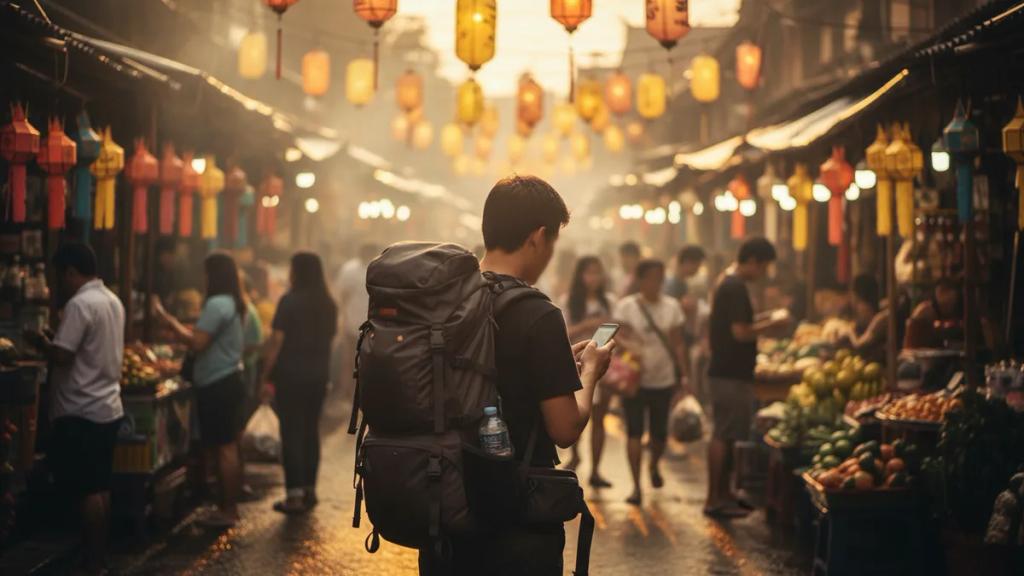
- Translation earns its data here. Menus, bus signs and market haggling are in Thai script, and camera-translate is the single most-used feature for many visitors.
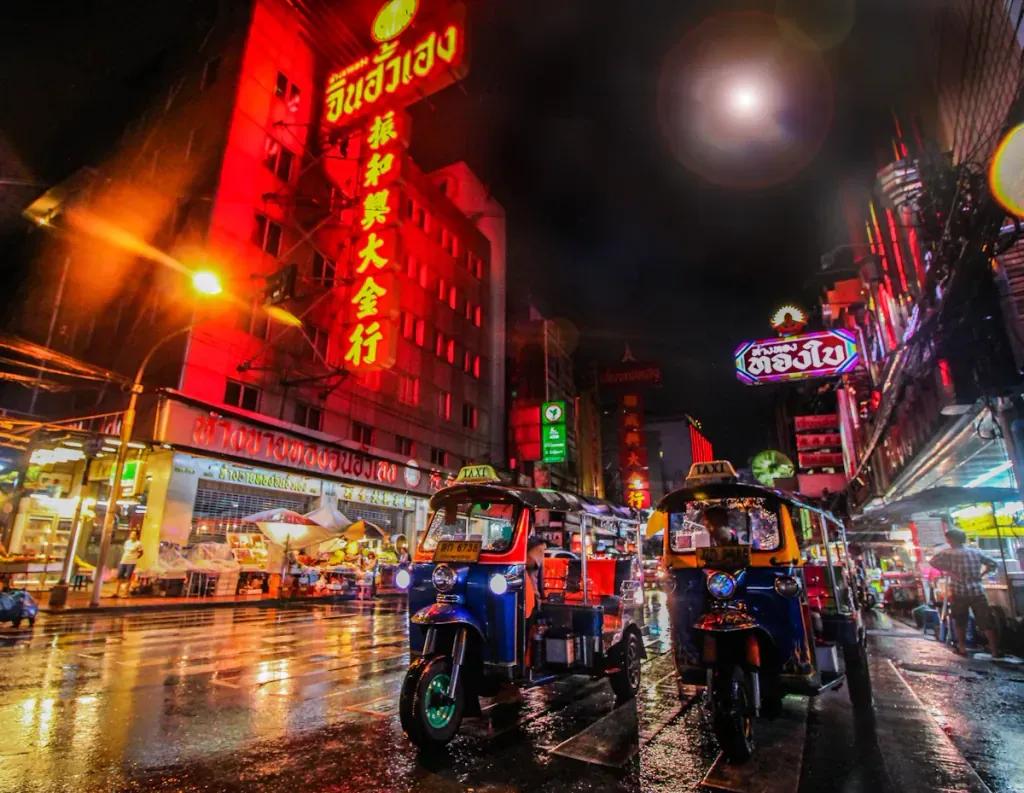
From Suvarnabhumi, the Airport Rail Link runs to Phaya Thai (connect to the BTS) until around midnight; Grab has signposted pickup points for later arrivals. Don Mueang connects by the SRT Red Line or Grab. Then comes Bangkok's oldest ritual: the tuk-tuk fare negotiation. Live data is your honest broker - open Grab, see what the same trip costs with a fixed price, and negotiate from knowledge instead of hope. The same trick defuses the classic "the Grand Palace is closed today" detour: your maps and opening hours are one search away. Install the eSIM before you fly and you are armed from the first kerb.
More than a European city break. Bangkok travel is maps-heavy (soi numbering defeats everyone eventually), Grab-heavy, translation-heavy, and the food photography is not optional. For most travellers 1GB per 2 days is a realistic floor; take more headroom if you video-call home or upload every street-food run. If Bangkok is the start of a longer Thailand loop, the best eSIM for Thailand guide covers coverage beyond the capital, including where the islands get patchy.
Light and breathable wins - Bangkok is hot every month of the year, and you will be walking between air-conditioned extremes. The non-negotiable: temple dress codes are actually enforced. The Grand Palace and Wat Pho require covered shoulders and knees, and the Grand Palace will turn you away for a scarf draped over a sleeveless top - wear real sleeves, or buy the fisherman's pants sold at the gate. In the May-Oct monsoon, pack a fold-up poncho for the daily downpour. And if a rooftop bar is on the list, note that Sky Bar and Vertigo bar sleeveless shirts and flip-flops for men.
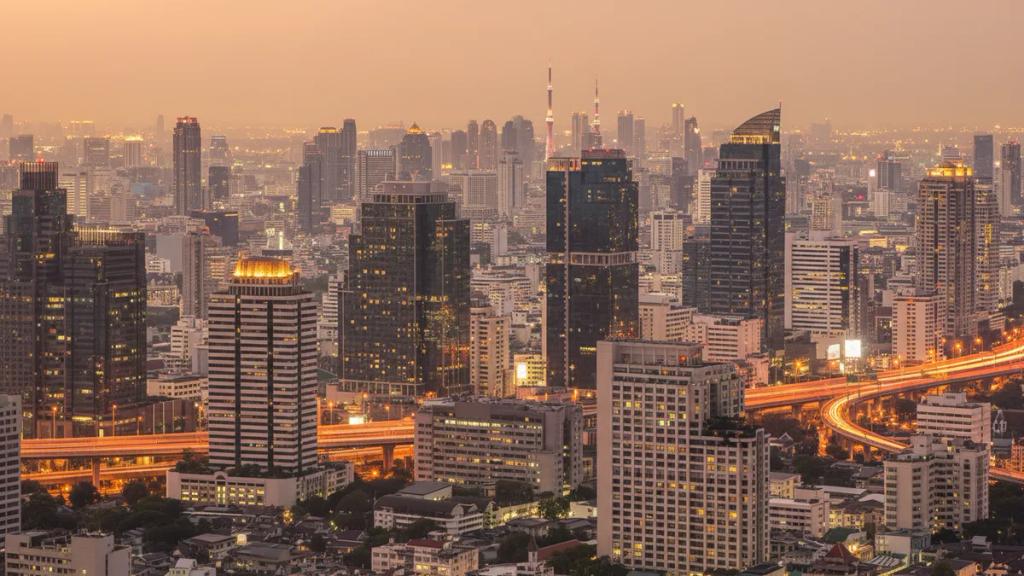
The Wat Arun shot is taken from across the river, not at the temple - grab a riverside terrace on the Tha Tien side at sunset and stay for the moment the spires light up after dark. The Grand Palace wants the 8:30 opening bell: soft light, thinner crowds, bearable heat. For the skyline shot, any of the big rooftops delivers - just clear the dress code first (see above). The famous umbrella-snapping train market at Maeklong is real, but it is a day trip about 70km out, not a Bangkok neighbourhood - check the train timetable before committing the morning.
Bangkok's full ceremonial name - Krung Thep Maha Nakhon Amon Rattanakosin and another 17 words after that - is the world's longest place name at 168 letters, per Guinness World Records. Locals just say Krung Thep, "city of angels". And the 2022 "rename" you may have read about was gentler than the headlines: the Royal Society made Krung Thep Maha Nakhon the preferred official form, with Bangkok kept in parentheses - both remain correct. Many Thais can recite the full name anyway, thanks to a pop song whose lyrics are simply the name itself.
Songkran (April 13-15) is Thai New Year and the world's biggest water fight - the whole city is fair game, so bag your phone in plastic before stepping outside. Loy Krathong falls on the November full moon, when candlelit krathong baskets float down the Chao Phraya and every klong in town. Chinese New Year (January or February, lunar calendar) turns Yaowarat Road in Chinatown into one of Southeast Asia's biggest street celebrations - lion dances, firecrackers and a solid wall of street food.
The love is earned: street food that embarrasses most restaurants, glittering temples beside brutalist malls, and a cost of living that makes a great day out cost less than a mediocre one at home. The complaints are earned too. The heat and humidity are relentless and April is punishing. Traffic can turn 5km into an hour, which is why the BTS and river boats exist. And around the Grand Palace, the "it's closed today" tuk-tuk detour and creative fare pricing are institutions - a quick Grab price check and an official-hours search defuse both, which is exactly why locals keep data on at all times.
Yes. The BTS is elevated, so your eSIM works the entire ride with normal city coverage. The underground MRT has signal in stations and most tunnel stretches, with brief dropouts possible between deep stations - queue up your route and podcasts before descending.
No. Grab runs on data, and your account stays tied to your home number - which keeps receiving verification SMS because a data-only eSIM leaves your primary SIM active. Log in before you travel so any confirmation code arrives while you are still on familiar ground.
The malls and most cafés are generous with it, and it is a nice fallback in the air-conditioned refuges. But Bangkok life happens at street level - navigating sois, hailing Grabs, translating menus - exactly where there is no hotspot. Treat Wi-Fi as a bonus, not a plan.