Corsica runs on Orange, SFR, Bouygues and Free, and your eSIM rides one of them as its host. It is French, so EU roaming applies without qualification and an EU or EEA SIM works on its home allowance. That is the easy part, and it is where most guides stop. The harder part is that Corsica is not really an island with mountains on it. It is a mountain range that happens to be surrounded by sea, and almost every practical mistake visitors make here follows from underestimating that.
Corsica is the most mountainous island in the Mediterranean. Monte Cinto reaches 2,706 m, there are around twenty peaks above 2,000 m, and the spine runs the length of the island.
So roads do not go through, they go around and up. They are narrow, walled, switchbacked and frequently single-track with passing places.
Ajaccio to Bastia is about 150 km and takes two and a half to three hours in good conditions. Ajaccio to Bonifacio is similar. A journey that looks like an hour on the map is reliably two or three.
Never plan two bases in one day. Pick a region and stay in it, or accept that driving is the day.
Behind a camper van on a coast road, there is no overtaking for twenty kilometres and no point being annoyed about it.
Public transport barely exists outside the two main towns and the scenic railway. Corsica is a place you drive, and hiring a car is effectively mandatory.
The train is worth doing anyway. The narrow-gauge line between Ajaccio, Corte and Bastia - locally U Trinighellu - crosses viaducts and gorges through the interior and is one of the great small railway journeys of Europe. It is a day out rather than transport.
More than almost anywhere in western Europe, which surprises people who expect France to be uniformly covered.
The coast and the main towns are fine. Ajaccio, Bastia, Calvi, Porto-Vecchio and Bonifacio all have solid 4G.
The interior is a different country. The mountain roads, the gorges and the villages of the Niolu and the Castagniccia drop out routinely, and often for long stretches.
The GR20 has essentially no coverage. The trail runs about 180 km along the island's spine and is widely described as the toughest waymarked long-distance path in Europe. Refuges are basic and remote, weather turns violently, and rescue is by helicopter. Anyone walking it should tell someone the stage plan each day rather than relying on being reachable, and should treat a forecast checked in the valley as the last one they will get.
Scandola and the Calanques de Piana, both UNESCO-listed, are covered patchily from the sea and barely from the coast path.
Cap Corse, the northern finger, thins on the western side.
The beaches of the south are generally fine, which is where most people are.
Worth knowing, because it is a genuine feature of Corsican summers rather than a rare event.
The maquis burns. The dense aromatic scrub covering much of the island is highly flammable, and July and August fires are common, sometimes large.
Roads close at short notice, and the closures can be long detours given the geography above.
Access to forests and trails is restricted on high-risk days, and the restrictions are enforced.
Open flames, cigarettes and barbecues are heavily regulated in summer and taken seriously.
Check local prefecture advice before a mountain day in August, and be prepared for a plan to be cancelled by something outside your control.
Corsican - Corsu - is a Romance language much closer to Italian than to French, and it is genuinely spoken, not merely displayed.
Signage is bilingual, and you will notice French place names on road signs sprayed out with the Corsican version left legible. That is a political statement and it is not aimed at you.
Corsica was Genoese for centuries and only became French in 1768 - the year before Napoleon was born in Ajaccio, which made him French by about twelve months.
A degree of reserve towards outsiders is sometimes reported and mostly overstated. Ordinary courtesy, a bonjour on entering a shop, and an interest in the place rather than just its beaches go a very long way.
August is when the island belongs to Corsicans and returning families, prices peak and everything is full. June and September are better in every respect.
- Maps with offline copies for the whole island. This is the single most important preparation, given the interior.
- A ferry operator app if you are bringing a car - Corsica Linea, Corsica Ferries and La Meridionale run the routes.
- Meteo France, for mountain forecasts, which change fast and matter.
- A translation app is optional. French works everywhere; English is common in tourism and thinner inland.
- The prefecture or local alert accounts in summer for fire and road closures.
Four airports: Ajaccio (AJA), Bastia (BIA), Calvi (CLY) and Figari (FSC) in the south. Seasonal flights from across Europe multiply in summer and thin dramatically in winter.
Ferries are the other way in, and are how most French and Italian visitors come - from Marseille, Toulon and Nice, and from Livorno, Genoa and Savona in Italy. Crossings run from a few hours to overnight.
Bring a car on the ferry, or hire one on arrival. Book far ahead for July and August; the island genuinely runs out of hire cars.
Choose your airport by region, not by price. Landing at Bastia for a holiday in Bonifacio means a three-hour drive on arrival.
Light for the coast, where wifi is common and EU visitors are on their home allowance anyway. The important thing here is not allowance but preparation: download offline maps of the whole island before you leave the coast, because the interior will not give you the chance.
Proper walking boots, if you intend anything beyond a beach. The paths are rocky, steep and unforgiving, and this is not an island for trainers.
Layers, always. The coast can be 30C while a pass an hour away is 12C and windy.
A waterproof for the mountains in any season.
Swimwear and reef shoes - many of the best swimming spots are rock and pebble.
Sun protection, which is stronger here than the sea breeze suggests.
Nothing formal. Corsica is relaxed, and even the smart restaurants are coastal-casual.
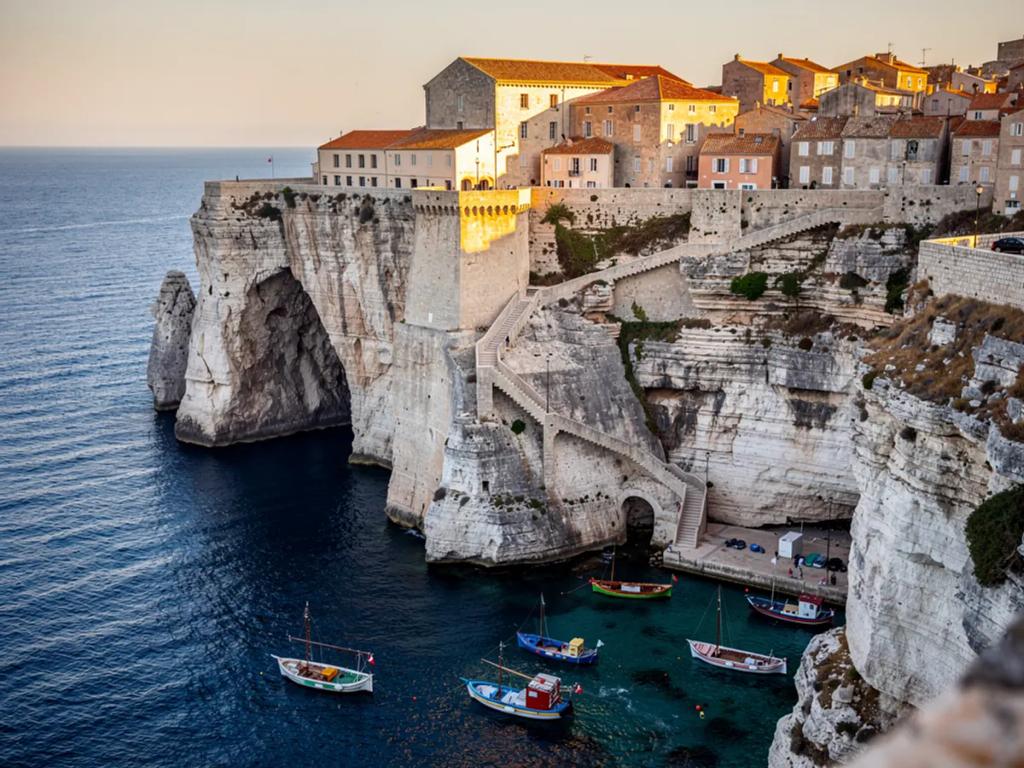
Bonifacio, the old town built along the lip of white limestone cliffs, seen from the sea - take the boat, because the view from the town does not show you the town.
The Calanques de Piana, red granite towers dropping into the sea on the west coast, in late afternoon light.
Scandola Nature Reserve, UNESCO-listed and reachable only by boat.
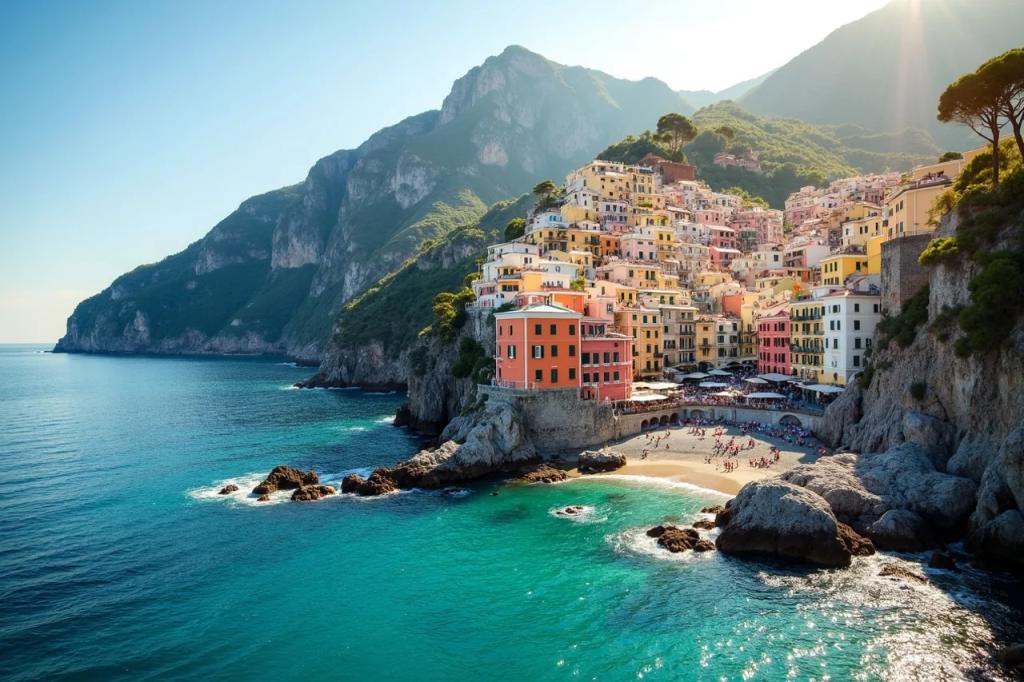
Palombaggia and Santa Giulia, the southern beaches, for water that genuinely is that colour.
Corte, the mountain citadel town at the heart of the island and the historic capital of independent Corsica.
The Restonica and Asco gorges, in the interior.
Napoleon's birthplace in Ajaccio, and the town's Bonaparte industry.
Cap Corse, the northern peninsula, for empty roads, Genoese towers and no crowds.
Napoleon was born in Ajaccio in 1769, a year after Genoa ceded Corsica to France - so the most famous Frenchman in history was very nearly not French at all.
The maquis gave the French Resistance its name. The scrubland was where Corsican outlaws and fighters hid, and maquisards became the word for resistance fighters everywhere in France.
Napoleon said he could recognise Corsica blindfolded by the smell of the maquis, which is quoted on the island constantly and is not implausible - it is myrtle, rosemary, thyme and cistus, and it is genuinely powerful in the heat.
Corsican polyphonic singing is a distinct living tradition, sung in three parts, and hearing it in a church is a highlight for many visitors.
The island calls itself l'Ile de Beaute, and it is the one piece of tourist branding nobody argues with.
And the Moor's head flag, with its white bandana, has been Corsica's emblem since the eighteenth century - the blindfold was raised above the eyes as a symbol of liberation.
The Calvi On The Rocks festival, in July, on the beach.
Napoleon's birthday, 15 August, marked substantially in Ajaccio.
The Easter processions in Bonifacio, Sartene and Calvi, which are ancient, solemn and unusual - Sartene's Catenacciu involves a hooded penitent dragging a cross through the town.
A Merendella and the village fetes through the summer, which is where the polyphony turns up.
June and September are the sweet spots: warm sea, open businesses, no crowds. July and August are hot, full and expensive. Winter closes much of the coast entirely, while the ski stations at Ghisoni and Asco open.
The love: Corsica has the best combination of mountain and sea in the Mediterranean, and it is not close. You can swim at eight and be walking a 2,000 m ridge by eleven. The water and the beaches genuinely match the photographs, the interior is empty and wild in a way the rest of western Europe is not, the food is distinctive - chestnut flour, brocciu cheese, charcuterie from pigs that eat acorns - and the island has a fierce identity that makes it feel considerably further from France than it is.
The complaints are consistent. The driving exhausts people who did not budget for it. It is expensive, particularly in August, and noticeably more so than mainland France. Public transport is negligible. Everything closes from November to March outside the two main towns. Signal in the interior is poor, which matters if you are hiking. And a few visitors report a certain coolness towards outsiders, which is usually a matter of arriving expecting a French resort rather than a place with its own language and grievances.
Come in June or September, base yourself in one region, take the little train through the middle at least once, and download your maps before you leave the coast.
Yes, completely. Corsica is part of France and therefore the EU, so Roam Like at Home applies and an EU or EEA SIM uses its domestic allowance. The issue here is coverage rather than cost.
Often not. The coast and main towns are well served, but the interior - the gorges, the mountain villages, and the GR20 in particular - drops out for long stretches. Download offline maps of the whole island before leaving the coast, and if you are walking, leave your stage plan with someone rather than relying on being reachable.
Effectively yes. Public transport barely exists outside Ajaccio and Bastia, and the sights are spread across an island with slow, winding roads. Book hire well ahead for July and August, when the island genuinely runs out. The narrow-gauge railway through the interior is wonderful but is a day out rather than a way of getting around.
Far longer than the distance suggests. Ajaccio to Bastia is about 150 km and takes two and a half to three hours; most cross-island journeys run at two to three times the speed you would assume in flat country. Plan one region per trip rather than a tour.