Dakar is the easiest place in West Africa to stay online. Three networks cover Senegal - Orange (run by Sonatel, the clear market leader), Yas (the operator formerly called Free Senegal) and budget player Expresso - and your eSIM connects through one of them. Orange switched on 5G in Dakar in June 2024, 4G reaches around 97% of Senegal's population, and on the Cap-Vert peninsula itself, from the Plateau up through Ouakam, Ngor and Yoff, you can expect solid fast data basically everywhere a visitor goes.
The honest picture: the peninsula is dense with towers, so the Plateau's office blocks, the Corniche, the Almadies restaurant strip and the surf spots all get strong 4G, with 5G increasingly common on Orange. Goree island is covered too - it sits only a few kilometres offshore and the ferry crossing never really leaves signal. Where things thin out is beyond the city: head upcountry towards Sine-Saloum or the Petite Cote and you will drop to patchier 4G and 3G between towns. For a Dakar-based trip that rarely matters; just download offline maps before any excursion.
- Yango and Heetch are how visitors get around - Uber does not operate in Senegal, and after a court ruling in late 2025 the ride apps are here to stay despite noisy disputes with the taxi unions. Yango usually has more cars; Heetch is the main alternative.
- Wave and Orange Money are the mobile-money layer the whole city runs on - the orange-and-blue Wave logo is painted on half the shops in town (the company was built in Dakar). As a visitor you will mostly pay cash in CFA francs, with cards accepted at hotels and bigger restaurants, but you will see QR codes everywhere.
- WhatsApp arranges everything - guesthouse check-ins, surf lessons, drivers for the day, restaurant reservations. If a business has a website it is probably out of date; the WhatsApp number is not.
- The Goree chaloupe (the ferry from the Port of Dakar) runs on a fixed schedule roughly every hour or two - check the current timetable online the morning you go, and build in queue time at the ticket office, because departures do sell out on weekends.
Blaise Diagne International (DSS) sits about 50km from the city, so your first hour in Senegal is a long drive - exactly when you need data for directions, WhatsApp messages to your hotel and a price check on the ride. Taxis have no metres anywhere in Senegal: agree the fare before you get in, or order a Yango from arrivals and skip the negotiation entirely. Both require you to be online the moment you land, which is the whole argument for installing your eSIM before you fly.
Dakar trips are maps-and-messaging heavy: Yango orders, WhatsApp voice notes, navigation on the long airport run, plus photo uploads that African light makes irresistible. French speakers travel translation-light; if you have no French or Wolof, budget extra for the translation app. For most travellers 1GB per 2-3 days is comfortable, with headroom if you video-call home or stream. Top-ups take minutes from your dashboard if the trip runs long.
Light and breathable, with a lean towards modest - Senegal is Muslim-majority and famously tolerant, but covered shoulders and knee-length shorts or trousers read as respectful, especially around mosques and on Fridays. Evenings on the ocean side get genuinely breezy from December to February, so pack one light layer. Sturdy sandals beat trainers: sand finds its way onto every street, beach path and ferry deck. In the June-October rains, quick-dry everything.
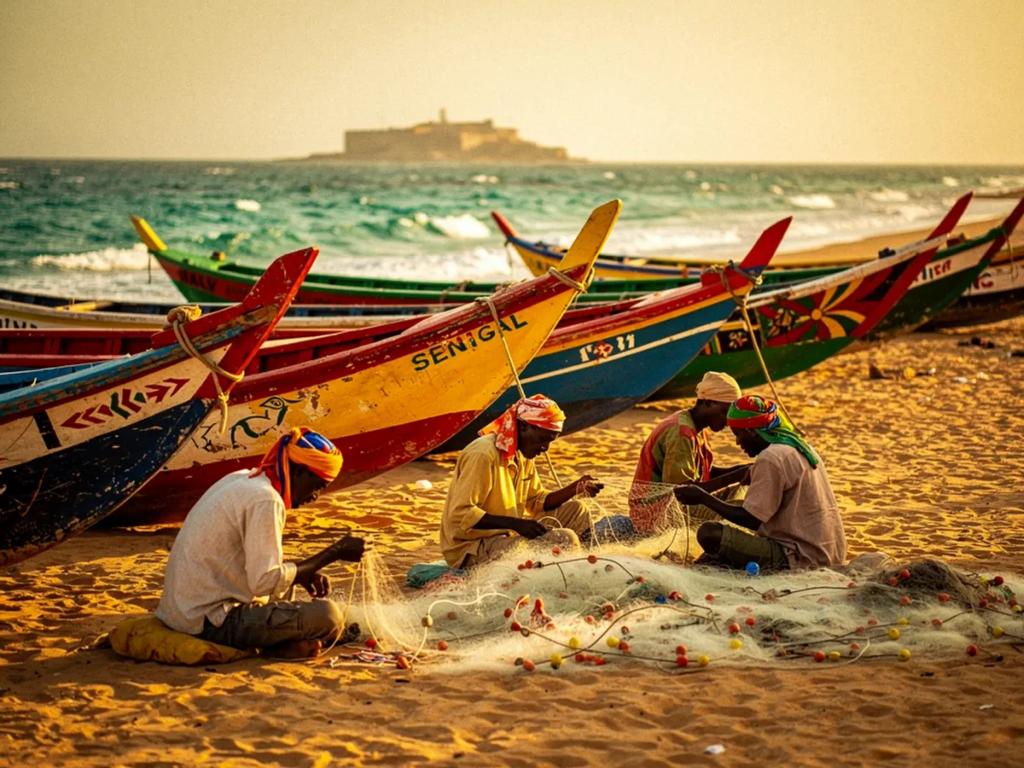
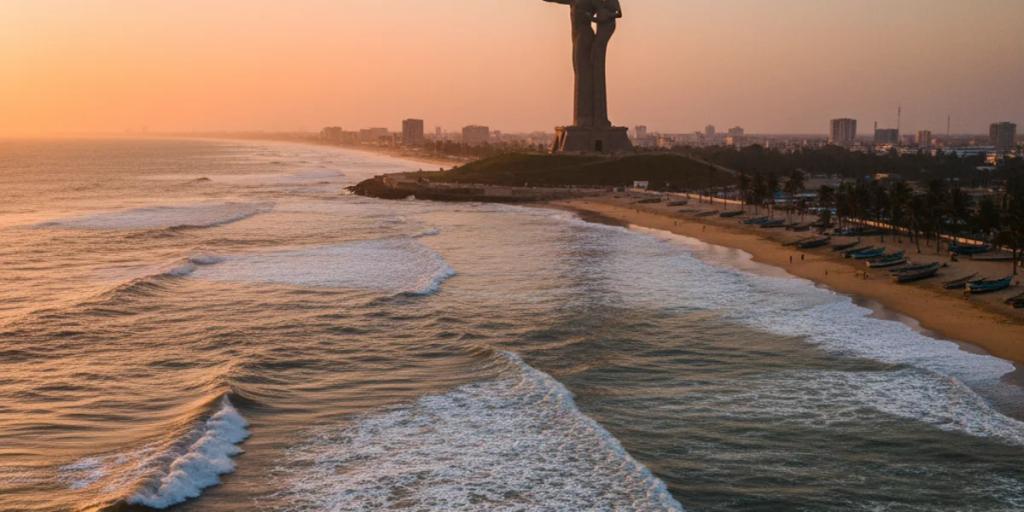
The African Renaissance Monument is the shot: a 49m bronze colossus, taller than the Statue of Liberty's figure, best photographed from the base of its staircase at sunset when the bronze goes gold - and yes, you can take the lift up to the viewing deck inside the head. Goree island gives you ochre-and-coral colonial lanes in soft morning light; treat the House of Slaves and its door of no return as the memorial it is, not a backdrop. Lake Retba (Lac Rose) lost its famous pink after the 2022 floods but the colour returned in 2025 - it shifts with salt and season, so ask locally before you build a day around it. Add the pirogue crossing to Ngor island and the Mosquee de la Divinite sitting improbably in its Ouakam cove.
Dakar is the westernmost major city on the African mainland - the Almadies point just past the surf spots is the continent's westernmost tip. The Dakar Rally no longer comes anywhere near it: the race left Africa in 2009 and has run in Saudi Arabia since 2020. And the city's sound is mbalax, the percussion-driven pop that Youssou N'Dour carried to the world; teranga, Wolof for hospitality, is the national brand - hence the football team's name, the Lions of Teranga.
Dak'Art, Africa's biggest contemporary-art biennale, holds its 16th edition November 19 to December 19, 2026, taking over venues across the city. The Saint-Louis Jazz Festival (May 13-17 in 2026) is West Africa's great jazz gathering - but it is in Saint-Louis, a four-to-five-hour drive north, so treat it as an overnight trip, not a day out. Dakar Fashion Week returns December 1-6, 2026 for its 25th anniversary. The movable Muslim calendar shapes the city too: before Tabaski, sheep markets fill every roundabout and prices spike, while the Grand Magal pilgrimage draws millions to Touba - outside Dakar, but transport across Senegal strains for days around it.
The love: that Atlantic light, live music spilling out of venues most nights, surfable waves twenty minutes from downtown, and teranga that turns strangers into lunch invitations. The gripes are real too. The peninsula has essentially one land exit, so traffic at the chokepoints can be brutal at rush hour. Vendor persistence at the monument, the Goree dock and the beaches wears some visitors down, beach cleanliness varies sharply by neighbourhood, and every taxi ride starts with a negotiation. Come with patience and small CFA notes, and the ledger tilts heavily towards love.
Yes - Goree sits close enough to the mainland that coverage carries across the water and on the island itself. Load the return ferry schedule before you board anyway; the ticket queue is easier to plan around when you already know which chaloupe you are aiming for.
Hotels and the cafe scene around Almadies and the Plateau have decent Wi-Fi, but it is patchy between them and power cuts can take a router down mid-afternoon. Nothing citywide fills the gap, and the moments you most need data - the airport run, ordering a Yango, finding an unmarked guesthouse - are exactly when there is no hotspot. Treat Wi-Fi as backup.
No - both generally require local registration, so they are for residents. Carry cash in CFA francs for taxis, markets and small restaurants, and use cards at hotels and larger spots. What you do need is data: with your eSIM installed before you land, Yango, WhatsApp and maps cover everything mobile money would have.