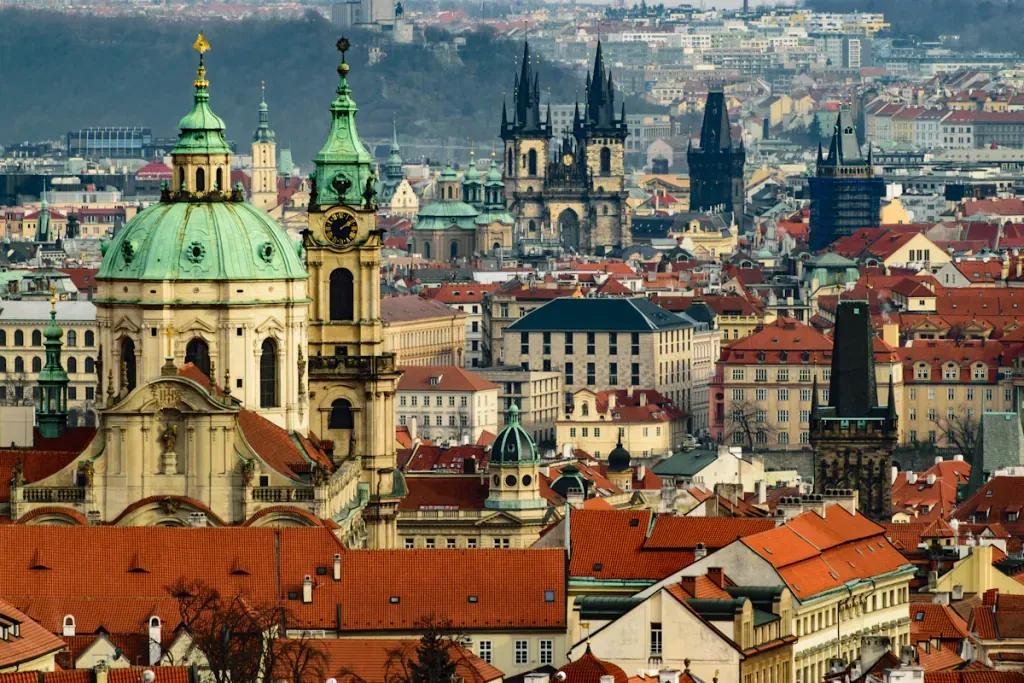
Prague runs on three mobile networks - T-Mobile CZ, O2 and Vodafone CZ - and all three blanket the city with strong 4G and growing 5G. Your eSIM connects through one of them as its host network, and coverage is excellent everywhere visitors actually go: Old Town, Mala Strana, the castle hill, Vinohrady, and the riverbanks. Here is the twist that makes a travel eSIM unusually good value in Czechia: mobile data here has historically been among the most expensive in Europe for locals, with regulators repeatedly flagging Czech per-gigabyte prices at the top of the EU charts. A travel eSIM sidesteps that entirely - you will often pay less per gigabyte than a Czech resident on a domestic contract.
Almost nowhere, honestly - and that includes underground. Prague finished wiring its entire metro for LTE, so all 61 stations and the tunnels between them have mobile signal, which puts it ahead of most European capitals. The one soft spot is the one every medieval city has: thick baroque walls in the deepest lanes of Old Town and Mala Strana can knock you down a bar or two indoors - a pub cellar dinner may pause your group chat. Step back onto the street and it recovers instantly.
- PID Litacka is the official transit app for metro, trams and buses - route planning, live departures and mobile tickets in one place. You can also skip it entirely: metro entrances and trams take contactless bank cards and phone wallets directly, with onboard terminals at the middle door of trams, and each tap buys a standard timed ticket.
- Bolt and Uber both operate and both are cheap by Western European standards. Locals lean on the apps for a reason: hailing a street taxi as a tourist is the classic way to get creatively overcharged.
- Timed tickets matter: Prague Castle circuit tickets and the Jewish Quarter's synagogue circuit are far smoother booked online, and busy summer slots go early - booking from your phone in the queue is a real scenario.
- Cards win over cash, and not just for convenience. Prague uses the Czech koruna, not the euro, and the famous "0% commission" exchange booths around Old Town make their money on brutal exchange rates instead of fees. Paying by card at the interbank rate quietly beats almost any booth. Beer gardens and a few old-school pubs were the last cash holdouts, but even that is improving - carry a few hundred koruna as backup, not as your plan.
Vaclav Havel Airport has no metro link yet, so it is bus 119 to Nadrazi Veleslavin and then metro line A into the centre, or the Airport Express coach to the main station - both take contactless cards. The ride in is exactly when you will want maps, accommodation messages and a first "which exit" search, so land with the eSIM already installed and activated rather than fishing for airport Wi-Fi with your luggage.
Prague trips are map-heavy (the lanes are gorgeous and disorienting in equal measure), photo-heavy, and translation-moderate - English works in the centre, less so in neighbourhood pubs where a menu scan helps. For most travellers 1GB per 2-3 days covers navigation, messaging and social posting; add headroom for video calls or uploading every bridge shot. If Prague is one stop on a longer route, a regional plan usually beats stacking single-country ones - see our guides to cheap eSIM data across Eastern Europe and the best eSIM for Europe for how the maths works out.
Shoes first: central Prague is essentially one continuous cobblestone surface, and it destroys heels and thin soles. Comfortable flat shoes are non-negotiable. Summer wants layers for evenings that cool off fast; winter wants a proper coat, hat and gloves, because Christmas-market browsing is a standing-outdoors sport - the local strategy is a mulled wine (svarene vino) every few stalls. There are no strict dress codes, but Czechs dress neatly for classical concerts and nicer restaurants.
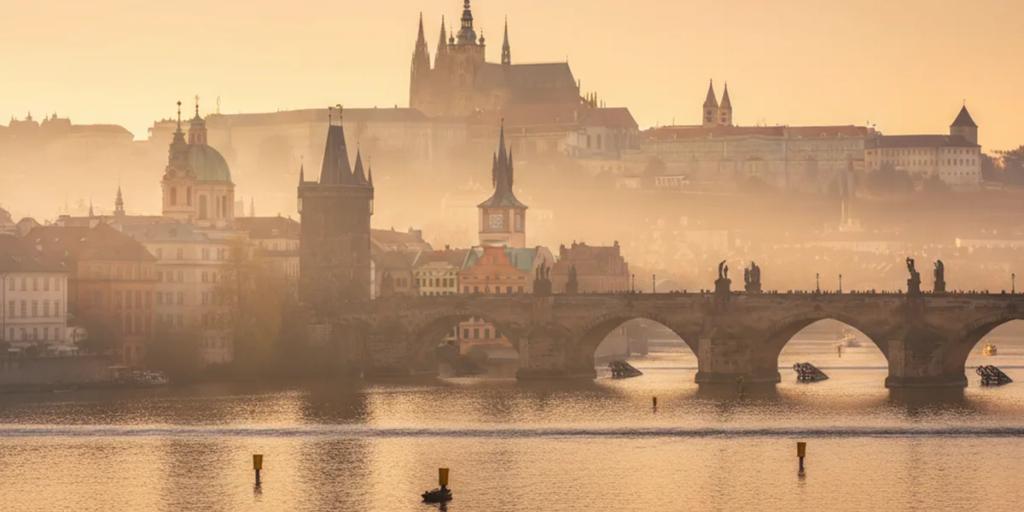
Charles Bridge has exactly one empty hour: dawn. Arrive before sunrise and you get the baroque statues in river mist with the castle glowing behind - by 9am it is a moving crowd. For the castle-over-rooftops frame, the ticketed Vrtba Garden in Mala Strana (a baroque terraced garden, open roughly April to October) gives an elevated view without the Petrin tower queue - though Petrin's lookout tower is the winner for full-city panoramas. Shoot the Dancing House from the opposite riverbank for the clean curve, and end at Letna park's beer garden, where sunset lines up the bridges over the Vltava.
Prague's astronomical clock has been running since 1410 - the oldest astronomical clock in the world still in operation. Czechs drink more beer per capita than any nation on Earth, a title they have held for roughly three decades, and in plenty of pubs a half-litre really can cost less than bottled water. Prague Castle is listed by Guinness World Records as the largest ancient castle complex in the world. And Czech history gave us "defenestration" as a recurring political method - two famous Prague window-throwings, in 1419 and 1618, both changed European history.
The Old Town Square Christmas markets run from late November into early January and are regularly ranked among Europe's loveliest - go on a weekday evening if you value elbow room. Prague Spring, the country's prestigious international classical music festival, fills May with concerts and traditionally opens with Smetana's Ma vlast. Signal Festival turns the city into an open-air light-art gallery for four nights in mid-October. Beer culture peaks year-round, but Pilsen - birthplace of pilsner - is an easy day trip by train if you want the source.
The love is earned: Prague came through WWII largely unbombed, so the fairy-tale medieval-to-baroque core is real, not reconstructed; the beer culture is world-class and honest value; and prices outside the tourist zone still undercut Western Europe. The complaints are real too: Charles Bridge and Old Town Square at midday are a shuffle-speed crush, certain streets are stag-party corridors on weekend nights, and the centre works hard to separate tourists from money - exchange-booth rate tricks, hailed-taxi overcharging (use Bolt or Uber), and restaurants near the square charging double for the same goulash you will find two streets away. Walk ten minutes in any direction and the city gets cheaper, calmer and better.
Yes, fully - all 61 stations and the tunnels between them carry LTE or 5G, one of the most complete metro coverage jobs in Europe. You can navigate, message and stream on the move underground.
Manage expectations: the hourly Walk of the Apostles lasts well under a minute, and plenty of visitors call it underwhelming. The clock itself is the marvel - a 1410 mechanism still doing its job six centuries on. Watch one show from the back of the crowd, then look at the dial properly once everyone disperses.
Probably not. Czech mobile data has historically been among the priciest in the EU for domestic customers, so the usual "local SIM is cheaper" logic is weaker here than almost anywhere in Europe. A travel eSIM installed before you land keeps your home number alive for bank codes and skips the shop queue - and per gigabyte it often beats the local tariffs outright.