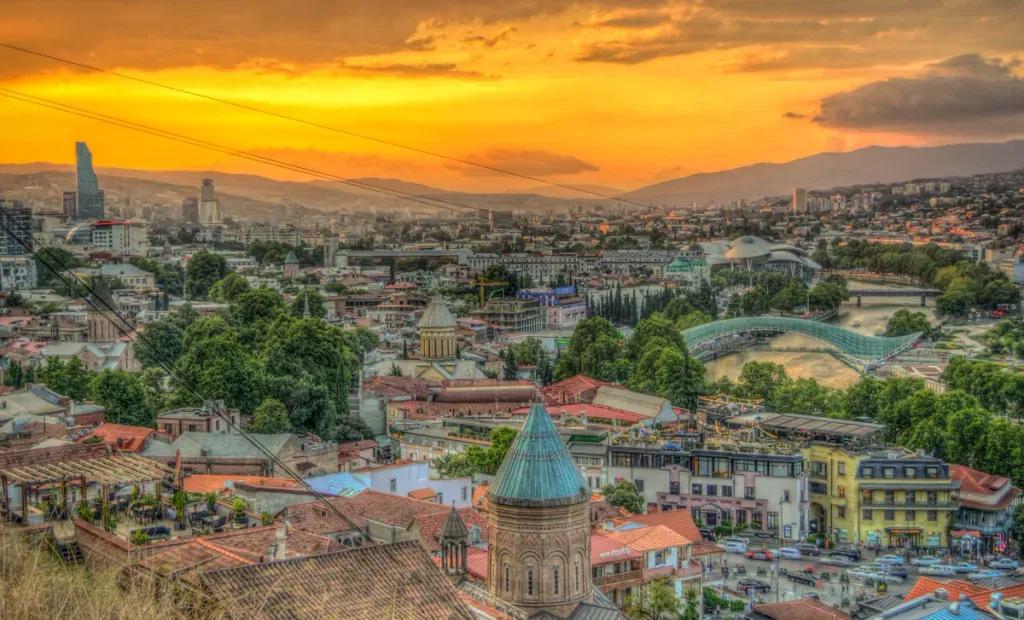
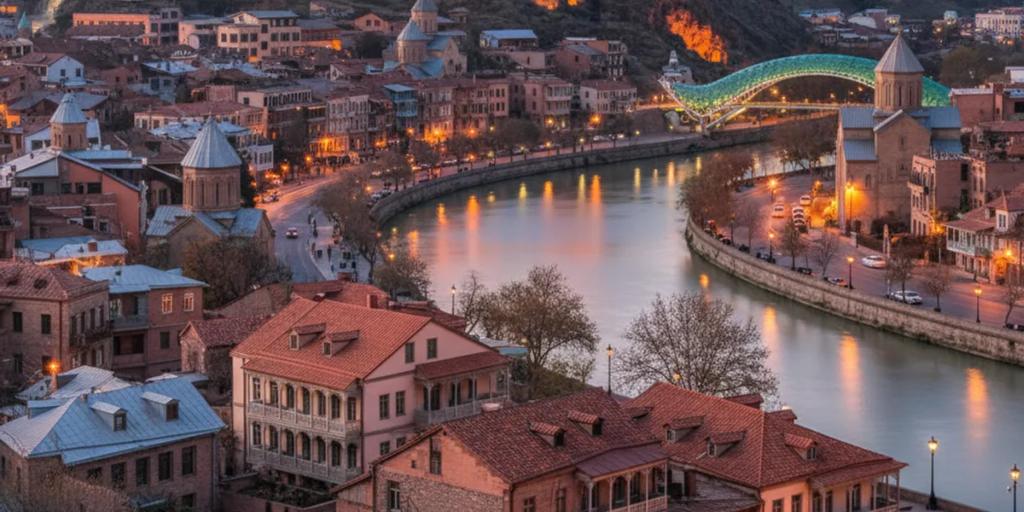
Tbilisi punches well above its weight for connectivity. Three networks cover the city - Magti (generally the strongest coverage nationwide), Silknet (which absorbed the old Geocell) and Cellfie (the former Beeline, rebranded) - and 4G is fast, dense and cheap by European standards across everywhere you will actually walk: the old town, Rustaveli and Marjanishvili avenues, Vera, Vake and the Fabrika end of the left bank. Your eSIM rides one of these hosts, so in the city itself a weak signal is the exception, not the rule.
Two honest caveats. The old town between Abanotubani and Betlemi Street is a stack of courtyards and thick-walled brick, so a bar or two can vanish mid-alley - it comes back at every open square. The bigger one is day trips: the Georgian Military Highway to Kazbegi is mostly covered (Magti-hosted plans hold best), but expect real dropouts around the Jvari Pass and in the deeper gorges, and the same applies to wine-country backroads in Kakheti. Download offline maps before the marshrutka leaves Didube station, because the mountains are exactly where you will want them.
- Bolt is the transport layer of Tbilisi - locals and visitors alike use it for rides and its scooters, and hailing from the curb is how you end up negotiating in Georgian. Yandex Go is the backup that is sometimes cheaper and easier to find late at night.
- The metro and buses are cashless: you tap a Metromoney card (2 GEL at station counters) or, on the metro and buses, a contactless bank card or phone straight on the validator, with a 90-minute transfer window. The Rike-Narikala cable car, though, still wants a Metromoney card, so buy one at its base station anyway.
- Translation apps earn their keep - Georgian has its own alphabet and menus outside the centre do not always come in Latin script.
- Cards are widely accepted in the city, but keep a little cash for markets, marshrutkas and village stops.
Tbilisi International sits about 17 km east of the centre. A Bolt ordered from the arrivals curb is the painless option and reliably beats the fares quoted by drivers inside the terminal; a 24-hour city bus also runs to the centre for small change. Either way, the SIM-card kiosks in arrivals involve queues and passport registration - an eSIM installed before you fly means Bolt, maps and the "landed safely" messages work the moment the wheels touch down.
City days here are map-heavy (the old town is a beautiful maze), Bolt-heavy and translation-heavy, which still adds up to modest totals: 1GB per 2-3 days covers most travellers comfortably. Budget extra if you are one of the remote workers Tbilisi now attracts - a cafe-wifi fallback exists in Vera and Vake, but you do not want a video call resting on it - or if you will be uploading every khinkali. Mountain trips barely dent data (there is often nothing to load), but that offline-map download beforehand is non-negotiable. If your route continues across the Caucasus, Armenia and Azerbaijan need their own plans - Georgian SIMs roam expensively there.
Georgian Orthodox churches enforce dress codes seriously: at Sameba Cathedral and Sioni, women need covered shoulders, knees and a headscarf (wrap skirts and scarves are provided in baskets at the entrance), and men in shorts will be turned away or handed a cover. Beyond that, Tbilisi is casual. Bring flip-flops for the sulfur baths, real layers for mountain day trips (Kazbegi can be 15 degrees colder than the city), and shoes with grip - the old town's polished cobbles are slick after rain.
Ride the cable car from Rike Park up to Narikala at dusk: the fortress walls, the Mother of Georgia statue and the whole amber-lit valley line up from the ridge path. The leaning clock tower of the Rezo Gabriadze puppet theatre is best in soft morning light before the crowds - stand back on the cobbles and shoot upward, and stick around for the angel that appears on the hour. Frame the brick domes of the Abanotubani bathhouses from the slope just above them. And the Chronicle of Georgia, the giant "Georgian Stonehenge" above the Tbilisi Sea, is free, open around the clock and a 20-25 minute Bolt from the centre - go late afternoon when the sixteen-story pillars catch the low sun. Fabrika's muraled courtyard fills the coffee-break slot.
Tbilisi literally means "warm place", after its hot sulfur springs - legend says King Vakhtang Gorgasali's hunting falcon fell into one, and he founded a city on the spot. Georgia backs an 8,000-year winemaking claim with archaeology, and its qvevri clay-vessel method is UNESCO-listed intangible heritage. The curly Georgian alphabet is one of only around 14 unique scripts in use worldwide. And if you get invited to a supra feast, the tamada (toastmaster) runs the evening - toasts are long, structured and not optional.
Tbilisoba, the city festival in early October, takes over Rike Park and the old town with food, wine and folk performances. The New Wine Festival in May pours the previous harvest at Mtatsminda Park for free. Orthodox Easter (movable, often a week or more after Western Easter) fills the churches with candlelit midnight services. Art Gene, a folk festival at the open-air Ethnographic Museum, usually lands in July.
The love: hospitality so insistent it borders on kidnapping (in the best way), food and wine value that makes Western Europe feel absurd, and an old town you can walk end to end between bathhouse and wine bar. The honest gripes: cars park on pavements with total impunity, air quality has rough days in the traffic bowl of the valley, and political protest seasons periodically close Rustaveli Avenue (large, generally peaceful, but factor them into taxi times). The famous stray dogs startle some visitors - most are ear-tagged, meaning vaccinated and neutered, and are famously gentle.
Coverage in stations is generally fine, but the metro is Soviet-deep - Rustaveli station has one of the longest escalator rides in the world - so expect dropouts in the tunnels between stops. Load your route and anything you need to show before you head down.
Mostly, yes. Towns and the main roads are covered, and Magti-hosted plans handle the mountains best, but gorges and the Jvari Pass stretch of the Military Highway have genuine dead zones. Download offline maps and any translation packs in the city first.
Tbilisi's cafe wifi culture is real - Vera and Vake are full of laptop-friendly spots - but it does not help you hail a Bolt from a curb, navigate the old town or translate a menu in Ortachala. Treat wifi as your video-call venue and mobile data as the thing that runs the actual day.