Warsaw is a genuinely easy city to stay online in. Poland's mobile market is one of Europe's most competitive, with four national networks - Orange, Play, Plus and T-Mobile - fighting over one of the continent's cheapest data markets, and the result is dense, fast 4G and 5G across the whole capital. Your eSIM rides one of these as its host network, and speeds in the centre, along the Vistula and out to the airport are routinely excellent.
The honest exception is underground. Warsaw's metro has two lines, M1 and M2, and while stations generally have coverage, the deeper tunnel stretches can stutter and a few stops still drop signal entirely - load your route in Jakdojade before the escalator, not after. Above ground there is very little to complain about: even the Old Town's reconstructed lanes are short and open enough that maps rarely miss a beat.
- Jakdojade is the Polish transit app, and locals are genuinely devoted to it - live tram, bus and metro routing plus in-app tickets. Install it before anything else.
- Ticketing still means tickets: London-style tap-your-bank-card-at-the-gate has not arrived in Warsaw yet (it is planned for the coming years). You buy from the ZTM machines at stops and inside vehicles - they take contactless cards happily - or skip the machine entirely with Jakdojade.
- Bolt, Uber and FreeNow all compete here, which keeps rides remarkably cheap by Western European standards. Locals default to the apps over street taxis.
- Veturilo, the city bike scheme, is app-only and pleasant along the Vistula boulevards.
- BLIK is the local payment phenomenon: Poles pay each other and even ticket machines with six-digit codes generated in their banking apps. You will see it everywhere but need a Polish bank account to use it - as a visitor you just tap your card or phone, which works virtually everywhere, market stalls included.
From Chopin Airport, commuter trains leave from the station under the terminal and reach the centre in roughly 20-25 minutes, with buses as backup; ticket machines take contactless cards. One local-knowledge note: at arrivals, walk past anyone offering a ride and either use the official taxi ranks or order a Bolt or Uber - the app price is honest and usually low. That first ride is exactly when your accommodation address, host messages and maps all need data at once, so install the eSIM before you fly.
Warsaw trips are transit-app-heavy and translation-moderate - English is common with younger Poles, less so with older generations, so Google Translate earns its data on menus and museum panels. For most travellers 1GB per 2-3 days covers Jakdojade, maps, messaging and photos comfortably; budget more if you upload video from the Old Town or video-call home. If Warsaw is one stop on a bigger route, a regional Europe plan covers the neighbours too, and Poland features heavily in our cheap eSIM guide for Eastern Europe for a reason.
Warsaw has four real seasons and means it. Summer is t-shirt weather with the odd thunderstorm; winter demands a proper coat, hat and footwear that can handle slush. Poles dress neatly casual - you will feel scruffy in gym wear at a nice restaurant, not underdressed in jeans. Poland remains a largely Catholic country and churches are working places of worship: covered shoulders and generally modest dress are the norm when you step inside, especially during services.
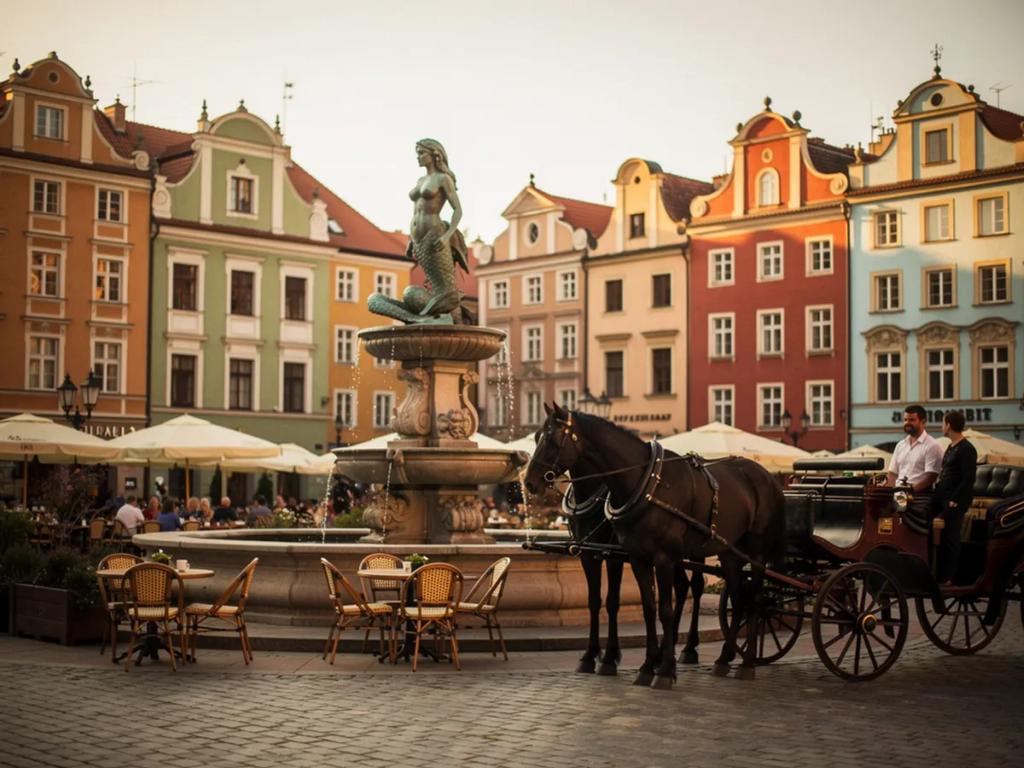
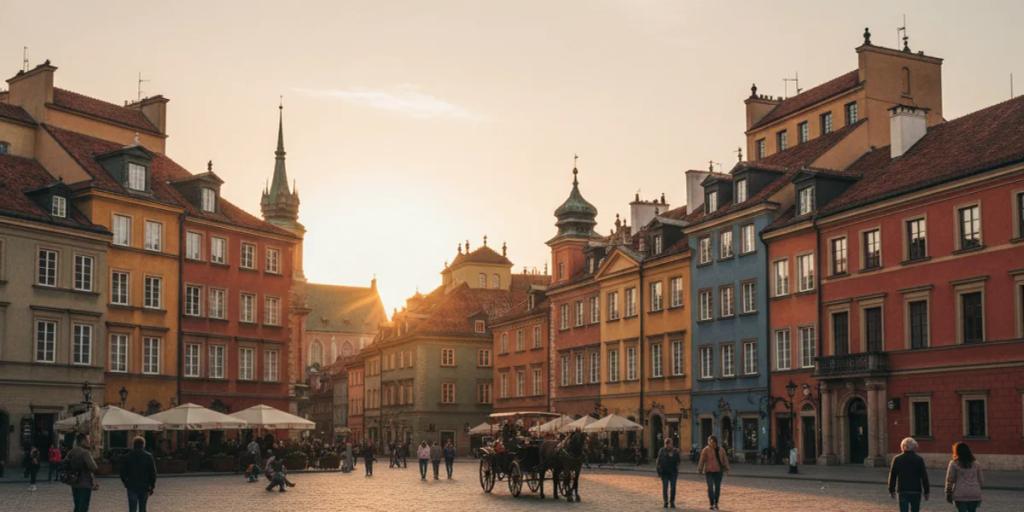
The Old Town Market Square's colourful facades glow best in early morning before the terraces fill - stand in the square's centre and shoot towards the syrenka, Warsaw's sword-wielding mermaid statue. Legend says a mermaid swam up the Vistula, was freed by local fishermen, and swore to defend the city forever; she is on the city's coat of arms. For the skyline, you have a choice of ironies: the 30th-floor terrace of the Palace of Culture (114m, open daily) gives the classic panorama, while the Highline deck on the 53rd floor of Varso Tower (230m, opened 2025) looks back at the Palace itself. In Lazienki Park, the Chopin monument and the resident peacocks do the work for you.
Warsaw's UNESCO-listed Old Town is not old: around 85 percent of it was destroyed in 1944, and it was rebuilt after the war using 18th-century cityscapes by Bernardo Bellotto (known here as Canaletto) as visual blueprints - UNESCO inscribed it in 1980 precisely as a masterpiece of reconstruction. Chopin's actual heart is sealed inside a pillar of the Holy Cross Church on Krakowskie Przedmiescie. And Varso Tower, at 310m, is the tallest building in the European Union.
Free Chopin recitals at the Lazienki monument are a beloved summer ritual - Sundays at 12:00 and 16:00 (the 2026 season runs July to late September while the monument's surroundings are renovated). On 1 August at 17:00, sirens mark the W-hour anniversary of the 1944 Uprising and the whole city stops for a minute - genuinely moving to witness. Orange Warsaw Festival brings big pop and indie names in late spring, the Warsaw Marathon takes over the streets in late September, and the Old Town illumination plus Christmas markets carry the dark months.
The love: Warsaw might be Europe's best value capital right now, with a food scene that has exploded from milk bars to serious fine dining, and it is greener than its reputation - Lazienki, endless parks and the wild, beach-lined Vistula boulevards. The gripes are fair too: November-to-February is grey and can weigh on you, swathes of the city are unlovely communist-era blocks (the Palace of Culture still divides locals - one old nickname is "the elephant in lacy underwear"), and the essential history museums, the Uprising Museum above all, are emotionally heavy - pace yourself rather than stacking them in one day.
Partly. Stations on both lines generally have coverage, but deeper tunnel sections can stutter and a few stops still lose signal completely. Plan your route in Jakdojade before heading underground and buy any in-app ticket while you still have bars.
Not at the gate - Warsaw has no tap-in system yet, though one is planned. You buy tickets from ZTM machines (which do take contactless cards) at stops, in stations and on board, or in the Jakdojade app, then validate before or as you board. Fines for ticketless riding are enforced by plainclothes inspectors.
No. BLIK is for people with Polish bank accounts, and card acceptance in Warsaw is near-universal, from metro ticket machines to pierogi stalls. Keep a few zloty coins for public toilets and you are covered; everything else, including your eSIM setup before you land, happens on your phone.