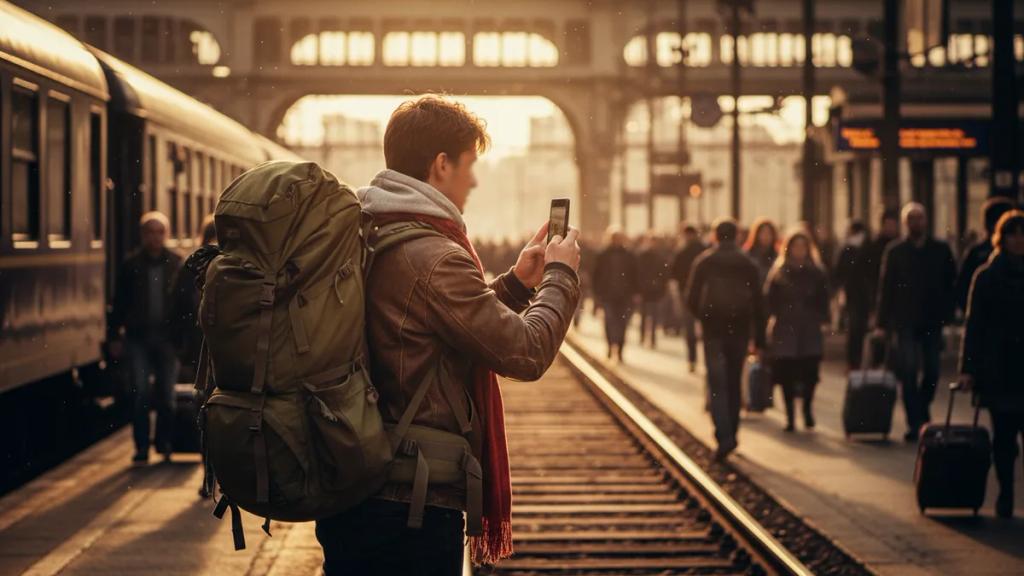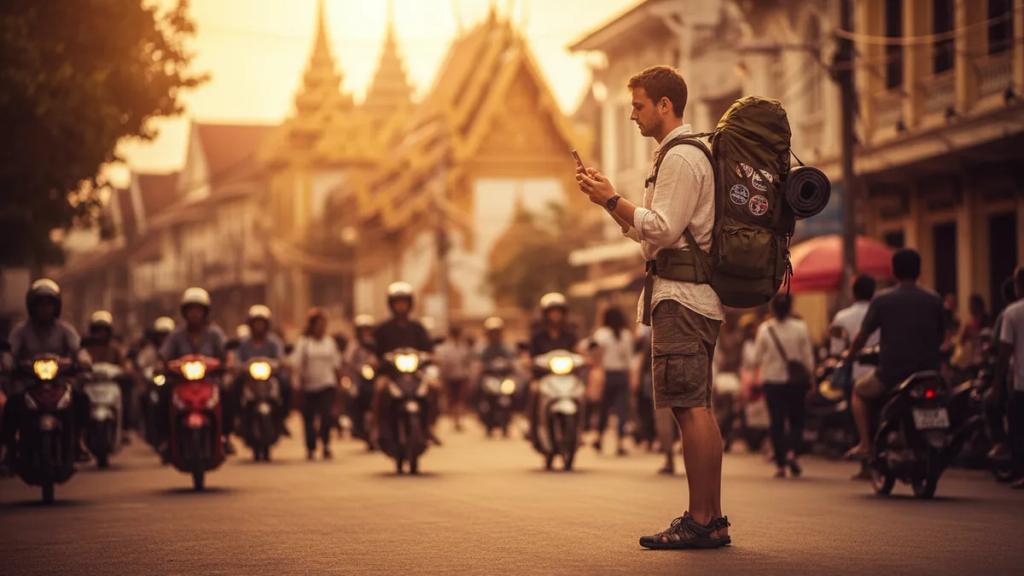
The best eSIM for Southeast Asia backpacking is a single Asia regional plan, starting at £2.49 for 1GB, so one eSIM follows you from Bangkok to Ho Chi Minh City to Bali without swapping SIM cards at every border. Instead of buying a new tourist SIM in each country - queuing at an airport kiosk, handing over your passport, and losing your number every week - you scan one QR code at home and stay connected across the region.
There is one honest catch you need to read before you buy, and this guide is built around it: the Asia plan covers most of Southeast Asia, but not quite all of it. Below is exactly which countries are in, which are out, how much data a multi-week trip really needs, and how to keep your home number alive for two-factor authentication while you travel.
Which Countries the Asia eSIM Actually Covers
This is where most backpacker eSIM articles get vague. Here is the real, verified coverage list for the eSIMpass Asia plan (18 countries):
Southeast Asia included: Thailand, Vietnam, Cambodia, Laos, Indonesia (including Bali), Malaysia, Singapore, and the Philippines.
Wider Asia included (useful if your route bolts on East or South Asia): China, Hong Kong, Macau, Taiwan, Japan, South Korea, India, Bangladesh, Sri Lanka, and Pakistan.
Southeast Asia NOT included: Myanmar, Brunei, and Timor-Leste. The classic overland "banana pancake" loop through Thailand, Laos, and Cambodia is covered end to end, Laos included. If Myanmar is on your route, plan to rely on hostel and cafe Wi-Fi there, or pick up a cheap local SIM for those days.
For the eight covered Southeast Asian countries, one plan is genuinely all you need. See the full plan and country list on the Asia eSIM page.
Asia eSIM Plans and Pricing
| Data | Duration | Price |
|---|---|---|
| 1 GB Data | 7 Days | £2.49 |
| 3 GB Data | 30 Days | £3.47 |
| 5 GB Data | 30 Days | £4.68 |
| 10 GB Data | 30 Days | £7.70 |
| 20 GB Data | 30 Days | £11.78 |
| 50 GB Data | 90 Days | £42.15 |
Notice the long-validity options. A backpacker isn't buying a 7-day plan five times; the 30-day and 90-day plans exist precisely for people on the road for weeks or months. The 90-day 50GB plan covers a classic three-month Southeast Asia trip with room to spare.
How Much Data Do You Actually Need?
Hostel and cafe Wi-Fi does a lot of the heavy lifting in Southeast Asia. Almost every hostel, guesthouse, and coffee shop has Wi-Fi, so you offload the big stuff - photo backups, video calls home, Netflix - onto free connections at night. Your eSIM data is for when you are out and moving: maps, Grab and Gojek rides, translation, booking the next hostel, and posting from the beach.
That changes the maths. Backpackers burn less mobile data than you would think:
- Light (maps, messaging, ride apps, occasional social): 300-500 MB per week
- Typical (the above plus daily photo uploads and some browsing on the move): 1-2 GB per week
- Heavy (frequent hotspot for a laptop, video calls off Wi-Fi, streaming on buses): 3-5 GB per week
For a two-week trip, most people are comfortable on 5GB. For a month, 10GB. For a full three months, the 90-day 50GB plan covers a typical traveller with plenty to spare. Size up one tier if you plan to work remotely or tether a laptop a lot.
Why One Regional eSIM Beats a SIM at Every Border
The old backpacker routine was a local SIM in each country. It works, but on a fast multi-country trip it becomes a chore:
- Passport registration: Thailand, Cambodia, and several neighbours legally require you to register a physical tourist SIM against your passport. That means a kiosk, a form, and a wait, every single country. An eSIM bought online skips registration entirely.
- A new number every week: Each local SIM gives you a new phone number, which quietly breaks anything tied to your old one.
- Border-day dead zones: You land or cross at a border with no working SIM, right when you most need a Grab to your hostel. With a regional eSIM already installed, you have signal the moment the local network appears.
- Airport markups and scams: Airport SIM counters overcharge, and back-alley shops sometimes sell half-used or throttled SIMs.
One Asia eSIM sidesteps all of that for the eight covered Southeast Asian countries. You cross from Thailand into Cambodia and your phone simply reconnects. If you want a broader primer on regional plans, see our travel eSIM primer.
Keep Your Home Number for 2FA (Dual SIM)
This is the detail that trips up backpackers: your bank, your email, and your airline all send two-factor authentication codes to your home number. If you rip out your home SIM and replace it with a local one, those SMS codes stop arriving, and you can get locked out of your own accounts halfway across the world.
An eSIM solves this cleanly because it lives alongside your physical SIM. Modern phones are dual SIM: keep your home SIM in the tray (or as your home eSIM) for calls and SMS 2FA, and add the Asia eSIM as a second line just for data. In Settings you set the Asia eSIM as your data line and turn OFF data roaming on your home SIM so it never runs up a bill. Your home number stays reachable for that one banking code, while all your actual browsing runs on the cheap regional plan.
That setup - home SIM for identity, travel eSIM for data - is the single most useful trick for long-term travellers.
Coverage Honesty: Where the Signal Drops
A travel eSIM connects to a major local network in each country (a roaming partner), not to every network at once, and it will not magically outperform the local network. On the mainland and in tourist hubs - Bangkok, Chiang Mai, Hanoi, Ho Chi Minh City, Kuala Lumpur, Singapore, Bali's south, Cebu - coverage is strong 4G and often 5G. Where it gets patchy is the same place it gets patchy for locals too:
- Small and remote islands: The far Thai islands, Indonesia's outer islands, boats between islands, and Palawan's back roads can have weak signal or none on any network.
- Jungle, mountains, and long bus routes: Expect dead stretches on overland journeys and trekking days.
The fix is simple and free: download Google Maps offline for each area before you leave Wi-Fi, and screenshot your hostel address and directions. GPS keeps working with no signal, so navigation carries on through the dead zones.
Installing Your eSIM (Under 3 Minutes)
- Buy the Asia plan and complete checkout.
- Receive your QR code by email instantly - no activation fee.
- Scan it: Settings > Mobile Service / Mobile Data > Add eSIM > Scan QR code. Do this on home Wi-Fi before you fly.
- Set the data line: choose the Asia eSIM for data, turn on data roaming for it, and keep your home SIM for calls and SMS.
- Land and connect: the plan activates when it first finds a network in a covered country.
Install at home: per-GB plans only start their validity clock on first connection abroad, and Unlimited plans run on the travel dates you select at checkout, so you are not wasting days either way - just have an Unlimited eSIM installed by your selected start date. eSIMpass plans are prepaid and data-only (no local phone number), which is exactly what a backpacker wants as a second line.
Country Comparison at a Glance
eSIM vs Roaming vs Local SIM
Compare your options for Asia
| eSIMpass | Roaming | Local SIM | |
|---|---|---|---|
| Setup time | Instant | None | 30-60 min |
| Cost per GB | ~$2-5 | $10-50+ | ~$3-8 |
| Surprise fees | None | Likely | Unlikely |
| Buy before trip | Yes | Yes | No |
| Keep your number | Yes | Yes | No |
| Speed | 4G/5G | 4G/5G | 4G/5G |
For the two most popular stops, we have dedicated deep-dives worth reading before you go: the best eSIM for Thailand and the best eSIM for Vietnam, including which local networks each connects to and where coverage is strongest.
Frequently Asked Questions
Does one Asia eSIM really work across multiple countries?
Yes. The Asia plan works across all 18 covered countries on the same plan and balance, including Thailand, Vietnam, Cambodia, Laos, Indonesia, Malaysia, Singapore, and the Philippines. You do not buy or activate anything new when you cross a border; your phone reconnects to the local network automatically.
Which Southeast Asian countries are NOT covered?
Myanmar, Brunei, and Timor-Leste are not included. If your route runs through Myanmar, plan to use Wi-Fi there or buy a cheap local SIM for those days. Everywhere else on the standard backpacker trail, Laos included, is covered.
Will I keep my home number for bank codes?
Yes, if you use dual SIM. Leave your home SIM active for calls and SMS (so 2FA codes still arrive), add the Asia eSIM as your data line, and turn off data roaming on the home SIM so it costs nothing. This is the recommended setup for long trips.
How much data do I need for a month of backpacking?
Around 10GB for a typical traveller who uses hostel and cafe Wi-Fi in the evenings and mobile data for maps, ride apps, and messaging on the move. Size up if you hotspot a laptop or make a lot of video calls off Wi-Fi. Use the calculator above for a personal estimate.
Can I tether my laptop to the eSIM?
Yes, hotspot and tethering work, which is handy in hostels with weak Wi-Fi. Just watch your balance, since tethering a laptop burns data far faster than phone use.
Will my phone work with it?
Most phones from 2018 on support eSIM: iPhone XR and newer, Samsung Galaxy S20 and newer, and Google Pixel 3 and newer. Your phone also needs to be network-unlocked. Check compatibility before you buy.
Is a local SIM ever still worth it?
Occasionally. If you are staying in one single country for a long time and use huge amounts of data, a local unlimited SIM can be cheaper per GB. But for a fast multi-country trip, the passport registration, new numbers, and border dead zones make one regional eSIM the easier and often cheaper choice overall.
One eSIM for the whole Southeast Asia trail?
Join 10,000+ travellers who chose eSIMpass. One Asia plan follows you across Thailand, Vietnam, Cambodia, Bali and more. Instant QR, no passport registration.
Get Your Asia eSIM