Batam is the island Singaporeans hop to on a 40-to-60-minute ferry, and its mobile coverage matches that job description: Indonesia's three networks - Telkomsel, Indosat (IM3), and XL Axiata - all serve the built-up crescent from Nagoya through Batam Centre to the Nongsa resorts with dependable 4G, easily enough for video calls from a hotel room. Telkomsel reaches furthest once you leave town, Indosat tends to be the value pick in the urban core, and XL lands in between. Your eSIM rides one of these hosts, so the practical difference for a weekend visitor is small - until you drive south.
Here is Batam's genuinely unique connectivity quirk: Singapore is close enough that your phone can cling to a Singaporean tower from the ferry and even from parts of the north coast, then hand you a roaming bill for a country you already left. The reverse problem hits mid-crossing, where coverage from either side thins out over open water - so do not count on booking anything from the boat. And because Batam runs on WIB (UTC+7), one hour behind Singapore, an auto-updating phone that latches onto the wrong country's network can quietly show the wrong time. Ferry departure boards use local time; travellers have missed boats over that hour. A local-network eSIM plus a manual glance at the clock fixes both.
Heading down the Barelang chain towards Rempang and Galang, coverage gets thinner on every network - fine at the famous first bridge, patchier at the far end. Save offline maps before the drive.
- Ferry bookings and check-ins are online: Batamfast, Majestic Fast Ferry, Sindo, and Horizon all sell tickets through their sites and apps, and return-leg changes on a busy Sunday happen from your phone, not a counter.
- Grab works in Batam with your existing account - no Indonesian number needed for cars - and covers Nagoya, Batam Centre, Sekupang, and Nongsa. One catch: drivers cannot pick up inside the ferry terminals, so they will message you a meeting point a short walk outside. That chat needs live data the minute you clear immigration.
- Gojek runs here too; GoCar is often a touch cheaper on longer runs, though its motorbike taxis usually want an Indonesian number for the confirmation call.
- Money is split down the middle: malls, hotels, and resort restaurants take cards, but hawker stalls, kelong seafood houses, and small warungs want rupiah - so ATM-finding and price-checking are real data uses here.
Most visitors arrive by sea, not air: ferries from Singapore's HarbourFront and Tanah Merah terminals land at Batam Centre, Sekupang, Harbour Bay, or Nongsapura in under an hour. Immigration queues at Batam Centre can be long on weekends, and the moment you exit is when you need data working - to summon a Grab to its designated pickup point, message your hotel, and confirm the return ferry. Setting up your eSIM before you board in Singapore means you walk out connected instead of negotiating with terminal SIM counters and taxi touts at once.
A Batam weekend is lighter on data than a big-city trip: distances are short, English is workable in tourist areas, and much of the stay happens inside a resort, spa, or mall. Budget for ride-app chats, maps on the Barelang drive, food photos, and the odd call home - 500MB to 1GB per day is comfortable, more if you tether a laptop because the hotel Wi-Fi disappoints. If Batam is your gateway to a longer Indonesian itinerary, the Indonesia eSIM breakdown compares the host networks nationwide.
Pack for permanent summer: light, quick-drying fabrics, sandals, and a compact umbrella or rain shell for the short daily downpour that can arrive any month. The dress-code moment is the Grand Mosque (Masjid Agung) in Batam Centre - shoulders and knees covered, and women will want a scarf; the pyramid-shaped landmark is worth the stop. Everywhere else runs on flip-flop island time: resort casual at Nongsa, shorts in the malls, and nobody blinks.
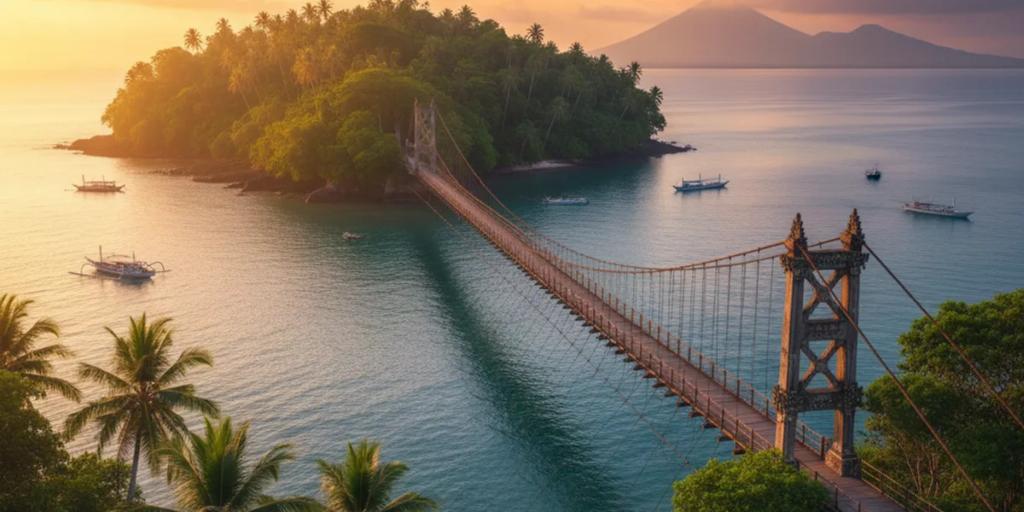
THE Batam shot is the Barelang Bridge, the cable-stayed first span of the six-bridge chain. Golden hour is its moment - shoot from the roadside viewpoints on the Batam side so the pylon and cables fan out against the sky, and go on a weekday if you want the frame to yourself. In town, the Welcome to Batam sign on the hill by Batam Centre makes the easy skyline-and-letters photo, with the Grand Mosque's pyramid roof nearby. For dinner-with-a-view, the kelong-style stilt seafood restaurants over the water photograph best just before sunset, lanterns on and boats behind. Nongsa's beach resorts deliver the pool-edge-facing-Singapore shot - on a clear evening the city's skyline glints across the strait.
Barelang is not a place name but an abbreviation: BAtam, REmpang, gaLANG, the islands its six bridges string together. The chain was built in the 1990s under B.J. Habibie, later Indonesia's president, as a showcase of local engineering. Batam is also a free trade zone, which is exactly why Singaporeans cross to shop and snack - and the influx has helped make it one of Indonesia's fastest-growing cities.
Batam's calendar moves to two rhythms. Ramadan and Eid (Hari Raya) shift each year with the Islamic calendar - daytime dining thins out during the fast, then the island fills with domestic travellers for the holiday. Chinese New Year is big here thanks to a large Chinese-Indonesian community, with lion dances in the malls and packed ferries from Singapore. The Batam International Culture Carnival, a costumed street parade backed by the national tourism calendar, recurs most years - dates move around, so check locally before planning a trip around it.
The case for Batam is value: massages, seafood feasts, golf rounds, and resort nights at prices that make Singapore wallets relax, all a short ferry from home with straightforward entry for most nationalities. The case against deserves honesty: Batam is not a postcard-beach destination - the sand-and-villa fantasy lives on Bintan next door - and the island is more industrial city than tropical idyll once you leave the resorts. Friday-evening and Sunday ferry peaks get crowded, and the terminal gauntlet of taxi touts wears on some visitors. Come for a cheap, well-fed, well-massaged weekend and Batam over-delivers; come expecting Bali and it will not.
Sometimes, and that is the trap. Near the north coast your phone may hold a Singaporean signal across the strait, billing you at whatever your plan charges there, then drop to nothing as you move inland. A plan on the Indonesian networks gives you steady coverage island-wide instead of a lottery.
Counters exist at Batam Centre, but Indonesian SIM registration requires your passport and the queues land exactly when you are also fending off taxi offers and finding your Grab pickup. An eSIM installed before departure skips the whole scene, and your home number stays active for banking codes.
Batam is on WIB, UTC+7 - one hour behind Singapore despite being visible from it. Phones set the clock from the network they attach to, so a device flip-flopping between Indonesian and Singaporean towers can jump an hour either way. Double-check before ferry check-in; the boats leave on Batam time.