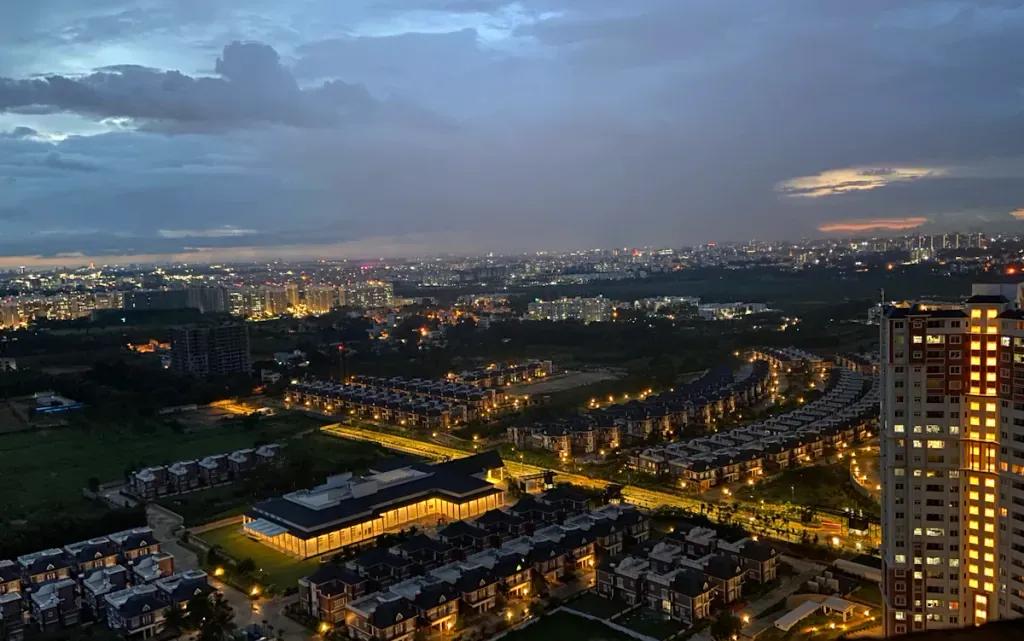
Bengaluru is India's tech capital, and it connects like one. Jio, Airtel and Vi all run dense 4G and 5G here - this is one of the best-covered cities in the country, which makes sense for a place where a third of the workforce seems to be on a video call at any given moment. Your eSIM rides one of these host networks, and across the central business district, Indiranagar, Koramangala, Whitefield and the airport corridor, fast data is simply the default.
Honest caveats, because even the tech capital has them. Peak-hour congestion is the real one: when a million commuters are stuck on the Outer Ring Road at 6pm, cell sites in the densest corridors slow down noticeably even at full bars. The old market lanes around KR Market and Chickpete can thin out between tightly packed buildings, and basements of malls and pubs sometimes go quiet. The Namma Metro's underground stretch through Majestic generally keeps a usable signal, but load your route before descending anyway.
- Namma Metro runs the Purple and Green lines through the centre, with newer lines opening in phases; QR tickets are bought in-app (there is even WhatsApp-based ticketing), so the fare gate itself is a data moment. The Blue Line to Kempegowda Airport is the city's most-watched construction project - the first airport stretch has been slated to open in phases through 2026, so check its status when you land rather than assuming it.
- Uber and Ola both operate cabs and autos, and locals increasingly swear by Namma Yatri, the open-source auto-rickshaw app born in this city. One heads-up: the famous Rapido bike taxis are currently off the road - Karnataka banned bike-taxi services in 2025 and courts have kept the ban in place.
- UPI QR codes are how this city pays, from darshini breakfast counters to craft-beer taprooms. Standard UPI needs an Indian bank account; the UPI One World wallet for foreign visitors exists but is not yet something to count on, so carry a card for restaurants and some cash for autos and street food - and data to locate an ATM.
- Swiggy started in this city, and ordering in is practically a civic activity - food delivery, groceries in minutes, the lot. On a longer work stint, these apps replace half your errands.
Kempegowda International Airport sits roughly 40 km north of the centre, and until the metro's airport line opens that distance is real: budget an hour to ninety minutes by taxi depending on traffic, or take the cheap, round-the-clock Vayu Vajra airport buses. The ride in is long enough that you will genuinely use your data - hotel messages, the first maps query, the "landed, in traffic obviously" text - so have the eSIM installed and tested before departure instead of gambling on airport Wi-Fi.
More than a beach destination, because Bengaluru trips skew workish: video calls between meetings, hotspotting a laptop from a cafe in Indiranagar, and heavy maps use while you reroute around traffic. A leisure visitor does fine on 1GB per 2-3 days; a business traveller hotspotting through even one daily video call should budget several times that. Buying a local SIM instead means India's KYC gauntlet - passport, visa, photographs, forms, and a wait before activation - which is a strange way to spend your first afternoon in a city built on software. The India eSIM guide compares the host networks if Bengaluru is one stop on a longer Indian route.
This is the city that earned an "air-conditioned by nature" reputation: light layers work nearly year-round, with a sweater or light jacket for evenings and a packable rain shell from June through November. Dress codes barely exist - Bengaluru is India's hoodie capital, and tech-casual passes everywhere from boardrooms to breweries. Temples are the exception: cover shoulders and knees at ISKCON and the Bull Temple, and leave shoes at the entrance.
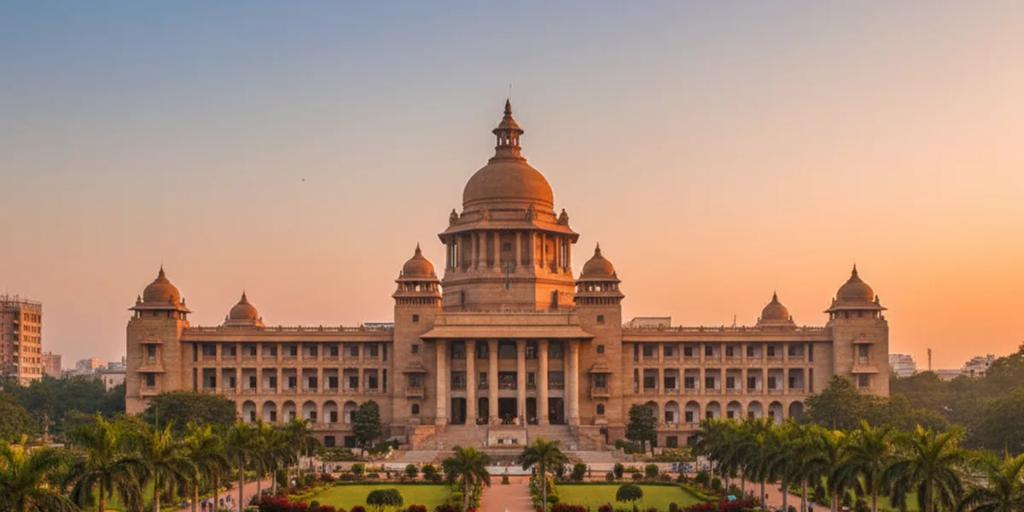
Vidhana Soudha, the colossal granite legislature, is illuminated on Sunday evenings and public holidays (roughly 6pm to 8:30pm) - shoot from across the road with the whole facade in frame; interiors need special permission. Lalbagh's Victorian glasshouse is best in soft morning light, especially during the Republic Day and Independence Day flower shows. Cubbon Park belongs to early mornings, when light filters through the rain trees. The Bull Temple's massive monolithic Nandi wants a wide lens from low down. For cafe-and-street colour, wander Church Street and Indiranagar's 12th Main. The classic day trip is Nandi Hills at sunrise - a genuine pilgrimage for the city's cyclists - and Mysore is doable in a day but honestly better overnight.
The city officially became Bengaluru on 1 November 2014, reclaiming its Kannada name. Legend traces that name to "benda kaalu uru" - town of boiled beans - after an old woman supposedly fed the humble dish to a lost Hoysala king; historians treat it as folklore, locals tell it anyway. On 5 August 1905, Bengaluru became the first city in India (and by most accounts in Asia) to light its streets with electricity. And India's space programme is run from here: ISRO is headquartered in Bengaluru.
Bengaluru Karaga, the city's oldest festival, follows the spring full moon of Chaitra (March-April; the 2026 procession fell on the night of 1 April) with a spectacular all-night procession from the Dharmaraya Swamy Temple. Lalbagh's twin flower shows bloom in the weeks around 26 January and 15 August. The Bengaluru Tech Summit (17-19 November 2026) fills the city's hotels with the industry. Ganesha Chaturthi animates neighbourhoods in August-September, and the season's true giant is next door: Mysore's Dasara in September-October is worth the trip.
The love: that weather, a food scene running from legendary dosa institutions to India's best craft-beer taprooms (the "pub capital of India" tag is earned), and real green lungs in Cubbon Park and Lalbagh. The gripes are equally real, and one towers over the rest: the traffic. Silk Board junction is a national meme for a reason, and a 10 km crosstown trip can take over an hour - locals plan their lives around it, and with live data so can you. Add perpetual construction (metro lines, flyovers, dug-up footpaths), summers that strain the city's water supply, and an airport that is simply far away, and you have a city best enjoyed by staying local to a neighbourhood each day.
Yes - this is one of India's best-connected cities, with dense 5G from Jio and Airtel across the central districts and tech corridors. The realistic risks are peak-hour congestion in the busiest corridors and data burn: hotspotting a laptop through back-to-back calls consumes far more than tourist use, so size your plan accordingly.
Only if you need an Indian number for local services. Visitor SIM registration means passport and visa copies, photos and an activation wait. A data eSIM activates before you even board the flight and keeps your home number reachable for banking codes - just confirm your phone is eSIM compatible first.
Not yet for the airport - the Blue Line's airport stretch has been targeted to open in phases through 2026, so check current status; until then it is the Vayu Vajra bus or a taxi for the 40 km ride. On the operating Purple and Green lines, signal is generally usable including the underground Majestic stretch, but buy your QR ticket and load directions while still above ground to be safe.