Guangzhou has been doing international commerce for over a thousand years as the port the world once knew as Canton, and its mobile infrastructure matches that ambition: China Mobile, China Unicom and China Telecom saturate the Pearl River Delta with 4G and 5G, and a travel eSIM connects through one of these local giants. Bars stay full from the Canton Fair halls in Pazhou to the arcaded old streets of Xiguan, and along every metro line, tunnels included. Coverage is a solved problem here. What trips visitors up is what sits behind the connection.
For the trade travellers who make up so much of Guangzhou's foreign traffic, the internet restrictions are a work problem, not just a holiday nuisance: Gmail, Google Docs, WhatsApp and most Western services are unreachable on local SIMs and on any Wi-Fi in the city, hotel and fairground networks included. Roaming travel eSIMs behave differently - the data session is normally carried back through infrastructure outside mainland China, so those apps tend to work as they do at home, no VPN involved. Exact routing depends on the plan, so treat a pre-installed VPN as cheap insurance; getting one after arrival is far harder. And a mapping footnote that matters in a city this dense: mainland China plots maps on its own GCJ-02 coordinate system, which is why the blue dot in some Western map apps drifts a block or two. Apple Maps corrects for it, and locals swear by Amap.
- Alipay or WeChat Pay first, everything else second. From dim sum teahouses to Shangxiajiu market stalls, payment is a QR scan; foreign Visa and Mastercard have linked to both wallets since 2023, but the onboarding and every payment happen live over data.
- The metro now takes your bank card. Since October 2025, Guangzhou Metro gates accept contactless Visa, Mastercard, Amex and JCB directly - a genuine rarity in mainland China, rolled out just before the Canton Fair. Alipay's transit QR code and station ticket machines remain the fallbacks.
- DiDi handles ride-hailing in English through the Alipay or WeChat mini-program, with translated driver chat - useful, because Guangzhou cab drivers rarely speak English and street names come in Cantonese and Mandarin flavours.
- Canton Fair logistics live on your phone: badge registration, hall maps, supplier follow-ups on WeChat. Exhibitors will add your WeChat within the first minute of a conversation, so have it working before you walk in.
Baiyun airport sits well north of town; Metro Line 3 runs from both terminals to the centre in roughly 45 minutes, and those new bank-card gates mean you can ride it straight off the plane with nothing but a contactless card. Airport Wi-Fi portals often want an SMS code sent to a Chinese number, a dead end for a visitor - so land with the eSIM already installed and switched on and skip the whole dance.
Plan higher than a typical city break, and higher still if you are here for business. Wallet apps, WeChat, camera translation of Chinese-only menus and constant navigation form the baseline; Fair visitors add the big one, tethering a laptop, since venue and hotel Wi-Fi cannot reach the Western services your email probably lives on. Hotspotting for work can burn 1-2GB in a single day on its own, so a generous or unlimited-style plan earns its keep here. Heading on to Hong Kong afterward, as many buyers do? It sits outside the mainland's internet rules and on a separate Hong Kong eSIM.
From May to September, dress for a steam room: the lightest breathable fabrics you own, plus an umbrella that will serve against both blazing sun and the sudden subtropical downpour. Carry a layer anyway - shopping malls, the metro and the Fair halls chill their air conditioning to near-arctic settings. Winter is short and mild but damp, so a mid-weight jacket suffices. During the late-winter huinantian weeks, when condensation slicks tiled floors, shoes with real grip are no joke. Business dress at the Fair is smart but practical; you will walk kilometres of hall.
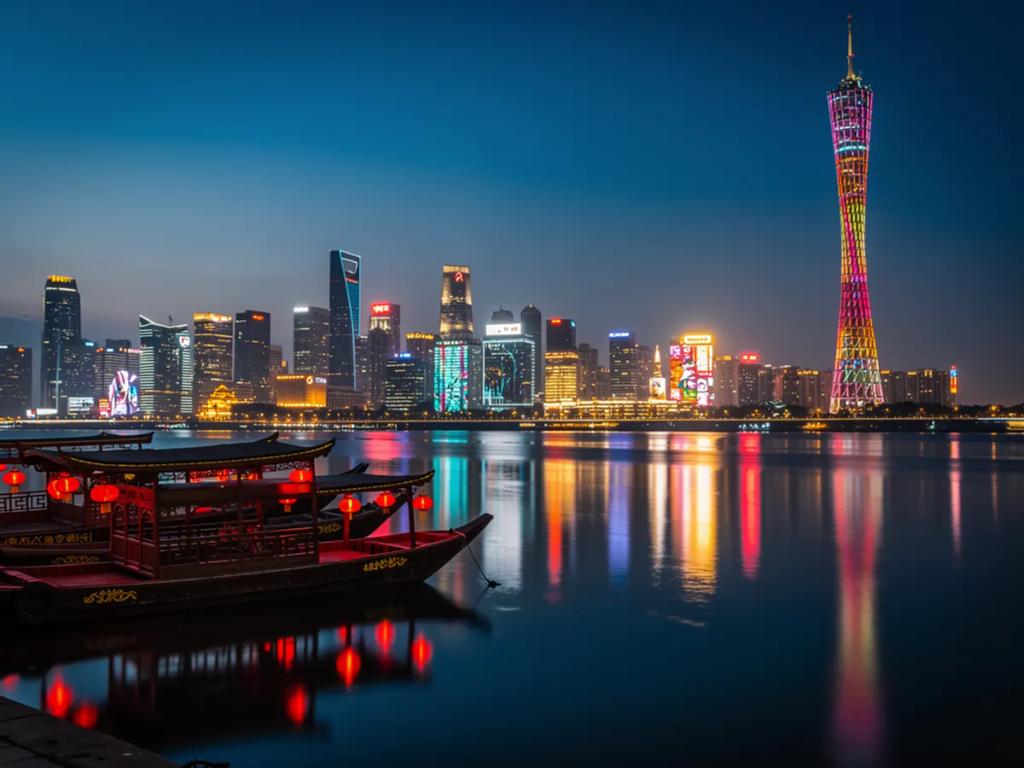
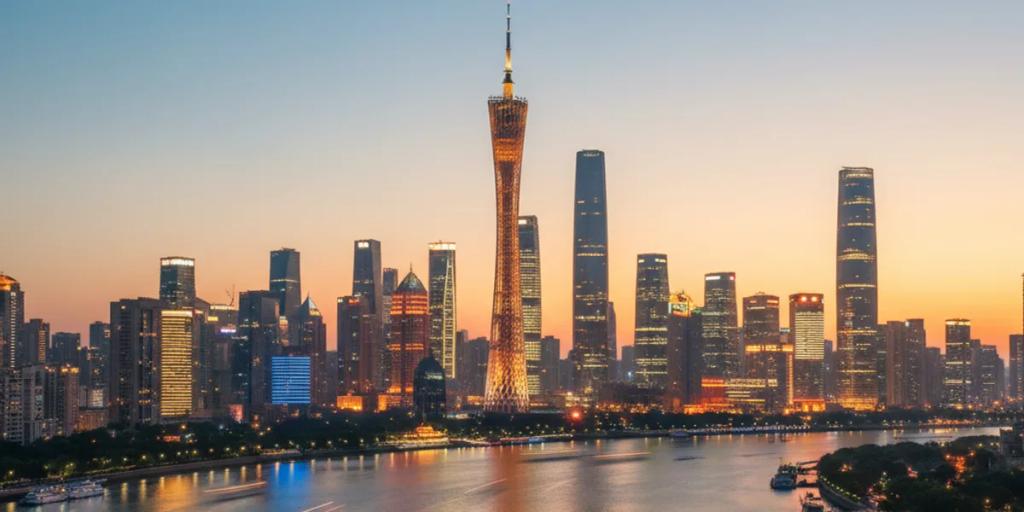
The signature frame is Canton Tower across the Pearl River at blue hour, when its LED skin cycles through colours against a still-bright sky - shoot from Haixinsha Island's riverfront or from Liede Bridge for a wider angle with the water in front. For the opposite view, Flower City Square lines up the Zhujiang New Town supertowers on one clean axis after dark. Go early to Shamian Island, where the colonial-era arcades and banyan shade are at their calmest and best-lit before mid-morning; and at the Chen Clan Ancestral Hall, point the lens up - the ceramic opera scenes crowding the roof ridges are the detail shot everyone misses. Drones over central Guangzhou are heavily restricted, so leave yours home.
Guangzhou is historic Canton, which is why the world's Chinese food vocabulary is so often Cantonese: dim sum and yum cha, the leisurely teahouse breakfast of small plates, grew up in this city's tea houses. Canton Tower was the tallest tower on earth when it opened for the 2010 Asian Games, holding the title until Tokyo Skytree overtook it in 2011; locals call its slimmed silhouette the "small waist". And Baiyun airport, currently back among the world's ten busiest, was briefly the single busiest on the planet in 2020.
The Canton Fair is the city's metronome: three phases each spring (mid-April to early May) and autumn (mid-October to early November) that fill flights, double hotel rates near Pazhou and pack the metro's Line 8 - check the fair calendar before booking even a pure leisure trip. In the days before Chinese New Year, Guangzhou stages its beloved flower fairs, street markets of kumquat trees and blossoms that define the festival here. Come early June, dragon boat crews race on the Pearl River and village waterways for the Duanwu festival.
The case for Guangzhou: arguably the best eating in China - a claim locals will defend to the death and most visitors leave believing - a cheap, vast, punctual metro, and the buzz of a city that trades with the whole planet while staying more easygoing than Beijing or Shanghai. The case against: the May-September humidity is genuinely punishing, English is thin on the ground and you are navigating between Cantonese and Mandarin, the blocked-apps friction annoys until your setup works, and during Fair weeks prices jump while hotels and flights strain at the seams.
Generally yes on your eSIM data, because roaming traffic is usually carried out through gateways beyond the mainland's restrictions - but never on the fairground or hotel Wi-Fi, which are ordinary Chinese networks where the blocks apply. The working habit for Fair week is simple: Wi-Fi off, eSIM on, and tether the laptop when email calls.
Yes - since October 2025 the gates take contactless Visa, Mastercard, American Express and JCB with a direct tap, no app or ticket needed. That makes Guangzhou one of the easiest metros in mainland China for a first-day arrival; Alipay's transit QR and single-journey tickets from machines still work if your card lacks contactless.
Usually not - Hong Kong and Macau are separate roaming zones on most plans, and their networks sit outside the mainland's internet restrictions entirely. If your trip crosses the Delta, pair this plan with a Hong Kong eSIM, or pick a regional plan that lists every stop on your route.