Kos punches above its size for connectivity. Greece's three networks - Cosmote, Vodafone Greece and Nova - all cover the island, and your eSIM rides one of them as its host network. The places tourists actually stay are the easy part: Kos Town, the harbourfront and the resort strips at Lambi, Psalidi, Tigaki, Marmari, Mastichari, Kardamena and Kefalos all sit on the coastal flats with solid 4G.
Head inland and uphill and it changes. The interior villages on the slopes of Mount Dikeos - most famously Zia, where half the island goes for sunset - sit in folded terrain where signal can drop to a bar or two, and it gets patchier still towards the Dikeos summit or around Old Pyli's ruins. None of it is a dead zone, but it is exactly where you will be relying on maps on an unfamiliar mountain road, so load your route while you are still on the coast.
One uniquely Kos quirk: the Turkish coast is only a few kilometres across the strait, and near the water your phone can quietly latch onto a Turkish network instead of a Greek one - which a Greece or Europe plan may not cover. If your phone shows Turkcell or Vodafone TR while you are sitting on a Kos beach, select a Greek network manually in settings.
- No ride-hailing to speak of - the apps that work in Athens are effectively absent on Kos. It is taxi ranks, a phone call, or your hotel arranging one, so save the taxi rank locations offline.
- Scooter, quad and bike rentals are how most people explore, and Kos is famously flat and cycle-friendly around the main town. An offline map of the island is the single best download you will make - see the interior note above.
- Ferry e-tickets: Blue Star Ferries and Dodekanisos Seaways connect Kos to the rest of the Dodecanese, and booking apps and QR tickets are the norm in high season when sailings fill up.
- Tap-to-pay is standard in Greece - card terminals are legally required in shops and restaurants - though beach loungers, small kiosks and some taxis still prefer cash.
Kos International Airport (the "Hippocrates") sits near Antimachia in the middle of the island, roughly 25 km from Kos Town. KTEL buses meet most arrivals and taxis queue outside, and the ride into town is exactly when the directions, transfer confirmations and "we landed" messages hit your plan - install the eSIM before you fly rather than gambling on airport Wi-Fi.
The short crossing to Bodrum is the classic Kos day trip, and it is the one that catches people out: you are leaving Greece and the EU. A Greece plan will not work in Turkey, so either treat it as an offline day or add a Turkey eSIM alongside - the Turkey network rundown covers what to expect. The Nisyros volcano trip from Kardamena is the opposite case: Nisyros is Greek, your plan keeps working, though expect thin signal down inside the Stefanos crater itself.
Kos is about four and a quarter hours from Manchester and Stansted, and two hours ahead of the UK all year. The Foreign Office warns of serious ambulance shortages on some Greek islands, so check your travel insurance covers medical evacuation, and of a high wildfire risk from April to October, when causing a fire is a criminal offence even if unintentional (gov.uk, updated 11 August 2026). Keep emergency alerts switched on on your phone.
Your UK plan: Greece is in every big UK network's Europe zone - included on O2, £2.72 a day on EE, £2.75 on Vodafone unless your plan has Euro Roam, and £2 or £2.75 on Three.
A Kos trip is navigation-heavy (scooter days, beach hunting) but streaming-light. For most travellers 1GB per 2-3 days covers maps, messaging, ferry bookings and beach photos; budget more if you upload video from every beach club. Plans top up from your dashboard mid-trip, and the Greece coverage guide compares the networks across the islands.
Daytime Kos is beach casual and nobody minds. Two exceptions: monasteries and churches expect covered shoulders and knees (carry a sarong or light shirt for the chapel stops on Mount Dikeos), and July-August evenings can turn surprisingly blustery when the meltemi blows - a light windproof layer earns its place in the bag. Since Kos is a cycling island, closed shoes you can pedal in beat flip-flops for exploring beyond your beach.
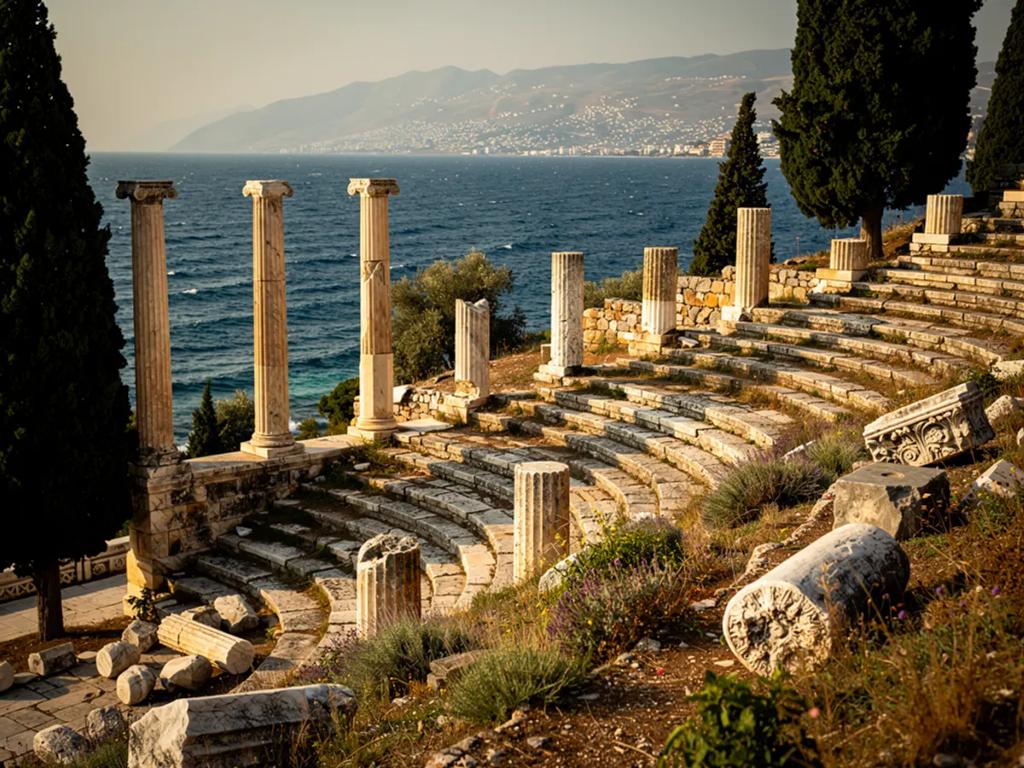
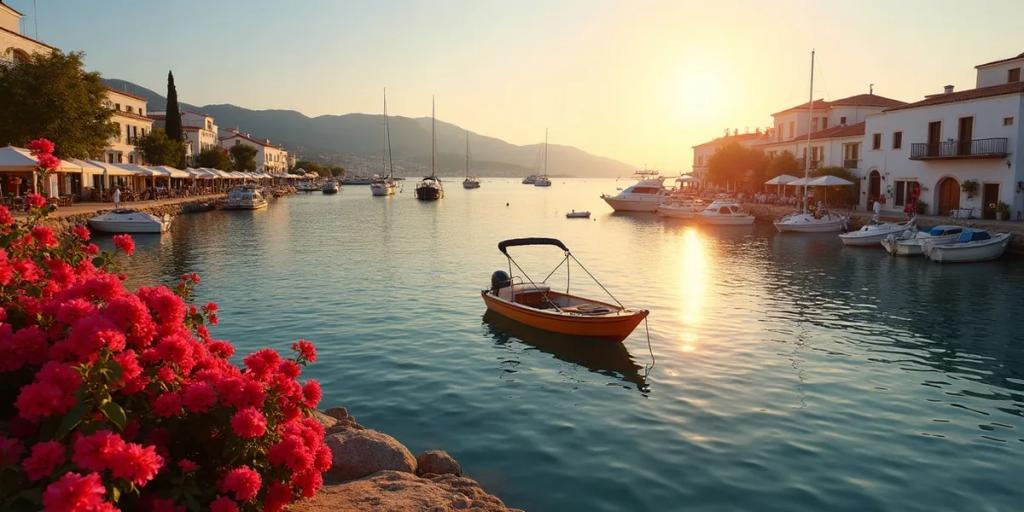
The Asklepion's terraces face east over the strait towards Turkey - go in the first hour after opening for soft light and empty stone staircases, and shoot from the lowest terrace upward to stack all three levels. Kos harbour delivers at golden hour: stand on the western quay so the Neratzia castle walls and the moored boats catch the low sun together. Zia's sunset is famous for a reason, and so are its crowds - arrive 45 minutes early if you want a taverna table facing west. The Therma hot springs cove, where the spring steams into the sea inside a boulder ring, photographs best in the morning before the crowds arrive.
Hippocrates, the father of medicine, was born on Kos around 460 BC, and the plane tree named for him still shades a square in Kos Town - botanists reckon the current tree is a centuries-old descendant, not the 2,400-year-old original. The island's unusually flat coastal plain is exactly why bikes rule here. And the ancient Asklepion was a healing sanctuary that worked like an early hospital, drawing patients from across the Aegean.
Hippocratia, the island's summer-long cultural festival, spreads concerts, theatre and exhibitions from roughly June into autumn - programmes vary year to year, so check locally. Greek Orthodox Easter is movable (usually April) and is the biggest date on the calendar, with midnight services and lamb on every spit. August 15, the Assumption, is the peak of Greek high season - book everything ahead that week.
The love: an island flat enough to actually cycle, long sandy family-friendly beaches, and serious ancient ruins without Athens-scale crowds or queues. The gripes are just as real: stretches of the coast are wall-to-wall package resorts, the meltemi can sandblast your beach day for a week straight in high summer, Kos Town's bar streets get loudly boozy in August, and outside May-October much of the island simply shuts. If you want untouched-Greece romance, this is not that island; if you want easy, cheap and cyclable, it very much is.
No - Bodrum is in Turkey, outside the EU and outside a Greece plan's coverage. Either go offline for the day, use café Wi-Fi in Bodrum, or install a separate Turkey eSIM before you board the ferry.
Zia itself has coverage, but it sits in the folds of Mount Dikeos and signal is noticeably weaker than on the coast, especially on the drive up and at the further viewpoints. Download the route and anything you need before leaving Kos Town.
Only if you want a Greek phone number. Buying a physical SIM in Greece requires passport registration at a shop, with fewer options on an island than in Athens. An eSIM installed before arrival skips the queue and keeps your home number live for bank codes.