Orange, SFR, Bouygues and Free cover Nice, and your eSIM will use whichever is strongest. France is in the EU, so an EU or EEA SIM works on its home allowance, and coverage along the coast is comprehensive. Our Paris guide covers French transport ticketing and the pickpocket question on the metro; our Corsica guide covers the ferries and the mountain roads. Nice's own useful fact is that it is not really a destination so much as the front door to a coastline, and the cheapest way through that door is a regional train most visitors never look at.
This is the single most useful thing to know here, and it saves both money and a great deal of parking misery.
The regional train line hugs the coast from Cannes through Antibes, Nice, Monaco and Menton to Ventimiglia just over the Italian border.
It is cheap. Nice to Monaco is about twenty minutes and costs a few euros. Nice to Cannes is around half an hour. Menton is forty minutes.
It is frequent - several trains an hour through the day - and the stations are central in each town, unlike the car parks.
The views are the point. Long stretches run right along the water, and the Nice-to-Menton section is one of the more scenic short rail journeys in Europe for the price of a coffee.
So do not hire a car unless you are going into the mountains. Coastal parking in Monaco, Antibes and Villefranche in season is expensive and scarce, and the Basse Corniche crawls in August.
Buy at the machine or on the app, and validate before boarding - French regional trains still expect it and inspectors are frequent.
Monaco is a separate country and the train ignores that entirely, but your phone bill does not. Monaco is in neither the EU nor the EEA, so Roam Like at Home does not apply there and most European plans exclude it - sometimes at rates high enough to matter after an hour. Your handset will move onto Monaco Telecom on its own as the train comes round the headland, which is how people find out. Lock your network manually to a French operator before you go, or turn data off for the day.
Nice only became French in 1860, transferred from the Kingdom of Sardinia after a plebiscite. Before that it was Nizza, and had been Italian-speaking for centuries.
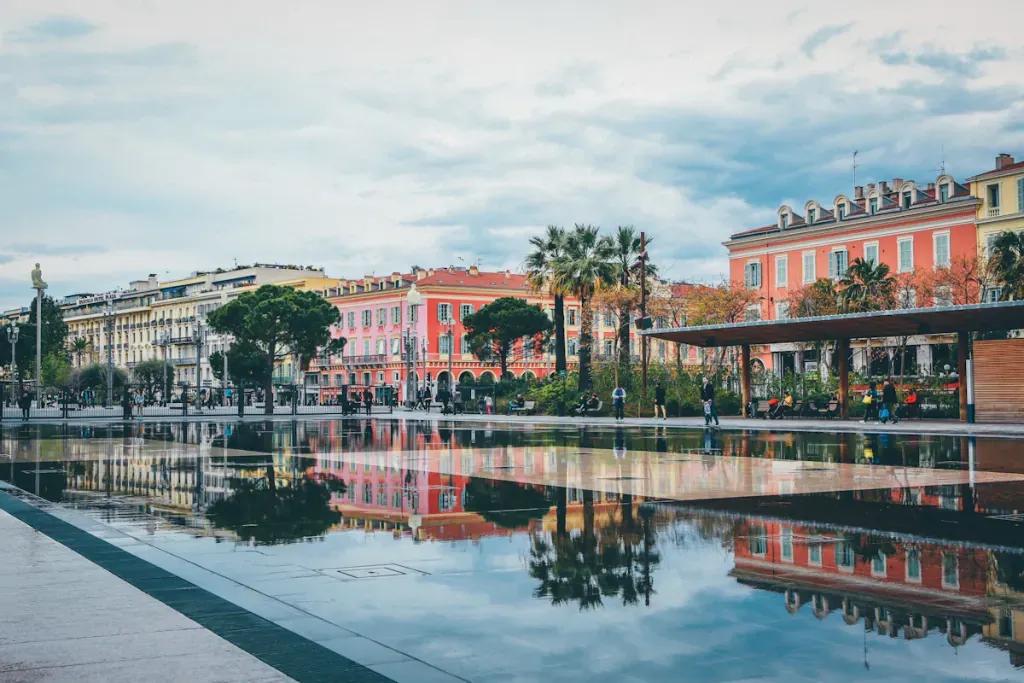
The old town shows it. Vieux Nice is Genoese and Piedmontese in plan and colour - tall ochre buildings, narrow lanes, shutters, washing lines - and looks nothing like a French provincial city.
The food is properly Niçois, which is its own cuisine rather than a regional French one. Socca, a chickpea-flour pancake cooked on a huge copper tray and eaten hot with pepper. Pissaladière, an onion tart with anchovy. Pan bagnat, the salade niçoise in a bun and squashed. Petits farcis, stuffed vegetables.
The salade niçoise argument is real. Purists insist on no cooked vegetables - no potato, no green beans - and will tell you so.
Nissart, the local dialect, is Occitan-Ligurian and survives on street signs, which are bilingual throughout the old town.
The Italian border is half an hour away by that same train, and the Friday market at Ventimiglia is a Nice institution.
Worth stating clearly, because photographs never show it and people arrive genuinely surprised.
There is no sand. Nice's beach is galets - smooth grey stones, some the size of a fist, along the whole Baie des Anges.
Walking on them barefoot is unpleasant and getting in and out of the water is awkward.
Bring or buy beach shoes. Every shop on the promenade sells them, which tells you how often this is discovered on arrival.
A thick mat or a lounger rather than a towel. A towel on galets is not padding.
The water is superb, though - clear, deep quickly, and clean. The swimming is genuinely better than at many sandy resorts.
If you want sand, Antibes, Juan-les-Pins and Villefranche have it, and all are a short train ride.
The coast is comprehensively covered, trains and tram included.
The Corniche roads above the city - the Basse, Moyenne and Grande - have short gaps in the tunnels and cuttings, which matters if you are navigating.
The arrière-pays, the backcountry of hill villages behind the coast, thins quickly. Eze is fine; go further into the Alpes-Maritimes towards Vence, Gourdon and the gorges and it drops out in the valleys.
The Mercantour National Park, two hours north, has very little.
On boat trips along the coast, coverage holds close in.
Approaching the Italian border, your handset may register on an Italian network - both in the EU, so no surcharge, but a country-specific plan may behave oddly.
Nice Côte d'Azur (NCE) is the third busiest airport in France and sits on reclaimed land right on the water - the approach over the bay is famous and the walk from the terminal to the sea is about a minute.
Tram line 2 runs from both terminals into the centre and to the port in around 25 minutes, for the price of a normal ticket. It is the obvious way in and a great many arrivals still queue for taxis instead.
It is the gateway for the whole Riviera - Monaco, Cannes and Saint-Tropez traffic all funnels through here, which is why it feels busier than a city of 340,000 warrants.
Helicopters to Monaco exist and take seven minutes, if you would like to see how the other half arrives.
- SNCF Connect, for the TER coastal line - the single most useful app in this guide.
- Lignes d'Azur, for the trams and buses, on which one ticket covers a lot of ground.
- Maps, with offline copies for the backcountry.
- A translation app is optional. English is widely spoken along this coast, more than in inland France.
- Cards work everywhere, contactless is standard, and the trams take contactless directly.
As above: the tram from the airport is cheap, quick and frequent.
By train, Nice-Ville connects along the coast in both directions, and TGV services reach Paris in about six hours - the plane is quicker but the train arrives in the centre.
By road, the A8 runs behind the city, and it is heavily congested in July and August.
Cruise ships dock at Villefranche, one bay east, and tender passengers ashore.
Very little. Wifi is everywhere, the city is compact, EU visitors are on their home allowance, and you will spend most of the trip on a train or a beach. Download offline maps only if you are heading into the hills.
Beach shoes, for the reason above.
Light summer clothes, and something for the evening - the Riviera dresses, particularly in Monaco and Cannes, and some restaurants will notice.
A layer for winter, which is mild but breezy off the sea.
Comfortable shoes for the old town's lanes and for the climb up Castle Hill, which is worth it and is a genuine climb.
Swimwear stays at the beach. Nice fines people for walking through the city in it, as do several towns along the coast.
The Baie des Anges from Castle Hill, looking down the whole curve of the promenade - go up by the free lift at the eastern end rather than the steps.
The blue chairs on the Promenade des Anglais, which are the city's signature object.
Vieux Nice's Cours Saleya market, flowers in the morning and antiques on Mondays.
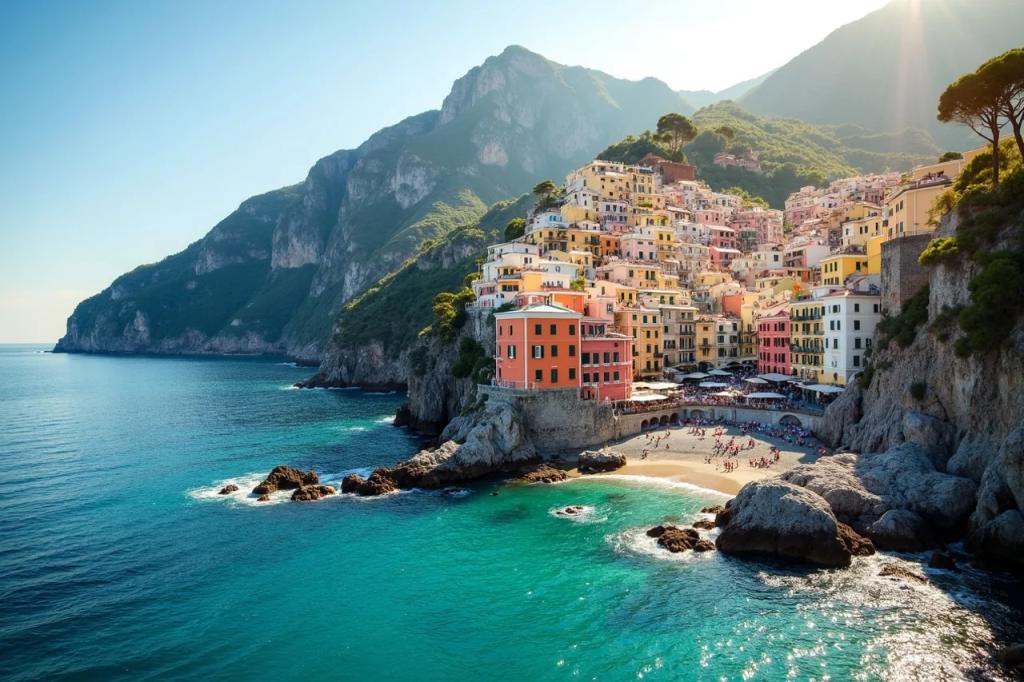
Villefranche-sur-Mer, one bay east, whose harbour is the postcard version of the Riviera.
Eze village, a village perché clinging to a cliff above the sea, twenty minutes away.
Monaco's harbour, from the Rock, twenty minutes by train.
The Matisse and Chagall museums, both in Cimiez above the city, both excellent and both quiet.
Menton's old town, at the Italian end, stacked in ochre and pink.
Nice became French in 1860, and the old town's Italian character is not a stylistic choice - it is what the city was.
The Promenade des Anglais is named for the English. The British colony that wintered here funded its construction in the 1820s, which is why an English name sits on a French seafront.
Socca is served on huge copper trays and eaten standing with black pepper, and the vendors in the Cours Saleya shout when a new one comes out of the oven.
Nice Carnival is among the oldest in the world, documented since the thirteenth century, and its flower parades throw tens of thousands of stems into the crowd.
The airport is built on reclaimed land in the Baie des Anges, which is why the approach is over water and the runway ends at the sea.
And the salade niçoise has a defended definition, complete with a local society that will explain at length why your version is wrong.
Nice Carnival, in February, two weeks of parades and the bataille de fleurs, and one of the largest carnivals in Europe.
The Fête du Citron in Menton, at the same time, which builds enormous sculptures out of lemons and oranges.
The Monaco Grand Prix, in May, twenty minutes away and impossible to ignore.
The Cannes Film Festival, also May, half an hour the other way.
The Nice Jazz Festival, in July.
May, June, September and October are the best months. August is hot, full and expensive, and the whole coast is in traffic.
The love: Nice gives you a genuinely characterful old town, a world-class light and setting, 300 days of sun, excellent and specific food, two superb small museums, and a train line that puts Monaco, Cannes, Menton and Italy within forty minutes for a few euros. It is far cheaper than the resorts it connects and considerably more real than any of them.
The complaints are consistent. The beach is stones, and that alone ruins it for some. The Promenade is a busy road as well as a seafront. It is expensive by French standards in season. August is overwhelming, on the coast and in the traffic. And the city has a memorial to a 2016 attack on the Promenade that visitors should be aware of and treat with the seriousness it deserves.
Come in May or October, buy a carnet of TER tickets on the first morning, eat socca standing up in the Cours Saleya, and take the train to Menton for a day.
In France, yes, without qualification. In Monaco, no - and this is the one thing in this guide that costs money if you get it wrong. Monaco is in neither the EU nor the EEA, so Roam Like at Home does not cover it and most European plans treat it as out-of-zone. Your handset switches to a Monegasque network by itself, usually without you noticing, so lock your phone manually to a French operator for the day trip or check your tariff before you go. Our Geneva guide describes the same trap on the Swiss border.
The TER regional train. It runs several times an hour from Cannes through Nice to Menton and Ventimiglia, costs a few euros a hop, stops in the centre of each town, and follows the water for much of the way. It is far better than hiring a car, and coastal parking in season is both scarce and expensive.
No. Nice's beach is large smooth pebbles along its entire length. Bring beach shoes and a thick mat rather than a towel - the water is excellent, but the entry is awkward barefoot. Antibes, Juan-les-Pins and Villefranche have sand and are a short train ride.
In the Corniche tunnels above the city, and in the backcountry - the hill villages and gorges of the Alpes-Maritimes thin out quickly once you are past Eze. The coastal strip, the trams and the trains are all well covered.