Oslo runs on Telenor, Telia and Ice, and your eSIM rides one of them as its host. Norwegian networks are excellent - among the best-covered countries in Europe relative to how empty most of it is - with comprehensive 4G, wide 5G and signal reaching remarkably far into the mountains and along the fjords. There is a roaming question here, and the answer is the opposite of the one for Switzerland.
This trips people up in both directions, so to be precise about it:
Norway is not an EU member. It is a member of the EEA, and Roam Like at Home covers the EEA. So an EU or EEA SIM roams in Norway on its domestic allowance, with no surcharge, exactly as it would in Spain or Germany.
That makes Norway the useful counterexample to Switzerland, which is in neither and where the same SIM can bill at painful out-of-zone rates. Two non-EU countries in western Europe, two completely different outcomes, and the difference is EEA membership.
- From the EU or EEA? Your plan covers Norway. Iceland and Liechtenstein are also EEA and also covered.
- From the UK? Post-Brexit policies vary by operator - check yours.
- From outside Europe? A travel eSIM as usual.
Note that Norway keeps the krone, not the euro, despite the EEA membership. Currency and roaming follow different rules here.
Norway has gone further from cash than almost anywhere. Cash is legally acceptable but genuinely unusual, and many businesses no longer handle it at all.
Contactless cards work everywhere - transport, museums, kiosks, the smallest coffee stand.
Vipps is the Norwegian payment app, near-universal among Norwegians and requiring a Norwegian bank account and national ID number, so a visitor cannot use it. This is the same pattern as MobilePay in Denmark and Pix in Brazil: you will watch everyone pay by phone while you tap a card, and the card works perfectly.
Bring a card without foreign transaction fees. You may not touch a krone note all week.
The fjords and the mountains. Coverage in Norway follows the valleys, the roads and the settlements, which is most places you will go. Once you are up on a plateau or deep in a side fjord, it stops. The Bergen railway - one of the great scenic rail journeys - crosses the Hardangervidda and loses signal for stretches.
Allemannsretten and the outdoors. Norway's right to roam lets you walk and wild camp on uncultivated land almost anywhere, which is a genuinely wonderful thing and also means it is very easy to be somewhere with no coverage and no one nearby. If you are hiking, tell someone your route.
The metro tunnels in central Oslo are patchy in places.
Winter darkness is not a connectivity issue but it is a practical one: in December it is dark by mid-afternoon, which changes how much of the day is usable for anything outdoors.
Oslo itself is thoroughly covered and easy.
Worth stating plainly, because it is one of the most common disappointments.
Oslo is too far south for reliable aurora. It happens occasionally during strong solar activity, but the city's light pollution and latitude make it a poor bet. The aurora destinations are Tromsø, the Lofoten islands and Alta, far to the north - a separate flight and a separate trip.
If northern lights are the goal, plan the trip around them rather than hoping Oslo delivers.
- Ruter, for Oslo's integrated transport - metro, tram, bus and the ferries to the islands in the fjord, all on one ticket.
- A rail app for onward travel; the Oslo-Bergen line should be booked ahead for the cheap fares.
- A weather app, and Norwegians universally use yr.no, run by the national meteorological institute, which is unusually good.
- Maps, and offline versions if you are heading anywhere rural.
- A translation app is optional. English is spoken to an extremely high standard by essentially everyone.
Oslo Gardermoen (OSL) is about 50 km north. The Flytoget airport express reaches the central station in around 20 minutes, and the ordinary regional trains take a little longer for noticeably less money - both are frequent and comfortable.
Be aware that some budget airlines use Torp (TRF), over 100 km away and marketed as Oslo. Check which airport your flight actually serves.
The city centre is compact and walkable, and the transport works.
Not much. Free wifi is widespread and the city is small.
For a week, under 1GB is realistic. Size up if you are heading into the fjords and want maps and navigation running, since that is where offline preparation matters most. Plans top up from your dashboard.
Norway has a saying about there being no bad weather, only bad clothing, and the country means it.
Proper waterproofs and layers, in every season. Summer in Oslo can be warm and can also be 12C and raining.
Serious winter kit from November to March - insulated coat, hat, gloves, and boots with grip. The pavements ice over and studs or grippers are sold everywhere for a reason.
Something for long summer evenings, when the light lasts until nearly midnight and people stay out.
Walking or hiking boots if you are doing anything outside the city - Norwegians go into the forest at the weekend as a matter of course, and Oslo's marka forest starts at the end of the metro line.
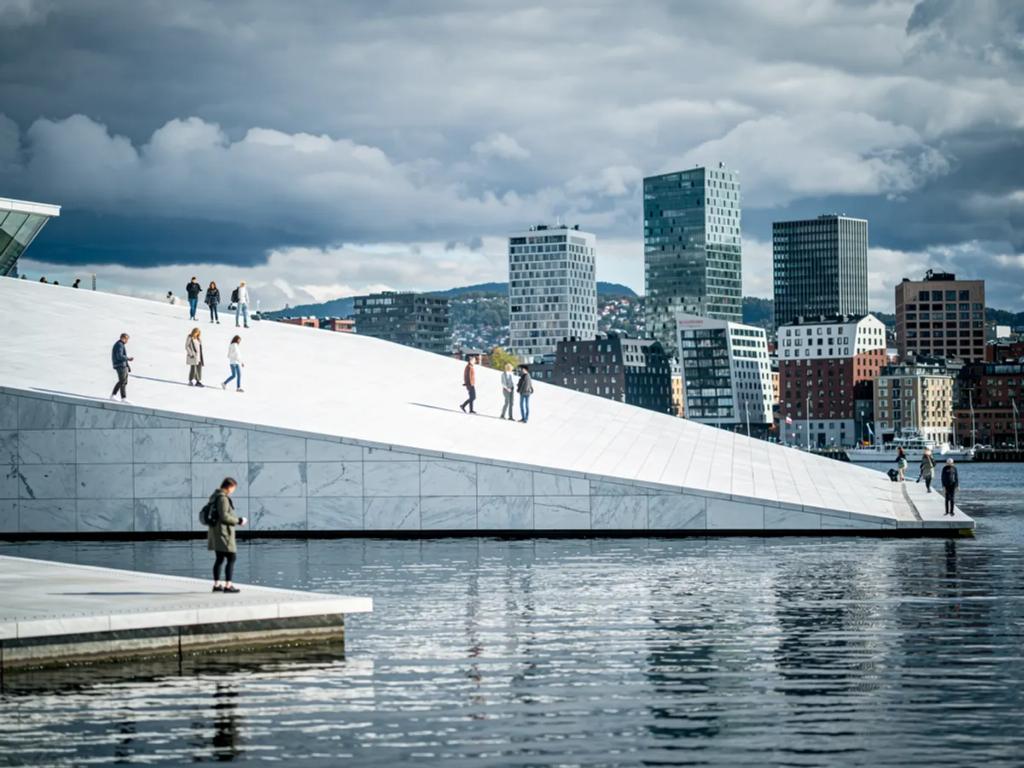
The Opera House, whose sloping marble roof you can walk up, with the fjord on one side and the city on the other. Best at sunset.
Vigeland Sculpture Park, over 200 bronze and granite figures by a single sculptor, free and open always - the Monolith and the Angry Boy are the famous ones.
Holmenkollen ski jump, reachable by metro, with a view over the whole city and fjord.
The Fram Museum, which holds the actual polar ship, and the Kon-Tiki raft next door.
Aker Brygge and Tjuvholmen at blue hour, the waterfront redevelopment with the Astrup Fearnley museum.
The fjord islands - Hovedøya and Gressholmen - a short public ferry on an ordinary transport ticket, and the best-value trip in the city.
Note that the Viking Ship Museum has been closed for a major rebuild, reopening as the Museum of the Viking Age - check its status before planning around it.
The Nobel Peace Prize is awarded in Oslo, alone among the Nobel prizes, which are all presented in Stockholm. Alfred Nobel never explained why.
Allemannsretten, the right to roam, is enshrined in Norwegian law and lets anyone walk, ski and camp on uncultivated land - a legal right, not a courtesy.
Norway has among the highest electric vehicle adoption in the world, and the streets are noticeably quiet as a result.
Oslo's marka forest is protected by law and covers a large share of the municipality - you can take the metro to a trailhead and be genuinely in forest in half an hour.
And alcohol is sold through Vinmonopolet, a state monopoly with limited opening hours, which surprises visitors looking for a bottle of wine on a Sunday. There is none.
Constitution Day, 17 May, is the big one - the whole country in national dress, children's parades, and Oslo entirely given over to it. It is a wonderful day to be here and accommodation is booked far ahead.
The Holmenkollen Ski Festival in March.
Øya Festival in August, in the Tøyen park.
The Nobel Peace Prize ceremony, 10 December.
Summer, June to August, has extraordinary daylight and is when the city lives outdoors; winter is dark and cold and is for skiing, which starts at the end of the metro line.
The love: Oslo is a small, calm, handsome capital wedged between a fjord and a forest, and the access to nature is unlike any other European capital - metro to a ski trail, ferry to an island, both on a city transport ticket. The museums are outstanding and specific, the waterfront redevelopment is genuinely good architecture, and the whole city is easy to be in.
The complaints are consistent. It is extremely expensive - among the priciest cities in the world, and eating and drinking out is the part that shocks people. Winter is dark, with about six hours of daylight in December. It is quiet, and visitors wanting nightlife or bustle find it reserved. It is small: two or three days covers the city. Alcohol rules frustrate people. And the northern lights are not here, which disappoints those who assumed otherwise.
Use it as the start of a fjord trip, take the Bergen railway, walk the Opera House roof, and go in late May or June for the light.
Yes. Norway is not in the EU but is in the EEA, and Roam Like at Home covers the EEA - so an EU or EEA SIM roams on its domestic allowance with no surcharge. This is the opposite of Switzerland, which is in neither and where the same SIM can bill at high out-of-zone rates. UK operators vary post-Brexit.
No - the Norwegian krone, despite EEA membership. Roaming and currency follow different rules here. Norway is also among the most cashless countries in the world, so a contactless card covers essentially everything.
Realistically no. Oslo is too far south and too lit; aurora appears only occasionally during strong solar activity. For a reliable chance you need Tromsø, Lofoten or Alta, well to the north - a separate trip.
Along the roads, in the villages and on the main rail lines, generally yes - Norwegian coverage is better than the terrain suggests. On the plateaus, in side fjords and out on the hiking routes, no. If you are walking under the right to roam, download maps and tell someone your route.