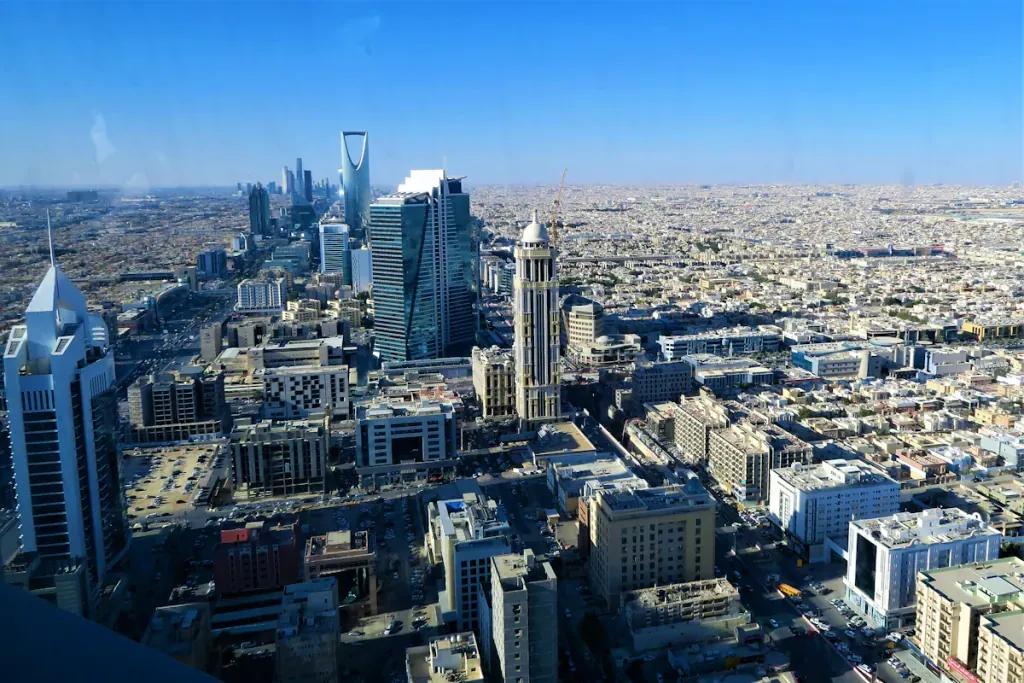
STC, Mobily and Zain cover Riyadh, and your eSIM will attach to one of them. This is worth saying plainly: Saudi Arabia has some of the fastest mobile networks in the world, consistently near the top of global speed rankings, and 5G coverage across Riyadh is excellent. Our Medina guide deals with the pilgrimage cities, which operate under entirely different rules. Riyadh does not - anyone with a tourist visa can come here, and until very recently almost nobody could.
Saudi Arabia went from being effectively closed to leisure travel to issuing tourist visas in minutes, and a great deal of what is written online predates that.
The tourist e-visa launched in September 2019. Citizens of over sixty countries can apply online or get one on arrival, typically in a few minutes, for stays of up to 90 days.
It is valid across the Kingdom except Mecca, which remains closed to non-Muslims. Riyadh, Jeddah, AlUla and the rest are open to any visa holder.
Foreign women are not required to wear an abaya. This changed with the same 2019 reforms, and the hijab is not required either except when entering a mosque.
What is expected is modesty, for everyone. Shoulders to below the knee, loose rather than tight, opaque rather than sheer. Men wear long trousers. That is the whole rule in practice.
Enforcement moved to the regular police under the 2019 Public Decency Regulations, away from the religious police whose role people still ask about. In Riyadh you will not be approached about your clothing if you are dressed as above.
Women have been able to drive since 2018, and unaccompanied women travellers can book hotels independently.
Alcohol remains prohibited, entirely and without a tourist exception. Do not bring it, and note that the penalties are serious.
Riyadh is more conservative than Jeddah and considerably more so than AlUla's tourist developments. Dress a notch more carefully here than you would on the Red Sea coast.
Riyadh is one of the largest construction projects on earth, and it affects a visit in practical ways.
The Riyadh Metro opened in late 2024 after years of building - six lines, driverless, air-conditioned, and it has transformed a city that had no public transport at all. Use it; the alternative is traffic.
Vision 2030 projects are everywhere: Diriyah's restoration, King Salman Park, Qiddiya, and the Mukaab cube in New Murabba. Some are open, many are not, and hoardings are a permanent feature of the streetscape.
Check what is actually open before building a day around it. Opening dates here have moved repeatedly, and announcements are made a long way ahead of completion.
The city is built for cars. It sprawls enormously, blocks are long, and there is very little shade. Outside the metro corridors, ride-hailing is how you move.
Uber and Careem both operate and are inexpensive.
Summer here is not a matter of discomfort. Riyadh sits above 45C for weeks and can reach 50C, in a desert with no humidity to soften it but also no relief.
Life moves to the night. Shops, restaurants and malls stay open late, families come out after dark, and the middle of the day is dead. Adopt the local schedule rather than fighting it.
Everything indoors is air-conditioned hard. You will move between 48C and 20C repeatedly, which is its own kind of tiring.
Winter is the season. From December to February the weather is genuinely delightful - warm days, cool evenings, and the desert is at its best.
Rain floods the roads when it comes, because the city drains poorly and the ground does not absorb. A downpour can strand traffic for hours.
Drink far more water than feels necessary, and do not plan outdoor sightseeing between eleven and four in summer.
Riyadh itself is exceptionally well covered, metro included - the networks here are among the best in the world.
The Edge of the World (Jebel Fihrayn), about 90 minutes northwest, has no coverage at the escarpment and patchy service on the approach. This matters more than usual: the last stretch is unmarked desert track, vehicles get stuck, and people have needed rescuing. Go with a guide or in a convoy, take water, and tell someone your plan.
The desert generally follows the same rule - highways are covered, and off them there is nothing.
Diriyah is well served, being a restored district on the city's edge.
The road to AlUla is long and mostly covered; AlUla itself is fine in the town and thin in the canyons.
The riyal is pegged to the dollar, so the rate does not move.
Saudi Arabia is close to cashless. Cards and contactless work everywhere including taxis, and mada is the domestic scheme that foreign cards sit alongside without difficulty.
Prayer times close shops briefly, several times a day. Malls and restaurants pause for roughly 20 to 30 minutes each time. It is much less disruptive than it used to be, but if a shutter comes down while you are mid-purchase, that is why.
Friday is the holy day, and the weekend runs Friday and Saturday. Mornings on Friday are quiet.
During Ramadan, eating, drinking or smoking in public during daylight is not done, including by visitors, and this is taken seriously. Hours shift dramatically and the city comes alive after sunset.
- Uber and Careem, which are how the city moves.
- The Riyadh Metro app or a transit app, now that there is a metro.
- Maps with offline copies for any desert trip, and specifically for the Edge of the World.
- A prayer times app, which is how you predict the short closures.
- A translation app. Arabic is the language; English is widely spoken in business, hotels and by younger Saudis, and signage is bilingual.
King Khalid International (RUH) is about 35 km north of the centre, with a substantial expansion underway.
Uber and Careem work from the terminal, as do official taxis.
The metro reaches the airport, which is new and makes for a considerably cheaper arrival than it used to be.
The e-visa is quick but apply before you fly rather than relying on arrival processing; check that your nationality is eligible.
Budget 30 to 45 minutes to the centre outside peak.
A moderate plan is plenty, and the network will not be your limit - speeds here are exceptional. Ride-hailing and maps run continuously given the distances. The one thing worth preparing is offline mapping for a desert day.
Modest, loose and covering shoulders to below the knee, for both men and women. That is the whole requirement.
Women do not need an abaya, though many visitors find a loose long dress or an abaya practical in the heat and unremarkable to wear. A scarf in the bag for mosque visits.
Men: long trousers. Shorts are not worn by adults in public here.
Light, loose, natural fabrics in summer - covering up is cooler than exposing skin in this climate, which is why the local dress looks the way it does.
A warm layer in winter, when desert nights drop sharply.
Sunglasses and a hat, always.
The Kingdom Centre sky bridge at dusk, looking down the length of the city - and the tower itself, with its inverted arch, from the street.
Diriyah's At-Turaif district, UNESCO-listed mud-brick palaces of the first Saudi state, floodlit after dark.
The Edge of the World, where the Tuwaiq escarpment drops several hundred metres to a plain that runs to the horizon. Go for sunset, with a guide.
Al Masmak Fortress, the mud-brick fort at the centre of the old city and the founding story of the modern state.
The camel market at Al Nahda, north of the city, early in the morning.
Wadi Hanifah, the restored valley park running through the city, which is where Riyadh goes to walk.
Souq Al Zal in the old quarter, for carpets and antiques.
King Abdullah Financial District, for the architecture, now that the metro reaches it.
Riyadh means "the gardens", from the oases that once sat where the city is - which is either poignant or funny depending on the month you visit.
Diriyah was the capital of the first Saudi state, founded in the fifteenth century, and its mud-brick At-Turaif district is a UNESCO World Heritage Site now at the centre of a very large restoration.
Saudi Arabia has among the fastest mobile networks in the world, regularly placing in the global top five for mobile download speeds - a striking statistic for a country most people do not associate with connectivity.
The Rub' al Khali, the Empty Quarter, is the largest continuous sand desert on earth and lies in the south of the country.
The tourist visa is barely older than the pandemic. Before September 2019 there was essentially no way to visit Saudi Arabia as a tourist, which is why so little reliable travel writing about it exists.
And Riyadh had no public transport at all until the metro opened in late 2024, in a metropolitan area of some seven million people.
Riyadh Season, running roughly October to March, an enormous state-backed entertainment festival - concerts, sport, shows and installations across purpose-built zones. It has changed what a winter visit to the city looks like.
Founding Day, 22 February, and National Day, 23 September, both marked substantially.
Ramadan, when the daily rhythm inverts completely and the nights are the best time to be out.
Eid al-Fitr and Eid al-Adha, both major, both moving.
December to February is the season in every sense: the weather is superb and Riyadh Season is running.
The love: Riyadh is one of the few places where you can watch a country reinvent itself in real time, and visitors who arrive curious rather than sceptical tend to be genuinely surprised. Diriyah is a serious heritage site, the Edge of the World is spectacular, the food scene has exploded, the networks and infrastructure are excellent, and Saudi hospitality towards guests is real and immediate. It is also almost entirely free of other tourists.
The complaints are consistent and some are fundamental. The summer heat makes half the year impractical. The city sprawls and has little that is walkable. There is no alcohol, which for some travellers is simply a dealbreaker. Much of it is a building site. The conventional sightseeing is thin compared with the effort of getting here. And visitors have their own views on the country's politics and human rights record, which is a matter for each traveller to weigh rather than something a connectivity guide can settle.
Come between December and February, use the metro, book the Edge of the World with a guide for sunset, and give Diriyah a full evening.
Yes to both. Saudi Arabia has issued tourist e-visas since September 2019 to citizens of over sixty countries - applied for online, usually granted in minutes, valid for stays up to 90 days and across the whole Kingdom except Mecca. Before 2019 leisure travel was effectively impossible, which is why so much online information is out of date.
Not an abaya, and not a hijab except inside mosques - both requirements were dropped in 2019. What applies to everyone is modesty: shoulders to below the knee, loose and opaque. Riyadh is more conservative than Jeddah or AlUla, so dress a little more carefully here.
Exceptionally. Saudi Arabia consistently ranks among the fastest mobile networks in the world, and 5G across Riyadh is comprehensive, metro included. The gap is the desert - and specifically the Edge of the World, where the approach is unmarked track with no coverage.
The metro opened in late 2024, has six lines including one to the airport, and is the first public transport the city has ever had. Where it goes, take it. Otherwise Uber and Careem are cheap and are how everyone else moves, because Riyadh sprawls and there is very little shade for walking.