Singapore might be the easiest place on earth to stay online. Four networks - Singtel, StarHub, M1 and SIMBA - blanket a city-state you can drive across in forty minutes, with dense 4G and 5G from Changi to the western docks. Your eSIM rides one of these as its host network, and in practice that means full-speed data in the MRT tunnels, inside the mega-malls, out on Sentosa, everywhere. The question in Singapore is never whether you have signal. It is whether you have enough data for a city that runs almost entirely through your phone.
This is the rare city where the honest answer is boring. The entire MRT network - stations and the tunnels between them - has mobile coverage, so your podcast survives the ride under the harbour to HarbourFront. High-rise basements and the deepest mall levels can briefly soften to 4G, and that is about the extent of the bad news. If your connection misbehaves in Singapore, restart the phone before blaming the city.
Singapore is an app-run city, and that is where your data actually goes:
- Getting around: MRT and bus fares work on SimplyGo, and foreign Visa and Mastercard contactless cards (or your phone wallet) tap directly on the gates - no ticket, no top-up card, though a small SGD 0.60 per day admin fee applies to foreign cards. Route planning happens in Google Maps or the Citymapper-style local apps, all live.
- Rides: Grab is the app here - taxis exist, but locals summon everything from cars to food through Grab, and airport queues move faster with a booking.
- Eating: hawker centres increasingly take QR and contactless payments, though cash is still welcomed everywhere - keep a few notes for the older stalls. Reserving your table, meanwhile, needs no data at all: locals "chope" seats by leaving a tissue packet on the table, a system that has survived every wave of digitisation.
- Bookings: Gardens by the Bay conservatories, museums and Sentosa attractions sell timed e-tickets - buy on your phone in the queue and walk past the counter.
Changi is routinely rated the world's best airport, and it earns it: the MRT runs from Terminal 3 into the city (tap in with your contactless card), Grab pickups are signposted, and free Wi-Fi is genuinely good. But your eSIM should already be installed before you land - activation takes seconds on arrival, and you will want data live for the first Grab booking and the "landed!" messages. Before leaving, detour to Jewel and watch the Rain Vortex; it is the only airport waterfall worth missing a lounge for.
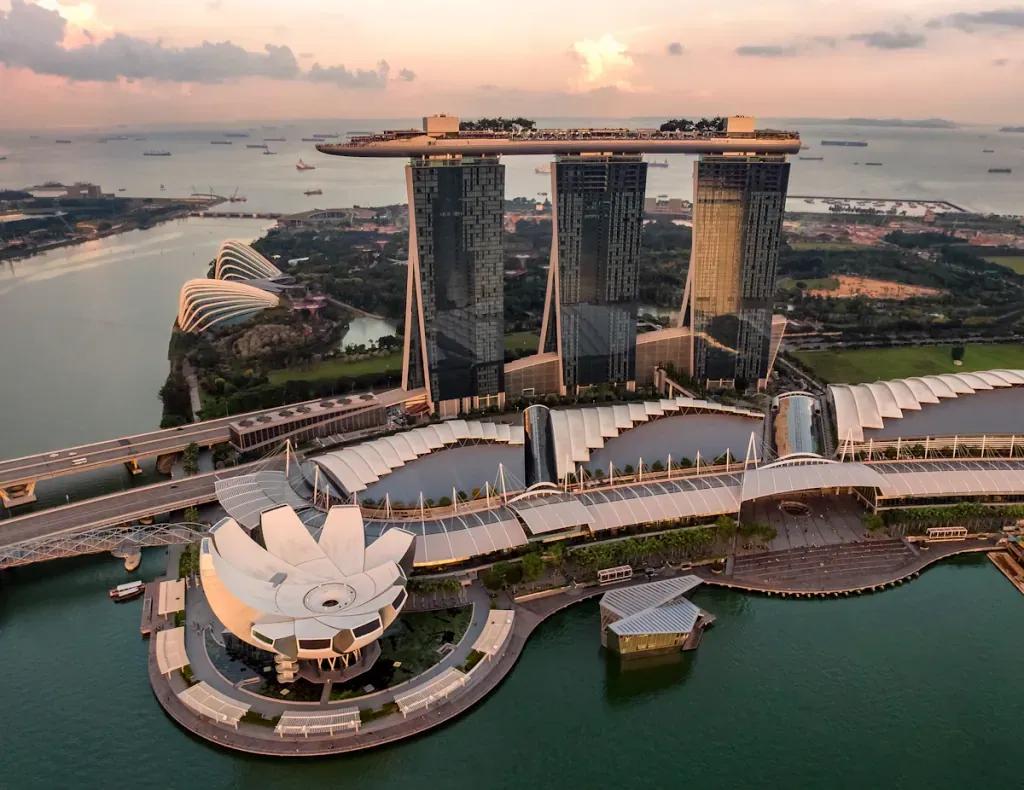
English is an official language and signage is immaculate, so translation apps stay idle. What eats data instead: constant maps (the city is walkable but the walk is always air-conditioned-mall-to-mall routing), Grab, mobile payments, and the sheer photogenic density - Marina Bay alone will fill a camera roll and the uploads that follow. Most travellers do fine on 1GB per 2-3 days; go bigger if you video-call home or work remotely from cafes. Our Singapore network comparison breaks down how the local host networks differ if you want the detail.
Outside: shorts, breathable everything, and sandals you can walk in - it is 30C with a sauna attached, every day. Inside: Singapore's air conditioning is set to arctic, so a light jumper for malls, cinemas and long MRT rides is the single most local packing tip there is. For temples and mosques, cover shoulders and knees - Sultan Mosque lends robes at the entrance, and Sri Mariamman Temple expects modest dress and bare feet. Beyond that there is no dress-code culture; nobody blinks at flip-flops in a food court.
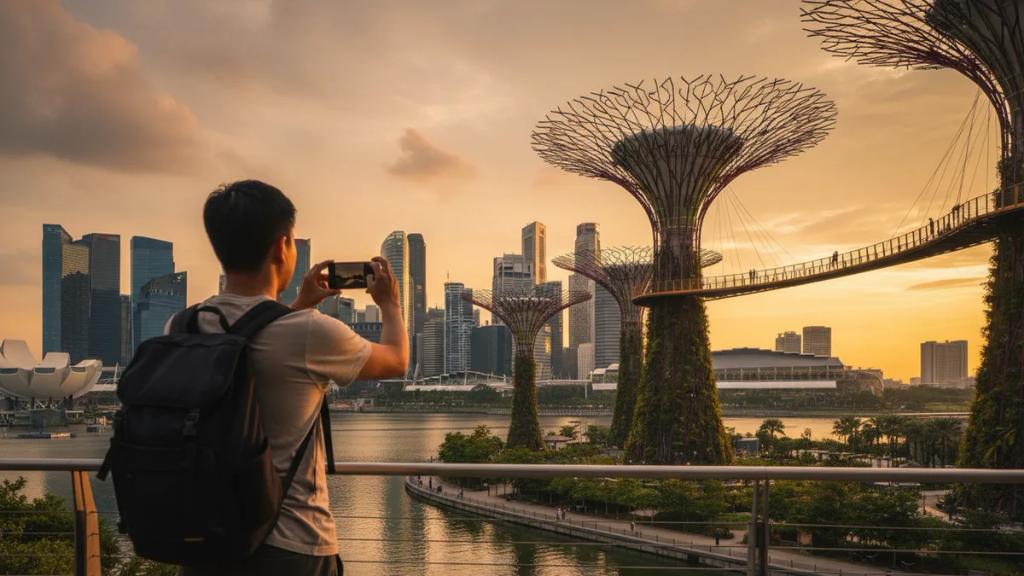
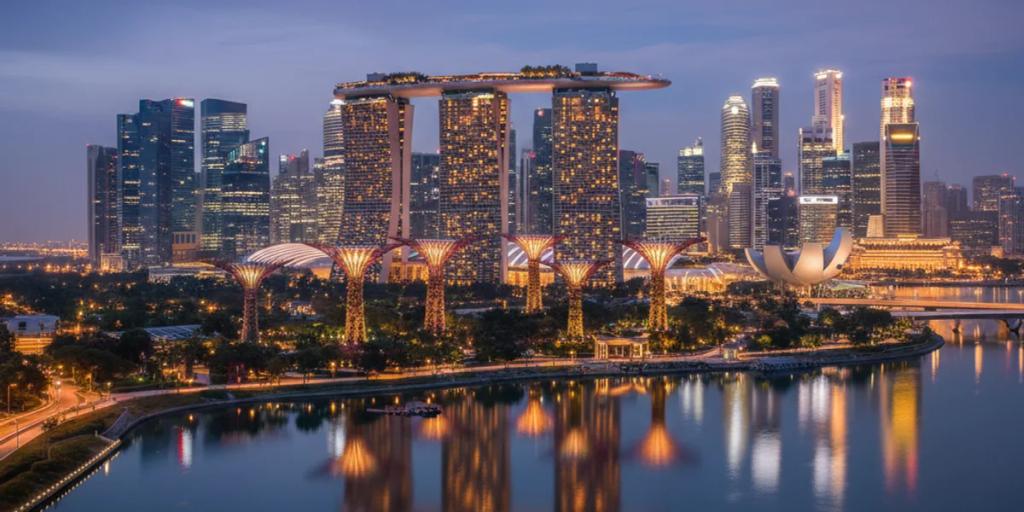
The Supertree Grove light show, Garden Rhapsody, runs free every night at 7:45pm and 8:45pm - lie back on the walkway under the trees and shoot straight up. The classic Marina Bay Sands skyline shot is from Merlion Park (get the Merlion spouting in frame) or from the Helix Bridge at blue hour, when the towers light up but the sky still holds colour. Inside Gardens by the Bay, the Cloud Forest waterfall photographs best from the entrance level, wide. And for something un-touristy, the pastel Peranakan shophouses on Koon Seng Road in Joo Chiat glow in soft morning light with nobody around.
Singapore is a city, a country and an island all at once - one of the very few true city-states left in the modern world. The Merlion, its beloved icon, was invented in 1964 as a tourism board logo. Jewel Changi's Rain Vortex is the world's tallest indoor waterfall at 40 metres, and the Night Safari, opened in 1994, was the world's first nocturnal wildlife park. And yes, the chewing gum law is real - but it bans sale and import, not chewing, and therapeutic gum is legally sold at pharmacies.
The F1 Singapore Grand Prix - the sport's original night race, first run in 2008 - takes over Marina Bay each Sep/Oct (in 2026 it runs 9-11 October). Chinese New Year (Jan/Feb, dates move) lights up Chinatown, Hari Raya brings the huge Geylang Serai bazaar during Ramadan (movable), and Deepavali (Oct/Nov) transforms Little India. National Day on 9 August delivers a full military-and-fireworks show over the bay.
The love: it is spotless, extraordinarily safe at any hour, the transit is the best you will ever use, and the hawker food is world-class at kopitiam prices - this is the city where Michelin-listed meals cost a few dollars at a plastic table. The gripes are just as real: the humidity never, ever relents (sweat management becomes a lifestyle - plan routes through air-con), alcohol is punishingly taxed so a beer can cost more than your chicken rice, and some travellers find the manicured perfection a little sterile - a theme park of a city rather than a gritty one. Whether that last one is a flaw or the entire point is up to you. On the fines-for-everything reputation: littering and jaywalking fines are genuinely enforced, but behave like a reasonable adult and you will never meet one.
Yes, fully - stations and tunnels alike have coverage across the network, which makes Singapore one of the few cities where you can stream through your entire commute. No pre-downloading rituals needed; just check your phone supports eSIM before the trip.
Wireless@SG covers malls, libraries and public buildings, and Changi's Wi-Fi is excellent - but registration hoops and the gaps between hotspots make it a poor primary plan in a city where Grab, SimplyGo top-ups and QR payments assume you are online on the street. Use it as a bonus for big downloads.
Yes. Foreign-issued Visa and Mastercard contactless cards (and Apple Pay or Google Pay) tap directly at MRT gates and bus readers through SimplyGo, with a small SGD 0.60 daily admin fee for foreign cards. There is no need to buy a transit card unless you prefer one.