Zurich runs on Swisscom, Sunrise and Salt, and your eSIM rides one of them as its host. Swiss networks are outstanding - among the best in the world for coverage and speed, reaching deep into the mountains and along every rail line. The technical side of connectivity here is a non-issue. The commercial side is the single most expensive mistake a visitor to Switzerland can make with a phone.
This is the important paragraph on this page.
Switzerland is neither in the EU nor the EEA. Roam Like at Home - the arrangement that lets an EU SIM roam across the union on its domestic allowance - does not cover Switzerland. Neither does it cover Liechtenstein in most operators' terms.
The consequences are real:
- Many EU operators bill Switzerland at out-of-zone rates, which can be startlingly high per megabyte.
- Some include it voluntarily, as a commercial choice rather than an obligation. A few bundle it with the EU zone; others sell a separate day pass.
- You cannot assume. Two people on the same street from the same country can have completely different bills depending on their provider.
There is a second trap unique to this country. Switzerland is small, mountainous, and surrounded by five neighbours, and cross-border signal spillover is common — near the German, French, Italian or Austrian frontier a phone can latch onto a foreign network without you noticing. In either direction that can put you on the wrong tariff.
Practical advice, and it applies whoever you are:
- Check your operator's Switzerland terms before you travel, not after.
- If you are on an EU plan that excludes Switzerland, a travel eSIM is straightforwardly the cheaper option and this is one of the destinations where that is least arguable.
- Near a border, consider locking your phone to the network you intend to use rather than letting it choose.
Rarely in the city, and this is a country that has put base stations in improbable places. But:
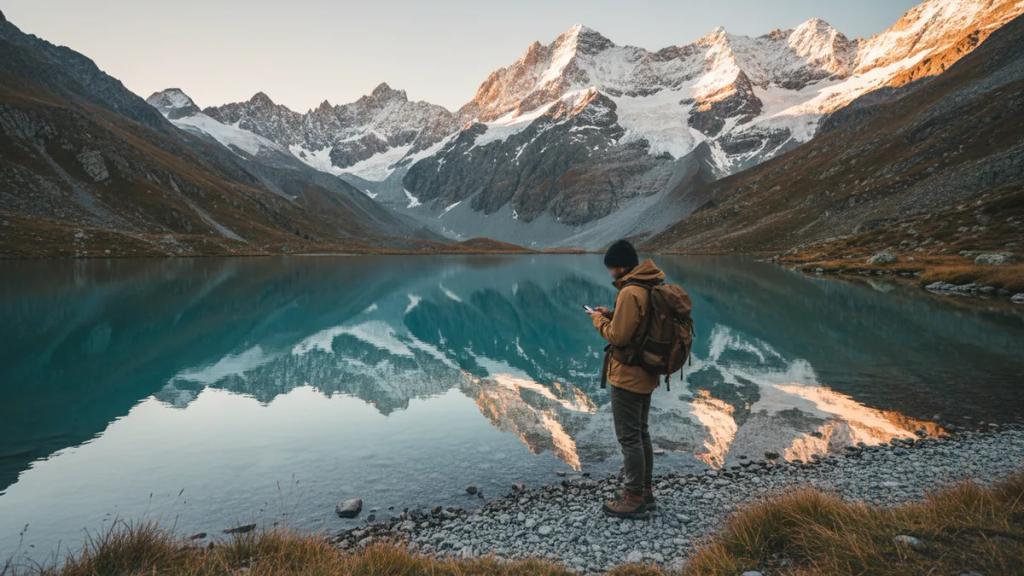
- Deep in the Alps, coverage follows the valleys, the villages and the rail lines - which is to say, most places people go. The high passes, the ridges and the back country are where it stops.
- Mountain rescue is not free. Switzerland's rescue service is superb and Rega, on 1414, is the number - but a helicopter callout is expensive and travel insurance that covers mountain activities is not optional. This is worth more attention than a phone signal.
- The long rail tunnels, including the Gotthard Base Tunnel, are exactly as connected as you would expect.
- Uetliberg, the mountain on the city's edge with a train to the top, is fine at the summit and patchy on the wooded trails.
- Inside the Grossmünster and Fraumünster, thick stone.
- SBB Mobile, the railway app, is the essential one. Swiss trains are punctual to a degree that is genuinely useful for planning, connections are timed to work, and the app handles tickets, platforms and live changes.
- A transport ticket for the city's trams, which are excellent - or the ZVV app for the regional network.
- Uber operates in Zurich, alongside regulated taxis, though the trams make both largely unnecessary.
- A translation app is optional. Swiss German is the spoken language and is genuinely hard to follow even for German speakers; written German is standard, and English is widely and well spoken.
- Maps. The old town is compact and the city is walkable.
Switzerland runs on quiet, punctual conventions, and visitors trip over the same few.
- Almost everything closes on Sunday - shops, most supermarkets, much of the retail city. The station and airport are the exceptions. Plan the weekend shop for Saturday.
- Sunday is a quiet day by convention and sometimes by house rule: no laundry, no drilling, no loud noise. It applies in apartments and holiday rentals.
- Recycling is taken seriously, and rubbish rules in rental accommodation are specific.
- Trains leave on time. Not approximately - exactly. A minute late to the platform is a missed connection.
Zurich Airport (ZRH) is about 10 km from the centre, and the train from the airport to Zurich Hauptbahnhof takes 10-15 minutes and runs constantly. It is one of the smoothest arrivals anywhere.
Zurich HB is one of the busiest stations in Europe and the hub of the Swiss network - Lucerne, Bern, Basel, the mountains and Milan all run from it.
Cards are accepted everywhere; Switzerland is largely cashless but the franc is still visible. Prices will be your main adjustment: this is consistently ranked among the most expensive cities in the world, and the sticker shock at a coffee is real.
Ordinary city amounts, and less if you use wifi, which is widely available.
For a week, 1GB per 3 days is comfortable. Size up if you are taking the trains into the mountains and want maps and video along the way - the scenic rail routes are long and the views deserve to be filmed. Plans top up from your dashboard.
Layers, and something waterproof. Zurich's weather changes fast, and the föhn can swing the temperature substantially within a day.
Winter kit from December to February - proper coat, and boots if you are heading up.
Swimwear in summer. This is the local habit visitors most often miss: Zurich swims. The lake and the Limmat are clean, and the city's badis - public bathing areas, some of them beautiful wooden structures over the water - are where the city spends warm afternoons. The Flussbad Oberer Letten on the river is the classic.
Smart-casual generally. Zurich is understated and well dressed; conspicuous display is not the register.
Proper footwear if you are going up anything, even the easy mountains.
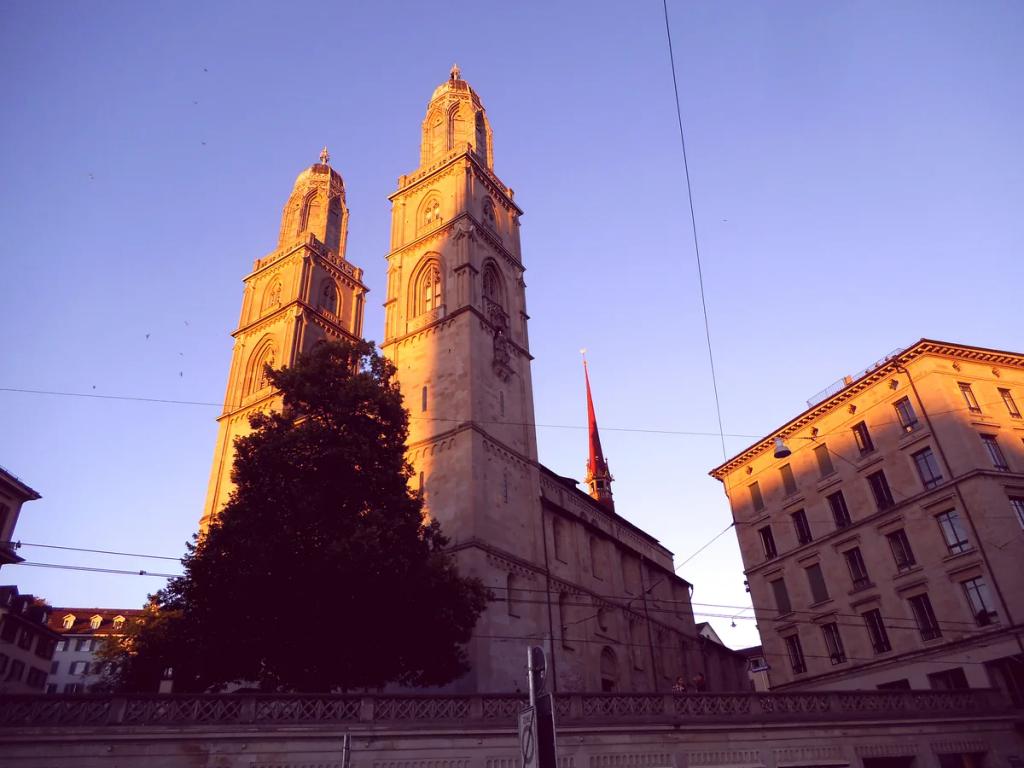
The Grossmünster's twin towers from the Lindenhof or across the Limmat, with the old town below.
Fraumünster's Chagall windows, five stained-glass panels made when the artist was in his eighties - photography inside is restricted, so check the current rule and be led by the signs.
Lake Zurich looking south, on a clear day, with the Alps on the horizon.
Uetliberg at sunset, reached by train in about twenty minutes, for the whole city, the lake and the mountains in one frame.
Niederdorf, the old town lanes, in the evening.
The badis in summer, wooden decks over green water with the city behind - the shot that says most about how Zurich actually lives.
Zurich is not the capital of Switzerland. Bern is, and this catches almost everybody. Zurich is the largest city and the financial centre.
Dada was born here, at the Cabaret Voltaire in 1916, a few streets from where Lenin was living in exile at the same time.
The city has over 1,200 public fountains, and the water in nearly all of them is drinkable spring water - carry a bottle and never buy water again.
Einstein studied and taught at the ETH here, and worked on the ideas that became relativity while in Switzerland.
And Zurich regularly tops global quality-of-living rankings, which the cost of a sandwich will explain to you within an hour of arriving.
Sechseläuten in April, when the guilds parade and the Böögg - a snowman stuffed with fireworks - is burned. The time its head takes to explode is said to predict the summer, and it is broadcast live and taken semi-seriously.
Street Parade in August, one of the largest technoparades in the world, which fills the lakefront with hundreds of thousands of people and is a startling contrast to Zurich's usual composure.
Zurich Film Festival in autumn.
The Christmas markets, including the one inside the main station.
Summer is the season for the lake and the mountains; winter brings snow, markets and access to the ski resorts within easy reach by train.
The love: Zurich is superbly run, beautifully sited between a lake and the hills, and unusually pleasant to simply exist in. The transport is the best in the world at what it does, the water is clean enough to swim in mid-city, the museums and galleries are serious, and the Alps are ninety minutes away by a train that will not be late. For a financial capital it is remarkably relaxed in summer.
The complaints are predictable and true. It is extraordinarily expensive, and this shapes the whole trip - meals, drinks, hotels, everything. It is quiet, and visitors looking for nightlife or spontaneity outside Street Parade weekend often find it staid. Sunday closing frustrates people who did not plan for it. It is small and two or three days covers it, which is why most visitors treat it as a base rather than a destination. And Swiss reserve, like Danish reserve, takes a little warming up.
Use it as a base, buy a rail pass, swim in the river, and go up a mountain on a clear day.
No. Switzerland is not in the EU or the EEA, so Roam Like at Home does not apply and many EU operators bill it at out-of-zone rates. Some include Switzerland voluntarily or sell a day pass - check your operator's specific terms before you travel, because they vary widely. This is one destination where a travel eSIM is clearly worth it for most European visitors.
Switzerland is small and mountainous with five land borders, and signal spills across them. Near a frontier your handset can latch onto a neighbouring country's network without any obvious sign, which may put you on a different tariff. Near borders, consider selecting the network manually.
Swisscom has the broadest reach, especially in the mountains, with Sunrise and Salt both strong across the populated areas. Swiss coverage is among the best anywhere and follows the valleys, villages and rail lines closely.
1414 for Rega, Swiss air rescue, or 112 for general emergencies. Rescue is excellent and not free - make sure your travel insurance covers mountain activities before you go up.