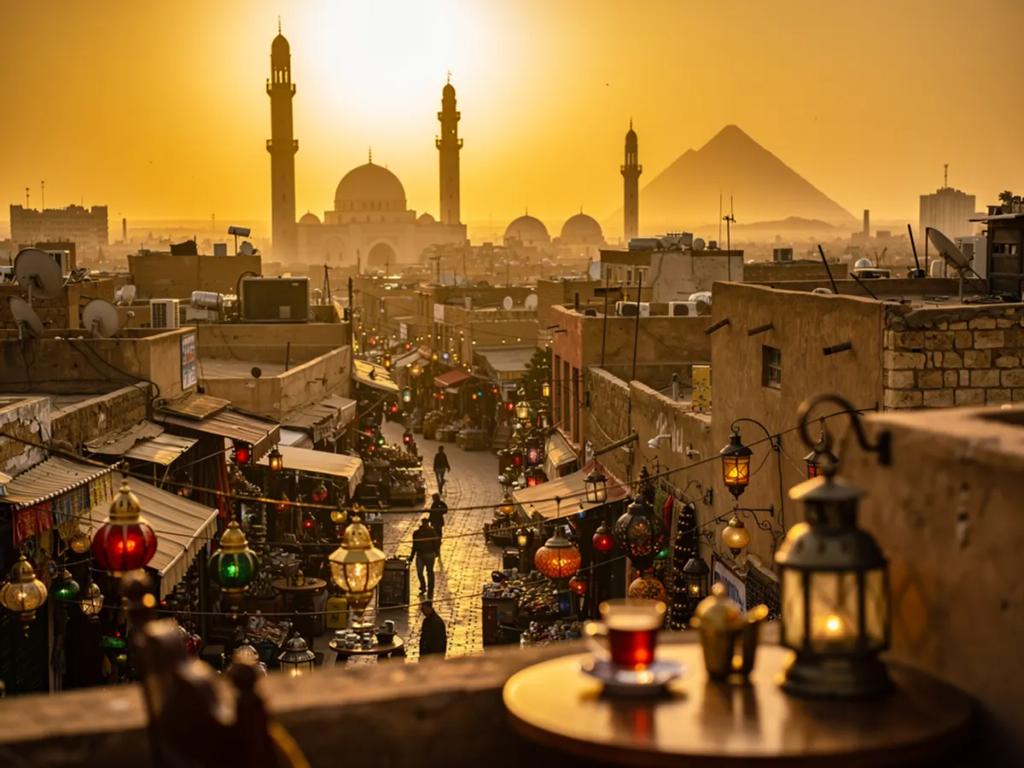
Cairo is where Egypt's mobile networks are at their strongest. Vodafone Egypt (the country's biggest network), Orange, Etisalat by e& and WE all concentrate their densest infrastructure on the capital, and your eSIM latches onto one of them automatically. Across Downtown, Zamalek, Garden City, Islamic Cairo, Giza and the sprawl in between, 4G is fast and everywhere - a metropolis of roughly 22 million people cannot function otherwise, and neither can a visitor, because Cairo is a city you navigate by app from the moment you land.
Three honest gaps. Deep inside monuments: the burial chambers of the pyramids, thick-walled Mamluk mosques and the bowels of the Egyptian Museum's older building will all cut you off - nobody is texting from inside the Great Pyramid. Parts of the Cairo Metro: coverage underground is inconsistent, so have your route and anything else you need loaded before the escalator. And the desert edge of the Giza plateau: signal is fine near the entrances and the Sphinx, thinner if your camel loop swings wide into the dunes. Everywhere else, expect full bars.
One thing to know before you promise a nightly video call home: Egypt restricts VoIP on its mobile networks, so WhatsApp and FaceTime calls frequently refuse to connect even with a perfect 4G signal. This is national policy applied by the networks, so no SIM or eSIM avoids it. Texts, photos and voice notes are untouched - Cairenes themselves conduct half their lives by voice note - and some hotel Wi-Fi lets calls through, but treat any call that connects as luck rather than a plan.
- Uber and Careem both operate across the city and are how visitors should move. Metered taxis are rare in practice and street negotiation is a skill you do not have yet; an app fare set in advance removes the entire conversation. In a city this size, dropping an exact pickup pin is half the ride.
- The Cairo Metro - Africa's first, running since 1987 - is the one way to beat the traffic, and at a few Egyptian pounds a ride it is absurd value. The middle cars of each train are reserved for women, a genuinely useful option for female travellers; look for the platform markings.
- Timed tickets are now the rule at the big sites. The Grand Egyptian Museum went online-only for ticketing in December 2025, with timed entry slots booked on its official site, and Giza plateau tickets can be bought in advance on the government's egymonuments.com portal, where cards are the expected payment.
- Talabat handles food delivery when a 40-minute crosstown ride for dinner loses its appeal, and hotels, malls and larger restaurants take cards - but keep small cash for tips, street food and Khan el-Khalili.
Cairo International sits about 20 km northeast of Downtown, a 30 to 60 minute ride depending on the traffic gods. There is no direct metro from the terminals, so nearly everyone opens Uber or Careem at arrivals - which means you need data before you reach the curb. Terminal SIM kiosks mean passport registration and tourist pricing; with the eSIM installed before departure, you are ordering the car while others queue.
More than a beach trip, less than you fear. Cairo days are heavy on ride-hailing, constant maps, Arabic menu translation and photo uploads with a pyramid in them. For most visitors 1GB every 2 days is a comfortable baseline; add margin if you hotspot a laptop or live on video. Check your phone against the compatible devices list before buying, and if Cairo is the first stop on a longer route, the Egypt eSIM covers Luxor, Aswan and the coasts on the same plan.
Modest is the default: shoulders and knees covered will serve you everywhere, and both mosques and Coptic churches expect it, with women adding a headscarf in mosques (some lend wraps at the door). Choose light, breathable fabrics - the heat is dry but relentless from June to August - and real closed shoes, because Cairo's pavements are an obstacle course of broken kerbs and sudden sand. Winter evenings genuinely cool down; bring a proper layer from November to February.
The panorama viewpoint on the Giza plateau delivers the classic frame with all nine pyramids in one line - go early, when low morning light beats the midday haze that flattens every afternoon shot. Inside the Grand Egyptian Museum, the 11-metre Ramses II colossus in the atrium wants a wide shot from low down, person in frame for scale. In Khan el-Khalili, skip the shop-front clutter and shoot the lane from a coffeehouse table - the century-old El Fishawy is the famous one - and walk Muizz Street after dark, when the minarets are lit. Leave the drone at home entirely: Egypt bans private drones without military authorisation, nationwide.
Cairo's Arabic name, al-Qahira, means "the Victorious". The pyramids were already ancient history to the ancient Egyptians you have heard of - Cleopatra lived some 2,500 years after the Great Pyramid went up. And Historic Cairo has been a UNESCO World Heritage Site since 1979, one of the world's oldest urban fabrics that is still a packed, noisy, fully lived-in neighbourhood rather than a museum.
Ramadan is Cairo at its most magical - the dates shift about 11 days earlier each year, daytime rhythms slow, and the city then stays up all night with lanterns, communal iftars and packed street cafes until dawn. The Eid holidays that follow are joyous and crowded. The Cairo International Film Festival, one of the region's oldest, takes over the Opera House each November (the 2025 edition ran 12-21 November). Local moulid festivals honouring saints dot the calendar too, though dates are fluid and very local.
The case for Cairo: five thousand years of layered history in one city, street energy that makes everywhere else feel sedated, and - with the Grand Egyptian Museum finally fully open since November 2025 - the greatest collection of antiquities on earth in a building worthy of it. The case against is real: traffic that defies description, air quality to match, and a hustle around Giza that never switches off - the classic move is a friendly stranger insisting "the entrance is closed" before steering you to a stable or a shop, and the cheerful free camel photo comes with an aggressive fee to get back down. Crossing the street is an extreme sport with local rules: find an Egyptian and shadow them. Accept the chaos as the price of the wonder and you will rave; expect polish and you will struggle.
Frequently they do not connect - Egypt restricts internet calling on mobile networks nationwide, and this applies identically to every SIM and eSIM. Messaging, photos and voice notes all work normally, so voice notes are how you actually keep in touch. Some hotel Wi-Fi networks let calls through; test yours before relying on it.
For the GEM, yes - ticketing moved online-only in December 2025 with timed entry slots, so book before you go. Giza plateau tickets are sold in advance on egymonuments.com, which skips the gate queue; have the confirmations saved offline in case signal dips at the entrance.
It is patchy underground, and the deep central stations are the worst of it. Load your route, your ticket details and anything you will need mid-journey before heading down, and the gaps stop mattering - rides between sightseeing stops are short.