Kerala is a state, not a city, and that changes how you should think about staying online here. A typical trip strings together Kochi's old port quarter, a houseboat night on the Alleppey backwaters, the tea hills of Munnar, and a beach finish at Varkala or Kovalam - four very different signal environments in one week. India's big networks (Jio, Airtel, Vi, plus state-run BSNL) all operate across Kerala, and your eSIM rides one of them. In the cities and along the coast that means solid 4G and growing 5G; the story gets more interesting the moment you leave the plains.
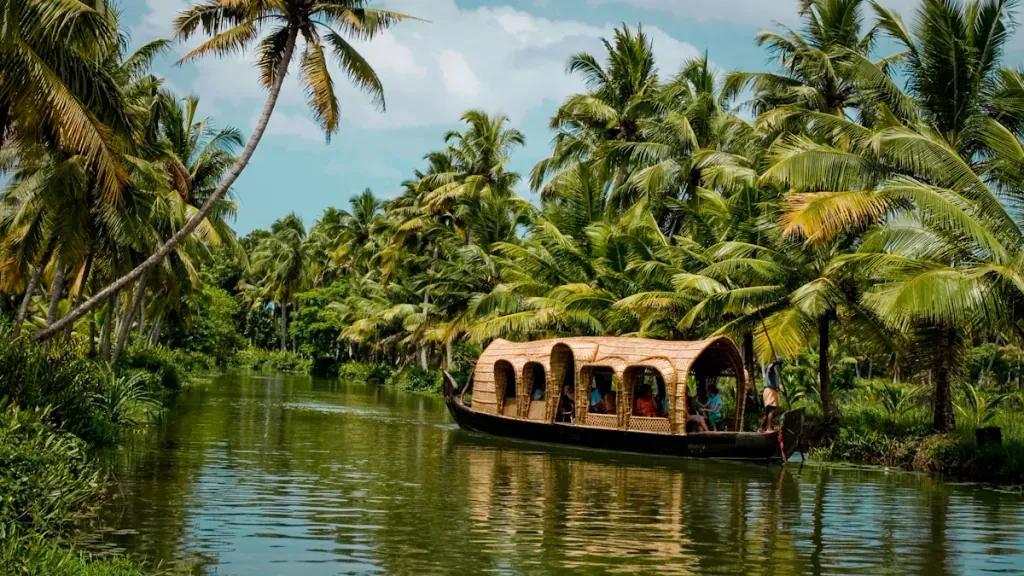
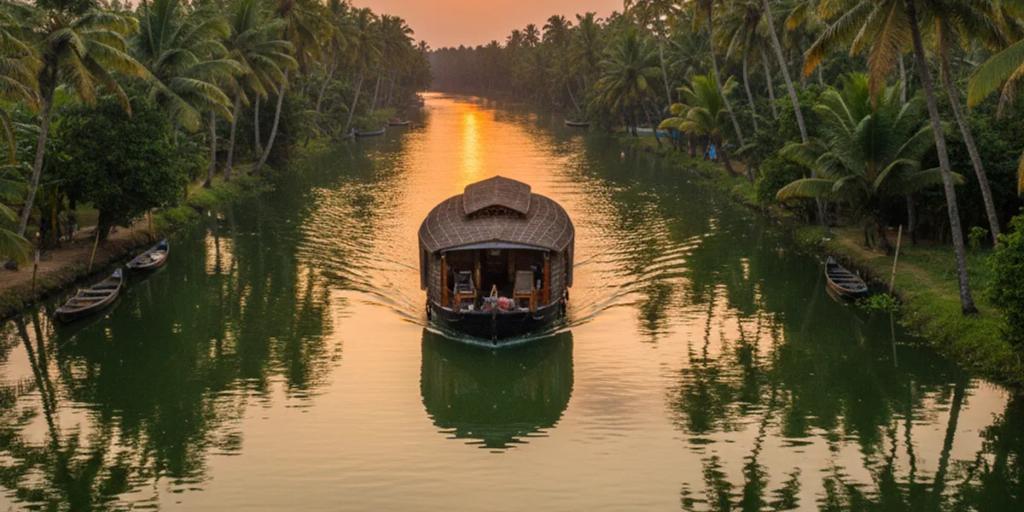
The backwaters are flatter than they feel: around Alleppey town and the main Vembanad Lake routes, Jio and Airtel generally hold a usable signal, though it can thin to a bar or two on the quieter canals between villages. The real dead zones are up in the hills. Munnar town itself is fine, but valleys and tea estates a few kilometres out sit in signal shadows - coverage can change completely within a short drive, and heavy monsoon rain degrades it further. Download offline maps for the Kochi-Munnar road before you set off, and treat anything above the tree line as offline territory. Waterfalls like Athirappilly sit in forest reserve, so expect the same patchiness there.
- WhatsApp is the operating system of Indian travel. Your houseboat operator, homestay host, driver and Ayurveda centre will all confirm bookings and send directions over it - a working data connection is not optional.
- Uber operates in Kochi and Thiruvananthapuram, alongside Ola; auto-rickshaws are everywhere but quoting tourist prices is a sport, so an app fare is your reference point even when you pay cash.
- Payments are the trap for foreigners. Kerala runs on UPI QR codes, but standard UPI needs an Indian bank account. NPCI's UPI One World tourist wallet is being rolled out but is not yet universally available, so plan on cards at hotels and bigger restaurants plus cash for chai stalls, autos and small temples - and data to find the nearest ATM.
- Trains and timed bookings: the IRCTC app handles rail tickets (the Kochi-Alleppey and coastal lines are genuinely scenic), and popular houseboats sell out in season, so booking happens on your phone days ahead.
Most travellers land at Kochi (COK), about 40 minutes to 1.5 hours from Fort Kochi depending on traffic; prepaid taxi counters, Uber and Ola all work from arrivals, and the Kochi Metro connects the airport side of town towards the centre. Thiruvananthapuram (TRV) serves the Kovalam and Varkala end of the state. Either way, the ride in is when the hotel WhatsApps, map searches and "we landed" calls happen - install the eSIM before you fly and skip the airport Wi-Fi scramble entirely.
Kerala trips are navigation-heavy (long drives between regions), WhatsApp-heavy (every booking lives there) and photo-heavy (you will upload the houseboat sunrise). Streaming is the wildcard: a houseboat night with no Wi-Fi and a Netflix habit burns data fast. For most travellers 1GB per 2-3 days covers maps, messaging and social posting; budget more if you plan to hotspot a laptop on the backwaters. Our India eSIM guide breaks down the network landscape across the country if Kerala is one stop on a longer route.
Light cotton and linen year-round on the coast, plus a proper rain layer June to November - monsoon downpours are sudden and absolute. Munnar evenings get genuinely cool (pack a fleece). Temples are the cultural line: shoulders and knees covered as a baseline, and the strictest houses go much further - at Thiruvananthapuram's Padmanabhaswamy temple men must enter bare-chested in a mundu (dhoti), no shirts or trousers, with dhotis rentable at the gate. Beachwear stays on the beach; Kerala is noticeably more conservative than Goa.
The houseboat shot works at sunrise, not midday: mist on the water, palms in silhouette, and you shooting from the bow back towards the stern deck. In Munnar, the layered tea-terrace shot needs low side light - go before 9am, find a ridge road above the estate, and let the plucking lines lead diagonally through the frame. Fort Kochi's Chinese fishing nets are a sunset ritual: stand on the promenade west of the nets so the sun drops behind the cantilevers. Athirappilly Falls is fullest and loudest just after the monsoon (Sep-Nov). Drone rules in India are strict and forest and temple zones are typically no-fly - check the DGCA Digital Sky map before packing one.
Kerala consistently tops India's literacy tables at around 96 percent, the highest of any state. The name itself is popularly read as "land of coconuts", from the Malayalam kera (coconut tree) and alam (land) - scholars debate the etymology, but the coconut economy is real enough. Kochi's airport became the world's first fully solar-powered airport in 2015. And Kathakali, the elaborately painted dance-drama you can watch in Fort Kochi, takes performers hours of makeup before a single scene.
Onam, the harvest festival, is the statewide marquee event in August-September (Thiruvonam falls on 26 August in 2026) - flower carpets, sadya feasts and packed hotels. Thrissur Pooram (April-May, late April in 2026) is the temple festival of temple festivals: caparisoned elephants, percussion orchestras and a legendary fireworks night. The Nehru Trophy snake-boat race churns Punnamada Lake near Alleppey each August (22 August in 2026), with hundred-oared chundan vallams racing in front of enormous crowds.
The love: the backwaters at dawn are as calm as travel gets, the food (appam, fish moilee, sadya on a banana leaf) is arguably India's best, and Kerala is a gentler, greener introduction to the country than the northern circuit. The gripes are just as real: monsoon humidity is relentless, road journeys take twice what the map suggests, Munnar and the houseboat jetties get seriously crowded in peak season (Dec-Jan), and alcohol takes planning - it is sold mainly through state-run BEVCO shops and licensed hotel bars, with the first of every month and election days dry (rules were eased slightly in 2025, but only for approved events in higher-end hotels).
Usually yes, but do not count on it everywhere. The main Vembanad Lake routes keep a workable Jio or Airtel signal; narrow canals between villages can drop to nearly nothing. Most houseboats have weak or no Wi-Fi, so your eSIM is the connection - download maps, music and anything important before you board.
In Munnar town, yes. Out in the estates and valleys, coverage is patchy and changes within a few kilometres - hills and forest create real signal shadows, and monsoon weather makes it worse. Plan hill days assuming stretches of no data: offline maps, downloaded translations, screenshots of bookings.
Because India's SIM registration is famously bureaucratic for visitors: passport and visa copies, photos, sometimes local address proof, and activation that can take a day or more. For a one-to-three-week trip, an eSIM installed before you land skips the paperwork completely and keeps your home number alive for banking codes - check your phone supports eSIM first.