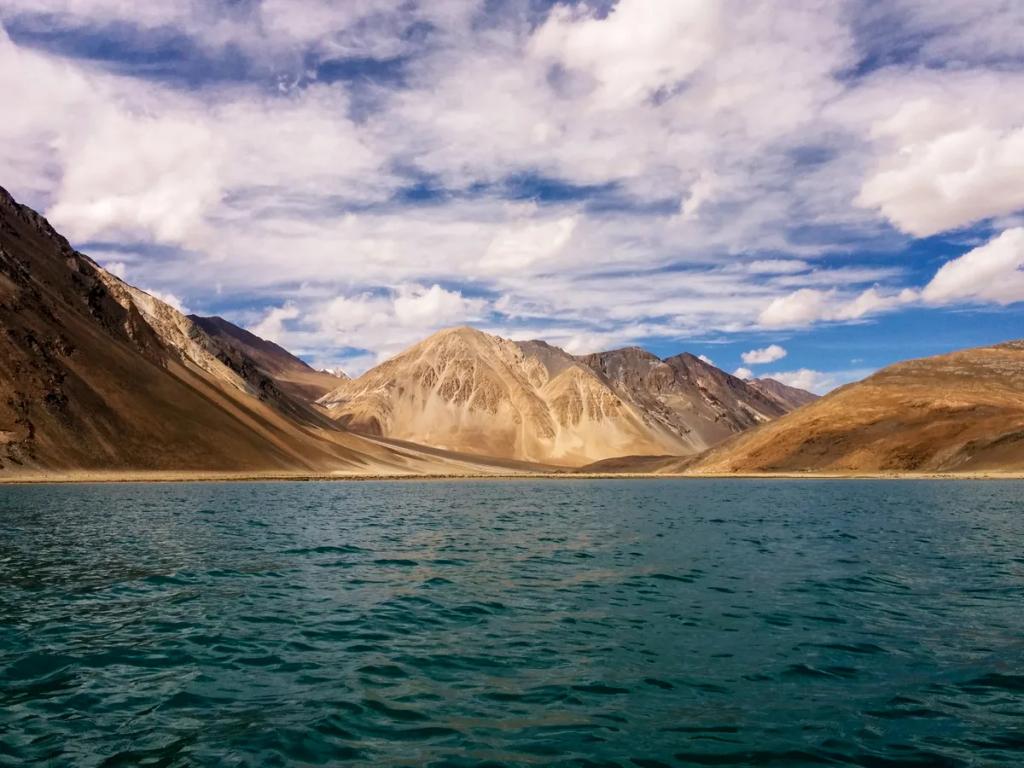
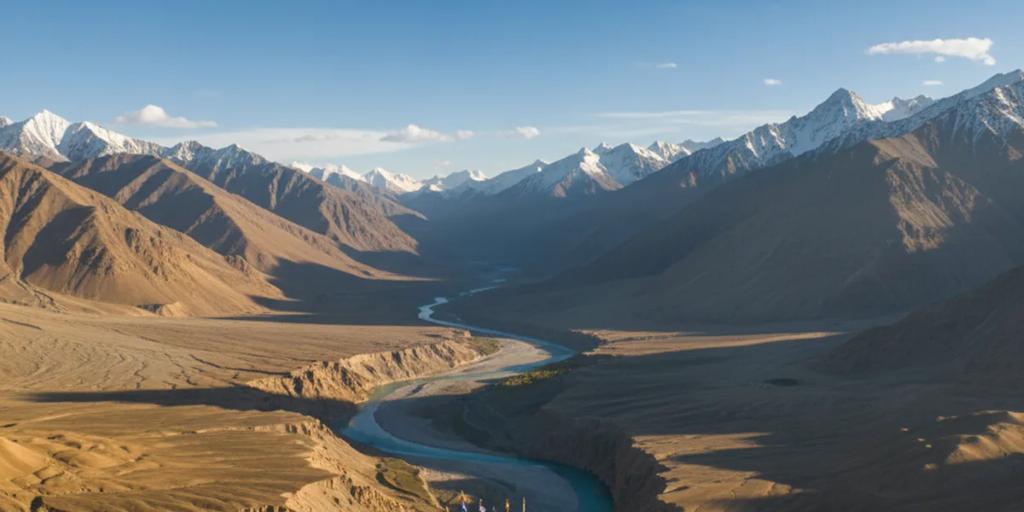
Ladakh is not a city, it is a high-altitude region - Leh, the Nubra Valley, Pangong Tso - and it has the hardest connectivity story in India, partly by geography and partly by design. The travellers who struggle here are the ones who assumed Ladakh works like the rest of the country. It does not.
Ladakh sits on sensitive borders with both China and Pakistan, and a long-standing security rule still applies: Indian prepaid SIMs registered in any other state simply stop working once you enter Ladakh - phones show "no service" from the moment you cross in. Only two things roam here freely: Indian postpaid connections and prepaid SIMs issued locally. That local SIM means a visit to a Jio, Airtel or BSNL office in Leh's main bazaar with your passport, visa copy and a photo, and a few hours to a day before it activates.
Where does a travel eSIM fit? An international eSIM connects as a foreign roamer, a different category from out-of-state Indian prepaid - but on-the-ground reports from Leh are genuinely mixed, and some travellers find their eSIM never latches in Ladakh at all. Our honest advice: install and verify your India eSIM before you fly to Leh - it works normally in Delhi, Srinagar, Manali and the rest of the country - and treat connectivity inside Ladakh as a bonus, not a promise. If being reachable matters, budget an hour in Leh for the local SIM queue as backup. The India network guide covers how the host networks compare nationally.
Inside Leh town, connectivity is genuinely decent - Jio and Airtel run solid 4G across town, the airport road and nearby Indus valley villages, while BSNL is slower but reaches deepest into remote Ladakh. Step outside the bubble and the map empties fast. In Nubra, the main villages of Diskit, Hunder and Sumur have usable Jio and Airtel data, but Turtuk is barely connected. At Pangong Tso, a Jio tower has served the Spangmik-Lukung shore since 2022; beyond that stretch, and at Tso Moriri and Korzok, expect nothing but the occasional flicker of BSNL voice. The Manali-Leh highway is a roughly 280 km dead zone between Upshi and Jispa.
So do what Ladakhi drivers do: download offline maps for the whole region before leaving Leh, save your hotel and permit documents offline, and tell someone your route and expected return. Out here that is not paranoia, it is standard practice.
The online errands in Ladakh are front-loaded. Many of the places you came for - Nubra, Pangong, Tso Moriri, Hanle - sit inside restricted zones: Indian citizens need an Inner Line Permit, while foreign nationals need a Protected Area Permit arranged through a registered tour operator, usually for groups of two or more. Sort this while you still have data and carry printed copies for the checkpoints, where there is often no signal to download anything. There is no Uber or Ola here; the Leh taxi union runs on fixed published rates, agreed in person. Cards work in Leh hotels and bigger restaurants, but carry cash beyond town - ATMs effectively stop at Leh. Flights land at Leh's high-altitude airport in the morning only; plan a quiet first day regardless, because acclimatization is not optional here.
Less than almost anywhere else we cover, because for long stretches you physically cannot use it. The Ladakh pattern is bursts: heavy syncing, uploads and video calls home while you are in Leh, then near-silence on multi-day loops. A small plan with top-up flexibility beats a huge one. Download before you go: offline maps, music and podcasts for long jeep days, and your bookings as PDFs. Hotel Wi-Fi in Leh exists but wobbles with the town's power cuts, so an eSIM installed and tested in advance is your steadier option whenever there is coverage at all.
Think desert, not alpine meadow: July days in Leh are warm enough for a t-shirt, but nights drop sharply and passes are cold year-round, so layers are everything. At 3,500 metres the UV is brutal - real sunscreen, sunglasses and a brimmed hat are non-negotiable, and lips crack fast without balm. In monasteries, cover shoulders and knees and remove shoes where locals do. If you visit outside summer, pack for genuine cold: winter regularly reaches -20C.
Thiksey Monastery at morning prayers is the shot of the trip - arrive before the horns sound around sunrise, and always ask before photographing monks inside the prayer hall. Pangong's impossible blue is strongest under high midday sun, not golden hour. For Leh itself, climb to Shanti Stupa at sunset and shoot back over the old town as the valley lights come on. The Khardung La signboard queue moves fastest in the morning; do not linger at the pass longer than the photo needs. One hard rule: drones are currently banned outright across Leh and Kargil districts by administration order, on top of India's standing no-fly belt along borders - leave it at home.
Khardung La's famous "world's highest motorable pass" signboard is wrong twice over: modern measurements put the pass around 5,359 m rather than the claimed 5,602 m, and higher roads such as Umling La (5,799 m) have long since taken the crown. Magnetic Hill on the Srinagar road does not pull cars uphill - it is an optical illusion where a downhill slope reads as uphill. And Leh's airport, at 3,256 m one of the world's highest commercial airports, has higher terrain constraining its eastern approach, so all flights operate in the morning before the valley winds wake up.
Hemis Festival, Ladakh's biggest monastery festival with masked cham dances, falls in late June or early July depending on the lunar calendar (in 2026 it lands in late June). The Ladakh Festival in September fills Leh with archery, polo and dance as the season winds down. Losar, the Ladakhi new year, is celebrated unusually early - in December, ahead of the Tibetan new year - when almost no tourists are around to see it.
The love is real: a lunar landscape of ochre mountains and turquoise lakes, thousand-year-old monasteries, night skies you will never see at home, and a silence that resets people. The complaints are just as real. Altitude sickness is not a maybe - most visitors feel it, the standard advice is 24-48 quiet hours in Leh before going higher, and some trips end early because of it. The season is short, the jeep days long and rough, and from October to May most guesthouses simply close. Come acclimatized, unhurried and offline-ready, and Ladakh rewards you like almost nowhere else.
Treat it as uncertain. Travel eSIMs connect as international roamers, which is not the category India blocks here (that rule targets out-of-state Indian prepaid), but real-world reports from Leh are mixed and some eSIMs never register in Ladakh. Verify yours works in Delhi or Srinagar first, and if being reachable in Ladakh is critical, buy a local prepaid SIM in Leh as backup.
Only in one spot: Jio has covered the Spangmik-Lukung shore since 2022. The rest of the lake, the Shayok road from Nubra, and Tso Moriri have essentially no usable data. Download maps and entertainment before leaving Leh and tell someone your route.
It exists in most guesthouses and cafes, but it shares thin backhaul and drops with the town's power cuts - fine for messages, frustrating for calls or uploads. Use it opportunistically, keep mobile data as your working connection while you are in coverage, and assume neither once you leave town.