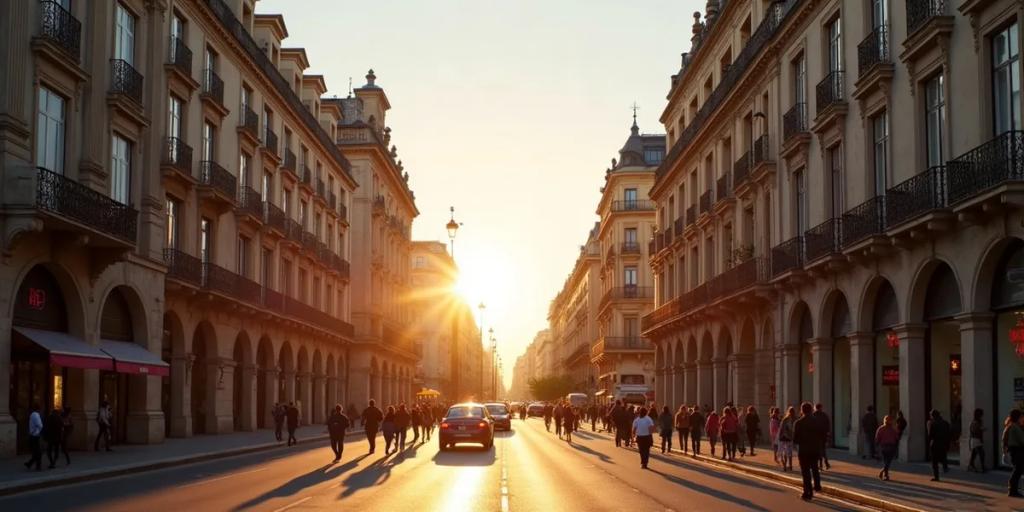
Madrid has no medieval canyon streets to fight, and it shows in the signal: Movistar, Vodafone and Orange all run dense 4G and 5G grids here, with Yoigo and Digi behind them. Whichever one your eSIM uses as its host network, expect full bars from Sol to Salamanca, across Retiro park, and - unusually for Europe - underground too.
Metro de Madrid finished a multi-year, multi-operator project that put 4G in every station and tunnel of the network - all 200-plus stations and the runs between them - so you can navigate, message and stream on the move. Cercanías commuter trains are the caveat: the cross-town tunnel between Atocha and Chamartín is patchier, so queue up your podcast before boarding.
As of June 2026 you can tap a contactless bank card, phone or watch directly on Metro de Madrid turnstiles for a single fare - no machine, no queue. Before that everyone needed a tarjeta Multi, the rechargeable transport card, and it still wins for longer stays: the Tourist Travel Pass and multi-ride tickets only load onto it. EMT city buses take contactless cards onboard too. Either way, the Metro and EMT apps need data for journey planning and disruption alerts.
- Cabify was founded in Madrid and is the ride app of choice here, with Uber, Bolt and FreeNow all competing hard - pickups are fast and cheap by capital-city standards.
- Timed museum tickets: the Prado, Reina Sofía and Royal Palace all sell entry by time slot, and summer weekends sell out a day or two ahead. The Prado's famous free evening hours (last two hours before closing) are box-office only with a long queue, so most visitors end up booking paid slots from their phone.
- Day trips need booked seats: Toledo (about 33 minutes by Avant) and Segovia (under 30 minutes) are Madrid's classic escapes, and Spanish high-speed trains are all reserved seating - Toledo in particular sells out on weekend mornings, so booking on the Renfe app is a genuinely data-dependent errand.
- Bizum envy: locals split every tapas bill with Bizum, which needs a Spanish bank account - you will be paying by card instead, and tap-to-pay is accepted everywhere down to the smallest bar.
From Barajas you have three options: Metro line 8 (airport supplement applies), the Cercanías C1 train from Terminal 4, or the 24-hour Exprés Aeropuerto bus to Cibeles and Atocha, which takes card payment onboard. Whichever you pick, the ride into town is when hotel directions, the first metro-map search and the "landed safe" messages all hit at once - reason enough to have the eSIM installed before you fly.
Madrid evenings are the data pattern to plan for: tapas-hopping through La Latina or Malasaña means repeated short map searches, group-chat coordination, menu translation and a steady drip of photo uploads from about 9pm to 1am. Days are lighter - museums are offline once you are inside. Around 1GB every 2-3 days covers a normal trip; double it if you video-call home or spend weekends on day-trip logistics. If you want to know which Spanish host network your plan should ride, our Spain network comparison goes deep on Movistar vs Vodafone vs Orange.
Madrilenos dress sharp - scruffy beachwear reads as lost tourist here, and you will feel it in nicer restaurants. Summer needs genuine heat planning: July and August afternoons hit the mid-30s, the siesta lull is real, so do museums at midday and streets after 8pm. Winter surprises people - this is a high, dry plateau and January mornings sit near freezing, so bring a proper coat. Even summer evenings in Retiro can want a light layer once the sun drops.
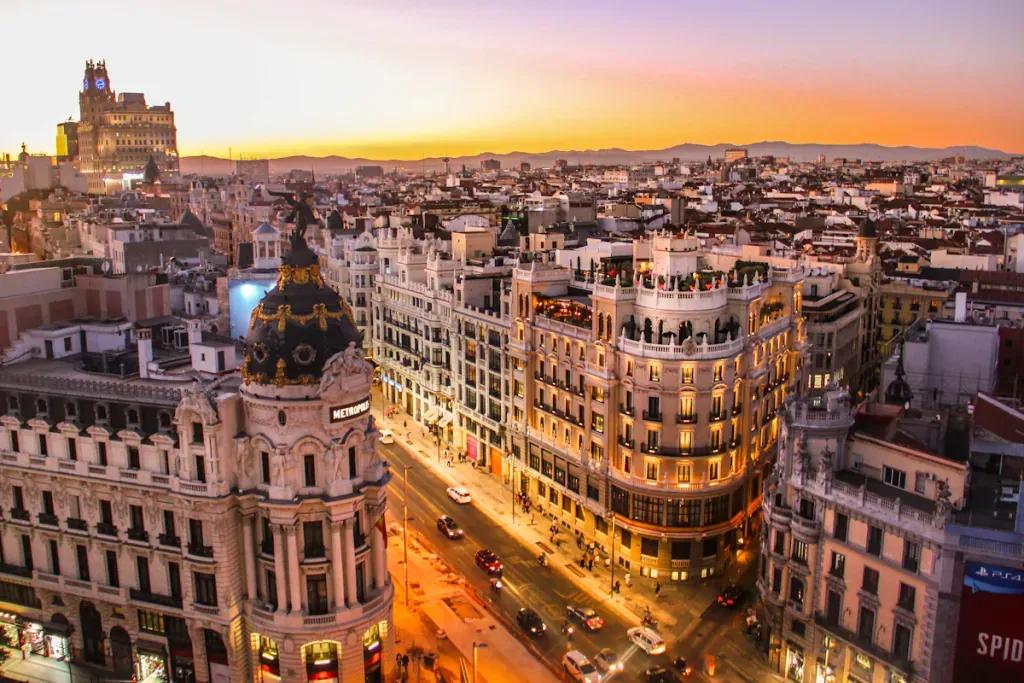
The Metropolis building shot - the white dome with the winged statue - is best from the Circulo de Bellas Artes rooftop, which is ticketed but cheap, in the last hour before sunset. The Temple of Debod, an actual 2,000-year-old Egyptian temple in Parque del Oeste, faces west over the city: arrive 30 minutes before sunset and frame it reflected in the pools. For Gran Via's neon canyon, shoot from Plaza de Callao looking back towards Metropolis. And Retiro's Crystal Palace glows from the inside in morning light - go before the crowds. Flying a drone over central Madrid is effectively off-limits without authorisation.
Madrid is the highest capital in the EU, sitting around 660 metres above sea level - part of why summers scorch and winters bite. The Temple of Debod was a 1968 gift from Egypt, thanking Spain for helping rescue the Abu Simbel temples from the Aswan dam floodwaters. And Botin, near Plaza Mayor, has served since 1725 and holds the Guinness record as the world's oldest restaurant.
San Isidro (15 May) is Madrid's patron-saint festival - concerts, picnics in traditional dress, and the start of the bullfighting season. Madrid Pride in early July is widely counted among Europe's biggest, taking over Chueca and Gran Via for a week. The Three Kings parade on 5 January is the city's real Christmas climax. And if Real Madrid host El Clasico, expect full hotels and a city glued to screens - check the fixture list before booking.
The love: the Prado-Reina Sofia-Thyssen art triangle within a 15-minute walk, a tapas rhythm where every drink arrives with food, and late-night energy that makes 1am on a Tuesday feel normal. The gripes are honest too: July and August are a furnace that empties even locals out of the city, the tourist-menu traps ringing Plaza Mayor serve the worst paella in Spain at the highest prices, and the dinner-at-10pm schedule genuinely disorients first-timers - restaurants at 7pm are either closed or full of other tourists. Adjust your clock, skip the laminated menus, and Madrid rewards you.
Yes, across the whole network - Madrid completed 4G coverage of every station and tunnel, so maps, messages and even calls work between stations. It is one of the best-connected metros in Europe; only the Cercanías rail tunnels are noticeably weaker.
Since June 2026, yes - metro turnstiles accept contactless bank cards and phone wallets for single fares, and EMT buses do the same onboard. For stays beyond a few days the rechargeable tarjeta Multi is still cheaper per ride, since ten-trip tickets and the Tourist Pass only load onto it.
For booking, yes: both routes run reserved-seat high-speed trains, and Toledo regularly sells out on weekends, so you will want the Renfe app or website working the day before. Coverage along both lines and in both towns is solid on Spain's main networks, so any recent eSIM-capable phone stays online for the whole excursion.