Miami is blanketed by America's big three networks - AT&T, T-Mobile and Verizon - and your travel eSIM rides one of them as its host, typically T-Mobile or AT&T. Both are dense across Miami-Dade, with 5G the norm from South Beach to Brickell, Wynwood, Little Havana and Coral Gables. Signal is rarely the problem here; the two things worth planning around are the water and the crowds.
On the sand, coverage is genuinely good - South Beach, Mid-Beach and Key Biscayne all sit within sight of towers, so streaming a playlist under an umbrella works fine. The honest caveats: on peak weekends (spring break, Ultra, the boat show) thousands of phones share the same beachfront cells and speeds can crawl. And once you leave land - an Everglades airboat, or a boat day past the causeways - signal thins fast, so download offline maps first.
PortMiami is the world's busiest cruise port by passengers, so there is a good chance your Miami days bracket a sailing. The pattern that saves money: use your eSIM freely on the land days and at the terminal, then switch to airplane mode the moment the ship leaves the channel. At sea, phones latch onto the ship's maritime network, which is expensive roaming your eSIM data plan does not cover - use the ship's Wi-Fi instead, and check whether your plan covers the islands before relying on it at ports of call.
- Uber and Lyft are how Miami moves - it is a car city, distances are real, and both apps work everywhere from the airport to the beach at 3am.
- Brightline runs fast trains from MiamiCentral (downtown) to Fort Lauderdale, West Palm Beach and Orlando; tickets and seat assignments live in its app, and it is the sane way to do a Disney or Kennedy Space Center day.
- Transit: Metrorail and Metrobus take contactless bank cards or phone tap at the gate, the central Metromover is free, and the GO Miami-Dade Transit app handles planning and fares.
- Parking is app-based: Miami Beach street and lot parking runs through the ParkMobile app, so even a rental-car beach day needs data at the meter.
- Tap-to-pay is universal - phone or card works from cafeterias in Little Havana to beach kiosks, no cash errand required.
From Miami International, the free MIA Mover connects the terminals to Miami Central Station, where the Metrorail Orange Line runs straight to Brickell and downtown; Uber and Lyft pick up from marked zones outside arrivals. Either way, the ride in is exactly when the "just landed" messages, hotel directions and first rideshare request hit your data - install the eSIM before you fly and skip the airport Wi-Fi login.
Miami is navigation-heavy (rideshare, driving directions, parking apps) and streaming-friendly, but translation-light: this is a bilingual Spanish-English city, and whichever of the two you speak, you will almost never need a translation app. One thing unique to South Florida: hurricane season runs June through November, and while official Wireless Emergency Alerts broadcast automatically to any phone on a US network - eSIMs included - the useful follow-up (radar apps, airline rebooking, cruise line updates) all needs data. For most trips 1GB per 2-3 days covers it; add headroom for beach streaming, and see the USA eSIM comparison for how the plans and host networks stack up.
Daytime Miami is beach-casual everywhere - shorts, sandals and a swimsuit under it all is the uniform from South Beach to Wynwood. Nights are a different city: many South Beach clubs and upscale Brickell restaurants enforce dress codes, and men in shorts, sandals or athletic wear get turned away at the rope. Pack one smart outfit and closed shoes. In summer, add a packable rain shell for the near-daily afternoon downpour, and a light layer for arctic indoor air conditioning.
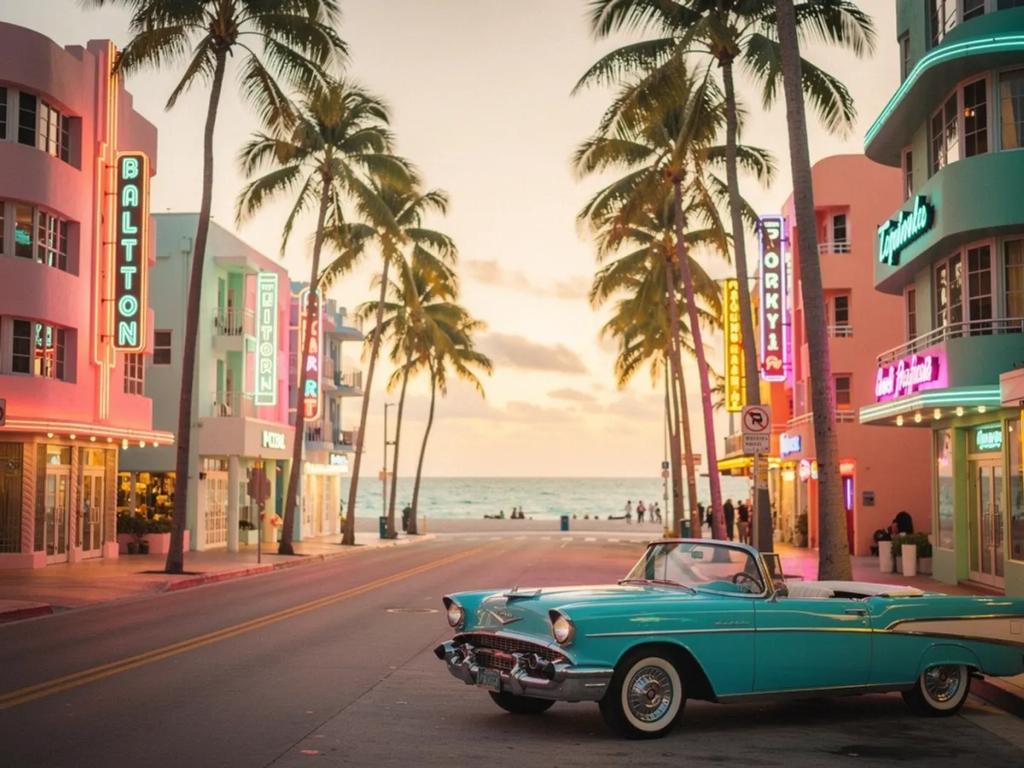
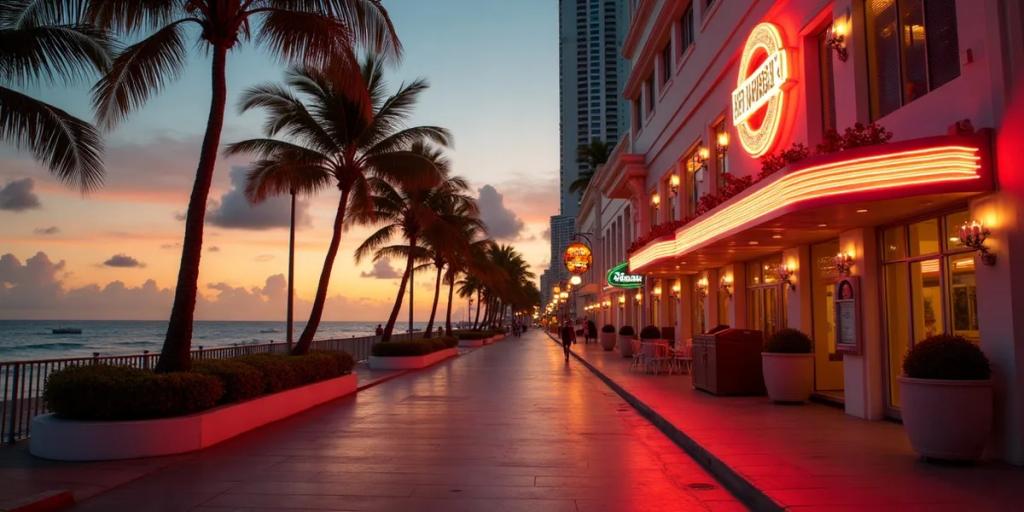
Ocean Drive's art deco facades want dusk, when the neon comes on but the sky still holds colour - shoot from the beach side of the street to get the full row. Wynwood Walls is now a ticketed compound (about $12 general admission), though the surrounding streets are covered in free murals if you skip the gate. For the skyline-plus-cruise-ships frame, walk the South Pointe Park pier in late afternoon, when ships sail out of Government Cut beside you. And the pastel lifeguard towers photograph best just after sunrise, when the sand is still empty.
Miami is the only major US city founded by a woman - Julia Tuttle, who lured the railway south in 1896. Wynwood went from anonymous warehouses to one of the world's largest street-art districts in barely 15 years. And more than half of Miami-Dade's residents were born outside the United States - one of the highest shares of any large American county, which is why the city runs so naturally in two languages.
Art Basel Miami Beach (early December) anchors Miami Art Week and books out the entire city. The Miami International Boat Show fills February, Ultra Music Festival takes over Bayfront Park in late March, and the Miami Open runs its two tennis weeks at Hard Rock Stadium around the same time. March in general - Ultra plus spring break - is when hotel prices and beachfront crowds peak hardest.
The love: real beaches inside a major city, nightlife that genuinely goes until sunrise, Latin food and music woven into everyday life, and winter weather the rest of the country dreams about. The gripes are just as real: prices have soared (cocktails, beach clubs and hotel rates sting), parking is a genuine ordeal almost everywhere, summer brings crushing humidity, mosquitos and daily storms, and March spring break can tip South Beach into curfews and chaos. Come in winter with a budget and it delivers; come in August expecting Barcelona prices and it will not.
On land, yes - at the terminal, on embarkation day and at US ports your eSIM behaves normally. At sea the ship switches you to a maritime satellite network that data plans do not include, so go airplane mode once you sail and use the ship's Wi-Fi packages instead.
Yes - a United States plan covers the whole country, and the Brightline corridor to Orlando keeps usable signal for most of the ride, so you can book theme-park tickets and return seats from the train.
Wireless Emergency Alerts are broadcast from mobile towers to every compatible phone on a US network, eSIM or not, with no app or signup needed. Keep some data spare in season for radar, county updates and rebooking if a storm shifts your plans.