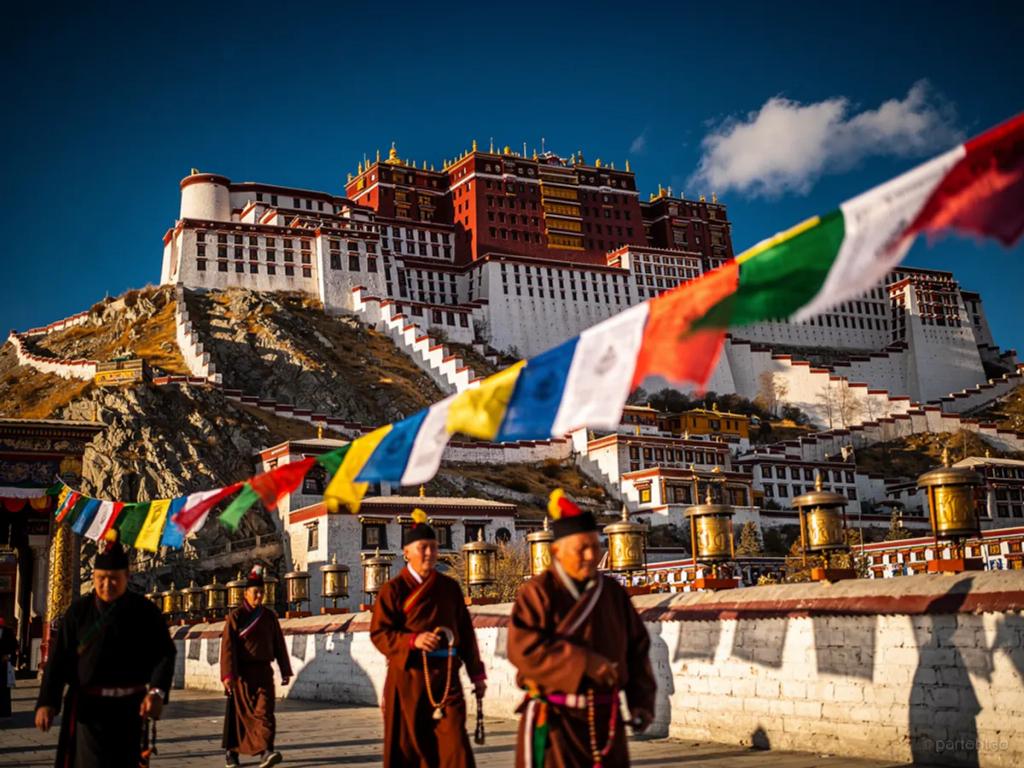
Tibet is not a normal destination, and the connectivity story starts with the travel rules. Foreign visitors need a Tibet Travel Permit on top of their China visa, and the permit can only be arranged through a registered tour operator - independent travel is not permitted, so you will have a guide and an itinerary from day one. What surprises most people is what happens once you are there: China Mobile, China Unicom and China Telecom cover Lhasa, Shigatse and the towns along the Friendship Highway remarkably well, and your travel eSIM rides one of these as its host network. China Mobile has even run base stations on the north side of Everest since 2020, up to a 5G site at the 6,500m advance camp.
Lhasa itself is easy: solid 4G and 5G across the old town, the Potala square and the hotel districts. The main overland corridors - Lhasa to Gyantse, Shigatse and on towards the Everest region and the Nepal border - hold signal in every town and for surprising stretches of highway between them. The honest gap is everything in between: valleys, passes and long rural stretches with simply nothing, sometimes for an hour of driving at a time. Since Tibet days are mostly long, spectacular drives, download offline maps, playlists and translated phrases before leaving each town.
On local networks and on any Wi-Fi - your Lhasa hotel included - Google, Gmail, WhatsApp, Instagram and most Western apps are blocked. A roaming travel eSIM usually behaves differently: data typically breaks out through a gateway outside mainland China, so those apps generally keep working without a VPN. Routing can vary by plan, so install a reputable VPN before you fly as a backup - VPN sites are hard to reach once inside. The practical habit here is the reverse of most trips: stay on eSIM data and treat Wi-Fi as the fallback.
- WeChat is how your guide, driver and operator will coordinate with you - have it installed and working before arrival, because sign-up verification is easier done at home.
- Alipay and WeChat Pay dominate payments in Lhasa and Shigatse, and both accept international cards; smaller monastery towns and roadside stops still run on cash, so carry some yuan.
- Offline maps and a translation app with downloaded Tibetan and Chinese packs earn their keep on drive days - camera translation for menus works only where you have signal unless the pack is offline.
- Altitude tools: apps that claim to measure blood oxygen from your phone are unreliable - a cheap fingertip pulse oximeter is the real tool for tracking acclimatization.
Most visitors land at Lhasa Gonggar Airport, about an hour from the city, or arrive on the Qinghai-Tibet railway - your permit is checked before boarding either, and your operator's guide meets you on arrival. Airport and hotel Wi-Fi typically want SMS verification, awkward with a foreign number, so having your eSIM installed and tested before you fly is worth more here than almost anywhere.
Less than a big-city trip in raw volume, but the shape is different: long offline drives punctuated by photo uploads and check-in messages whenever a town restores signal. For most travellers 1GB per 2-3 days covers messaging, maps and posting; add headroom for video uploads and calls home, since messaging apps here run over your eSIM rather than Wi-Fi. If your route continues over the Friendship Highway into Kathmandu, note that Nepal is a separate network world and needs its own Nepal eSIM, while a China eSIM covers onward mainland travel.
Layers, always. At 3,650m the sun is fierce enough to burn in under an hour - high-SPF sunscreen, sunglasses and a hat are non-negotiable year-round - yet the same July day that hits 24C drops near freezing after dark. Winter needs serious insulation, and wind at the high passes cuts through anything casual. At monasteries, cover shoulders and knees, remove hats indoors, and walk clockwise around temples, stupas and prayer wheels - the one etiquette rule your guide will repeat most.
The classic Potala Palace shot is from the Chakpori hill viewpoint opposite the palace - photographers line up before sunrise, and thanks to the two-hour solar offset, "sunrise" comes conveniently late by the clock. Yamdrok Lake's improbable turquoise is best from the Kamba La pass viewpoint on the Gyantse road, most saturated under midday sun. Prayer flags strung across high passes make the great foreground - frame low with the flags leading towards the peaks. Two hard rules: photography inside most monastery chapels is prohibited or fee-based, so ask your guide first, and never photograph military personnel, checkpoints or convoys - this is taken seriously. Leave the drone at home; Tibet is effectively a no-fly region for tourists.
Lhasa's name is usually translated as "place of the gods", and with over 3,000 hours of annual sunshine it is nicknamed the Sunlight City. The Potala Palace climbs 13 storeys up its ridge and is said to contain more than a thousand rooms. The Qinghai-Tibet railway is the world's highest, crossing the Tanggula Pass at 5,072m with oxygen enriching the carriages. And yes, yak butter tea is salty, not sweet - locals drink it all day for calories and warmth.
Losar, the Tibetan New Year, falls in February or March by the lunar calendar; Tibet has historically paused foreign permits around this window, and although permits have recently been issued year-round, your operator will confirm what applies to your dates. Saga Dawa, the holy month marking the Buddha's birth, enlightenment and passing, peaks on a full-moon day in May or June with pilgrims circuiting Lhasa's sacred routes. Shoton, the "yogurt festival", lands in mid-to-late August (12-18 August in 2026) with a giant thangka unveiled at dawn at Drepung Monastery.
The rave is deserved: the landscape is genuinely unlike anywhere else on Earth, the light is extraordinary, and the depth of everyday devotion - pilgrims prostrating along the Barkhor at dawn - moves even determinedly unspiritual travellers. The frustrations are just as real. The permit process and guided-only rule remove all spontaneity and price Tibet as a tour, not a backpacking stop. Altitude sickness at 3,650m is a genuine medical risk, not a travel-blog cliche: plan two easy acclimatization days in Lhasa and take symptoms seriously. Add winter route closures and daily firewall friction, and Tibet rewards preparation like few destinations do.
No. Regardless of how self-sufficient you are, foreign travellers must hold a Tibet Travel Permit, which is only issued through a registered tour operator, and travel outside Lhasa requires a guide and arranged transport. The eSIM is still yours to sort out - operators arrange the trip, not your connectivity.
Usually yes, on the eSIM itself. Roaming travel eSIMs typically route data through a gateway outside mainland China, so blocked apps generally keep working without a VPN. On hotel or restaurant Wi-Fi the blocks apply in full, so keep Wi-Fi off for anything Western and install a VPN before arrival as insurance.
On the Tibet side, yes - China Mobile has operated base stations from the 5,300m base camp up to 6,500m since 2020, including 5G, so the tourist base camp area near Rongbuk has real coverage. Whether your eSIM sees it depends on its host network, and the drives to get there cross long dead zones, so download everything you need before leaving Shigatse.