Chicago is an easy city to stay online in. The three US networks - AT&T, T-Mobile and Verizon - all run dense 5G across the Loop, the lakefront and the neighbourhoods, and your eSIM rides one of them as its host network. Data is fast from Wrigleyville down to Hyde Park, with congestion slowdowns rare outside festival weekends. One planning note that catches east-coast itineraries: Chicago runs on Central Time, one hour behind New York, so double-check timed tickets booked while your phone was still on Eastern.
Chicago's trains are called the L because most of the system is elevated - you ride above the streets with normal, full-strength signal, which makes it one of the most connectivity-friendly transit systems in America. Even the parts that do go underground are covered: the CTA finished wiring all 22 miles of its subway tunnels for 4G back in 2015, so the Red and Blue Line subway stretches downtown keep service from every major network. In practice you can navigate, message and stream for an entire ride.
- Ventra readers take your own contactless card: tap a contactless bank card, Apple Pay, Google Pay or Samsung Pay directly at any L turnstile or bus reader and it charges a pay-as-you-go fare - no local card or app purchase needed. The Ventra app is only worth installing if you want day passes or Metra commuter trains.
- Divvy is the city bike share (it lives inside the Lyft app), and the protected Lakefront Trail is genuinely one of the best urban rides anywhere - you unlock every bike with data.
- The architecture river cruise sells out: Chicago's single best tourist experience books by timed slot online, often a day or two ahead in summer. Same story for Skydeck and 360 Chicago fast passes.
- Reservation culture is real: hot restaurants release tables on Tock (invented in Chicago) and Resy, and walk-in waits at deep-dish spots run on a text to your phone.
- Uber and Lyft both blanket the city; taxis exist downtown, but apps win everywhere else.
Both airports sit directly on the L. From O'Hare, the Blue Line runs 24 hours a day to the Loop in about 45 minutes; from Midway, the Orange Line does the ride in about 25. Tap the same contactless card at the airport turnstile as anywhere else. O'Hare's flight delays are the stuff of American folklore, so rebooking apps, airline chat and "landed at last" messages all want data the moment you touch down. Install the eSIM before you fly and skip the airport Wi-Fi login entirely.
Chicago trips are photo-heavy (that skyline works from every angle), navigation-moderate (the grid system is mercifully logical), and streaming-tempting on long L rides that actually have signal. For most travellers 1GB per 2-3 days covers maps, messaging and posting; budget extra if you plan to video-call from the lakefront or upload every deep-dish cross-section. A USA plan works identically if Chicago is one stop on a bigger route, and the best eSIM for the USA guide compares the options - with unlimited USA plans covered separately if you refuse to count gigabytes.
Winter here is not normal city winter: the wind coming off Lake Michigan drives feels-like temperatures to -15 to -25C, and locals dress like engineers - a windproof outer layer, insulated boots, and gloves you can leave on while using your phone. And yes, the "Windy City" nickname most likely came from 19th-century jabs at boastful Chicago politicians rather than the weather, but nobody standing on a February L platform cares about etymology. Summer is the opposite: hot and humid, though the lakefront runs noticeably cooler, so carry a light layer for a Cubs game that runs past sunset or a boat deck on the river.
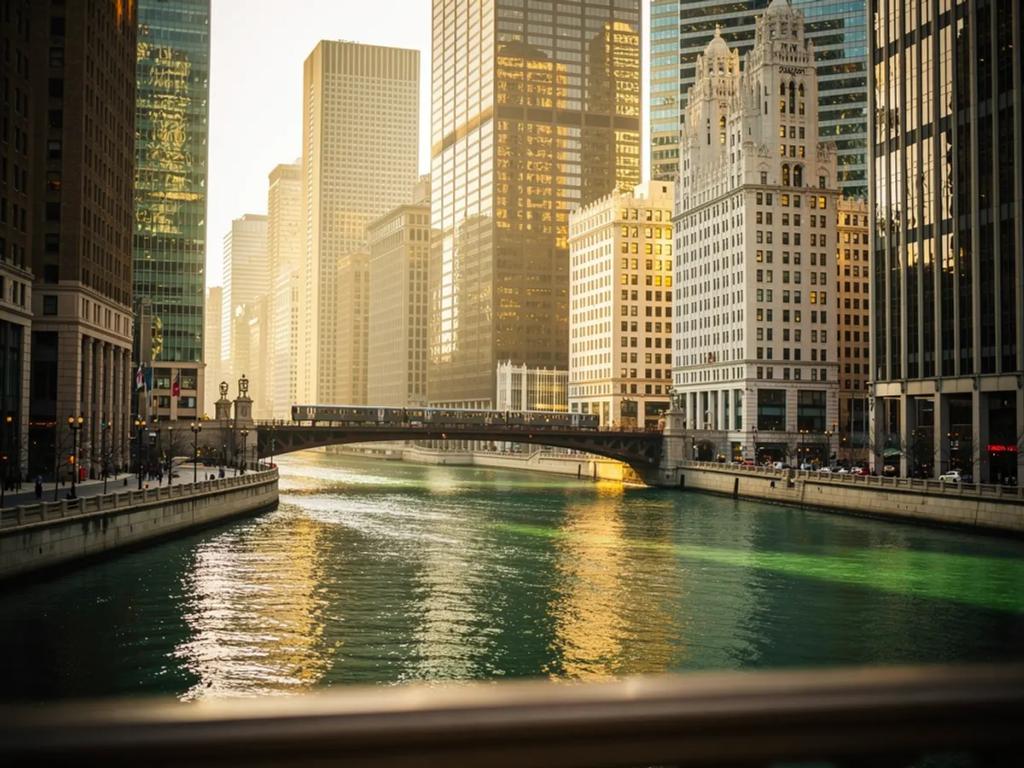
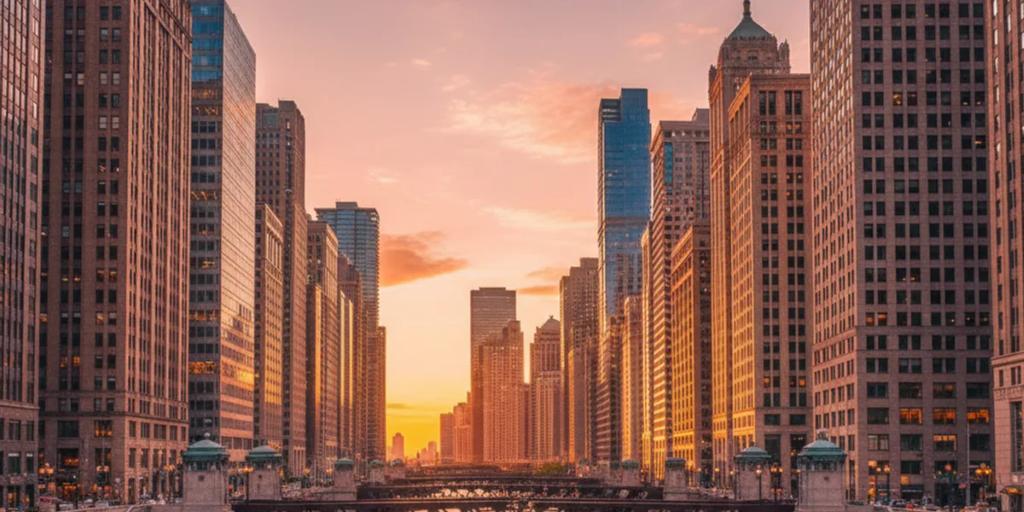
Cloud Gate (the Bean) is fully back after the 2023-24 plaza rebuild around it, and the trick is timing: arrive right after sunrise for a clean mirror shot of the skyline with nobody else's reflection in it; by 10am it is a crowd scene. The Chicago River canyon shoots best from DuSable Bridge looking west at golden hour - and if you are here the Saturday before St Patrick's Day, this is the balcony for the emerald-green river. For the full skyline, North Avenue Beach or sunset from the Adler Planetarium peninsula line the whole downtown up across the water. Food counts too: the deep-dish cross-section at Lou Malnati's or Giordano's is the shot everyone wants - order on arrival, it takes 45 minutes. The Art Institute's bronze lions have been posing since 1894.
Chicago permanently reversed its own river. In 1900, engineers completed the Sanitary and Ship Canal and turned the Chicago River around so it flows away from Lake Michigan, protecting the city's drinking water - still one of the great engineering feats in America. The Home Insurance Building, finished here in 1885, is commonly credited as the world's first modern skyscraper. Route 66 officially begins downtown - the "Begin Route 66" sign stands on Adams Street at Michigan Avenue. And the St Patrick's river dye is mixed to a secret formula guarded by the plumbers' union, a tradition since the 1960s.
The river turns green for St Patrick's Day on the Saturday morning before March 17 (10am, best seen from Michigan Avenue and Wacker). Taste of Chicago is back in its classic July slot in Grant Park after a few years exiled to September. Lollapalooza takes over Grant Park at the turn of July into August, and the free Air and Water Show roars over North Avenue Beach in mid-August. The Chicago Marathon runs the neighbourhoods on a Sunday in mid-October, when the weather is usually at its best.
The love: the best architecture in America with a river cruise to prove it, an 18-mile public lakefront that feels like a permanent holiday, and a food city - deep dish, Italian beef, world-class fine dining - that New Yorkers privately concede is superb. The gripes are honest too: winter is genuinely punishing, not picturesque, and it lasts. O'Hare will test your patience at least once, and summer festival weekends jam the Loop and hotel prices with them. And the city's rough reputation deserves nuance rather than fear: the areas visitors actually spend time in - downtown, the North Side, the lakefront, Hyde Park - are busy, walkable and fine with ordinary city awareness.
Yes, and better than in most cities. The majority of the system is elevated with regular outdoor coverage, and the underground Red and Blue Line subway sections have been wired for 4G across all major networks since 2015. Your eSIM keeps data through essentially the whole ride.
Yes. Every Ventra reader on L turnstiles and buses accepts contactless bank cards and phone wallets (Apple Pay, Google Pay, Samsung Pay) directly for pay-as-you-go fares. Note that transfer discounts only apply if the card is registered with Ventra, so occasional double-fares are the small price of skipping the ticket machine.
It really can. Lithium batteries drain dramatically in sub-zero windchill, and phones can shut down outright during a long wait on an open-air L platform. Keep the phone in an inside pocket near body heat, carry a power bank, and screenshot tickets and directions in case it dies at the wrong moment.