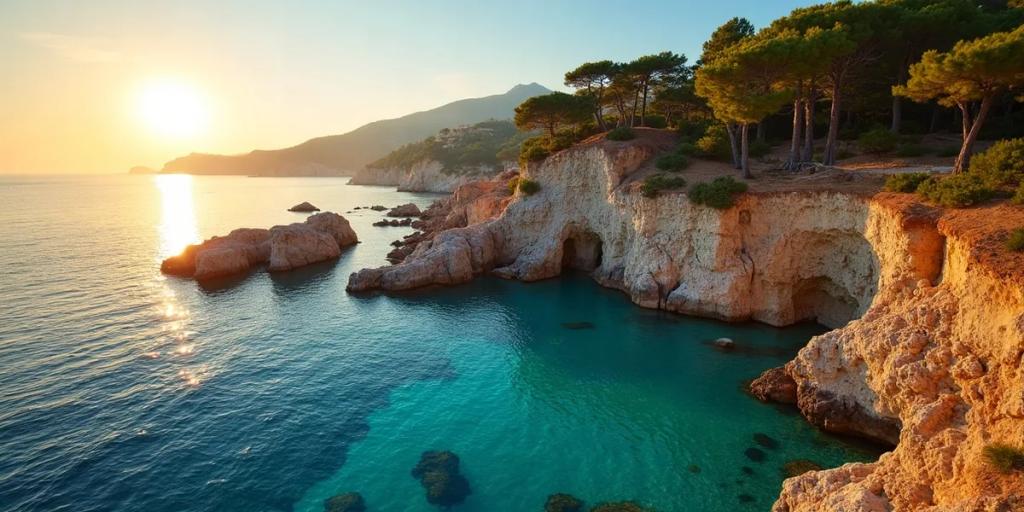
Mallorca's connectivity story has two halves. Palma, the airport corridor and the big resort strips (Playa de Palma, Magaluf, Alcúdia, Cala d'Or) sit on dense 4G and 5G from Spain's main networks - Movistar, Vodafone and Orange - so in town your eSIM just works. The other half is the reason you came: the Serra de Tramuntana mountains and the cliff-carved coves (calas), where signal is genuinely patchy on every network. Plan for both halves and the island is easy.
The Tramuntana range along the northwest coast is the island's blackspot. Deep valleys around Escorca, the hairpin descent to Sa Calobra and Cala Tuent, and cliff-backed beaches like Coll Baix are known dead zones where your phone becomes a camera for an hour at a time. Locals tend to rate Movistar as the strongest rural network, but no operator covers every gorge. The fix is boring and reliable: download offline maps for the whole island before leaving Palma and save your finca or hotel pin. If you hike any stretch of the GR221 dry-stone route, treat mobile data as a bonus, not a safety plan.
Most visitors rent a car, and Mallorca's best moments sit at the end of narrow roads where you cannot re-load a map. Navigation through the Tramuntana switchbacks works fine with the route cached offline; it is miserable if your maps app is streaming tiles on one bar. And note the famous Formentor road (Ma-2210) is closed to private cars from roughly mid May to mid October between 10:00 and 22:00, enforced by cameras - you take the TIB 334 shuttle from Port de Pollença or Alcúdia instead, and its timetable is exactly what you will want data for on the day.
- Contactless is the transit ticket. Palma's EMT city buses now take bank-card tap across the entire fleet, and the island-wide TIB buses have taken it for a while - card fares run notably cheaper than paying the driver in cash.
- Ride apps thin out fast. Uber works in and around Palma, and Cabify has operated there since 2023, but neither reliably covers the rest of the island; outside the capital you phone or app a local radio taxi.
- Beach days are planned online. Summer parking at popular calas fills by mid-morning, boat trips and cave visits (Coves del Drach and similar) sell timed tickets, and the Formentor bus timetable lives on the TIB site.
- Tap-to-pay is near-universal, from Palma market stalls to beach chiringuitos, so cash is optional.
From Palma airport, the A1 bus runs into the centre and takes a bank-card tap as you board - no ticket queue. The ride in is when the "landed safely" messages, the rental-car counter emails and the first map search all hit at once, which is why installing your eSIM before you fly beats hunting for airport Wi-Fi.
Palma is about two and a half hours from Heathrow, with British Airways several times a day, and about two and three-quarters from Manchester. From the airport, EMT bus A1 runs into Palma for €5 a trip. The Balearic sustainable tourism tax applies here as on the other islands, per person per night plus VAT.
Two Foreign Office warnings name Mallorca: local laws in Magaluf (Calvià) and Playa de Palma ban happy hours, open bars, pub crawls, party boats and off-licence sales between 9.30pm and 8am, and there have been serious accidents - and fines - at illegal commercial parties in villas on Mallorca and Ibiza (gov.uk, updated 12 August 2026).
Your UK plan: Spain is in every big UK network's Europe zone - included on O2, £2.72 a day on EE, £2.75 on Vodafone unless your plan has Euro Roam, and £2 or £2.75 on Three.
A Mallorca week is navigation-heavy (hire car plus cove-hunting) but streaming-light - you are on a beach, not a sofa. For most travellers 1GB per 2-3 days covers maps, messaging, timetables and photo uploads. Budget more if your accommodation is rural: Palma villas usually have proper fibre, but remote fincas often run on a strained 4G router shared by every guest, so assume your eSIM is the reliable connection. If you care which Spanish host network you land on, the Spain network comparison breaks them down.
Beach kit stays at the beach: Palma's civility bylaws fine swimwear and shirtless walking away from the seafront, so pack a cover-up for the town end of a beach day. Palma evenings run smart-casual - locals dress up a notch for dinner around the Passeig del Born. And if the Tramuntana is on your list, bring real shoes and a layer: the GR221's stone paths punish sandals, and the ridges are cooler and windier than the coast even in summer.
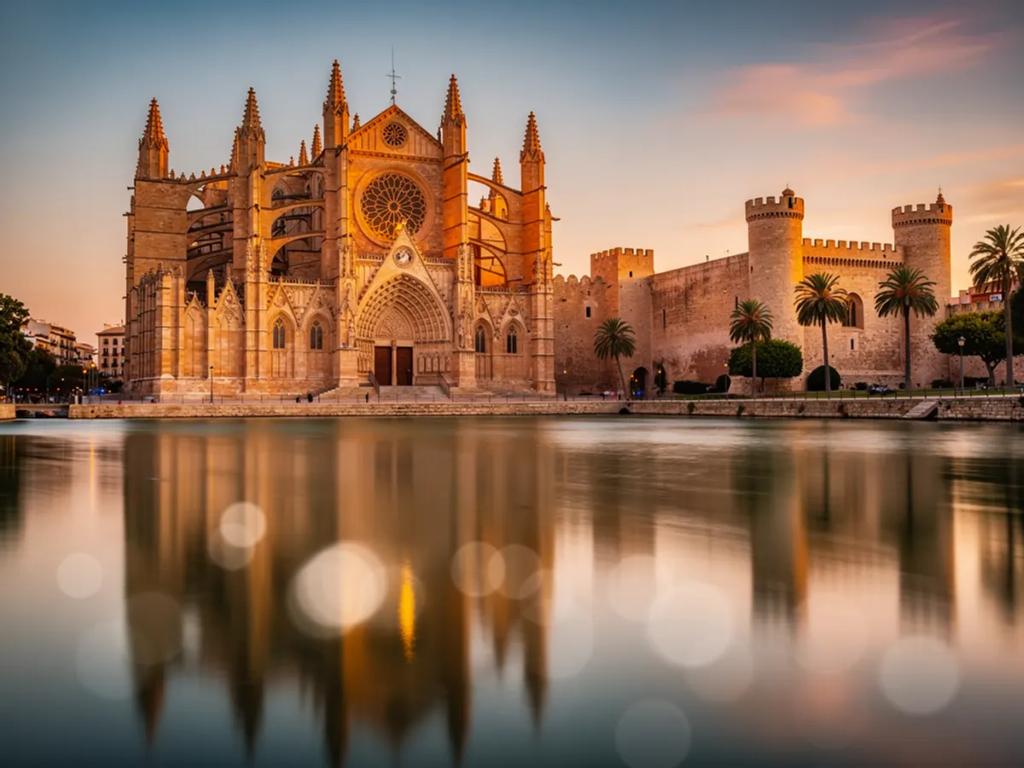
The Cap de Formentor lighthouse shot means going early: with the Ma-2210 closed to private cars from 10:00 in season, drive out at first light for sunrise over the cliffs and an empty road back. Sa Calobra's Torrent de Pareis gorge is the opposite - the canyon walls are so high the floor only catches direct light around midday, so time the boat or the hairpins for then. In Palma, shoot the cathedral doubled in the Parc de la Mar reflection pool at dusk as the floodlights come on. Valldemossa's plant-pot lanes want early morning, before the day-trip buses. Drones are restricted over Palma's crowds and the protected Tramuntana - check Spain's AESA rules first.
Chopin and George Sand wintered in Valldemossa's monastery in 1838-39 and hated it: the rain wrecked his health, and her book A Winter in Majorca insulted the locals so thoroughly it is still sold, with rebuttals, all over the island. The Serra de Tramuntana is a UNESCO World Heritage cultural landscape. And Mallorca's famous pearls are man-made by design - Manacor has manufactured imitation pearls since 1890, and that is the product, not a scam.
Nit de Sant Joan (23-24 June) fills the beaches with bonfires and midnight swims. Nit de l'Art turns one September evening in Palma (19 September in 2026) into a free late-night circuit of some 30 galleries and museums. And spring is cycling season: pro teams train on the island's climbs from late winter, and the Mallorca 312 sportive in late April briefly fills the Tramuntana roads - book hire cars and mountain hotels early if you overlap it.
The love is about density of variety: nowhere else packs dozens of genuinely different coves, a serious UNESCO mountain range and a capital with real-city food and culture into an island you can cross in ninety minutes. The gripes are just as real: July and August saturation, parking standoffs at the famous calas that start before 9am, prices that spike hard in August, and Magaluf's party reputation - though that is one small pocket the rest of the island barely resembles. Come in May, June, September or October and you keep the sea and lose most of the fight.
Often no, on any network. Cliff-backed coves and Tramuntana valleys like Escorca and Cala Tuent are documented dead zones. Download offline maps, save your parking spot before descending the footpath, and tell someone your plan before a long hike.
In Palma and the larger towns, usually yes. Countryside fincas often run on fixed-4G or satellite connections that sag in the evening when every guest streams at once, so a data plan you can top up mid-trip is the sane backup for video calls and remote work.
Only if you need a Spanish phone number, since buying a physical SIM in Spain requires passport registration in a shop. For data, an eSIM activated on arrival keeps your home number free for banking SMS and works on any recent unlocked phone.