Montreal is a big-league connectivity city. Bell, Rogers and Telus run dense 4G and 5G across the island, and Videotron - the Quebec network headquartered here - adds a strong fourth network. Your travel eSIM roams onto one of the majors, and whichever it picks, downtown, the Plateau, Old Montreal, Parc Jean-Drapeau and both airports are saturated with signal. If you want to know how the host networks stack up nationally, our Rogers vs Bell vs Telus comparison goes deep.
Here is the part that surprises visitors: it mostly does not. The metro is fully wired - a joint build by all four networks finished in December 2020, putting 4G LTE in every one of the 68 stations and all 71 km of tunnel, so you can stream on a moving train two levels below rue Sainte-Catherine. The RESO, the famous underground city, is equally covered: its 33 km of passages thread through shopping centres and office towers that carry indoor antennas, so following your blue dot underground works better here than in most cities above ground. The genuine weak points are the deepest corners of heritage stone buildings in Old Montreal and, in winter, your battery rather than your bars - deep-freeze days drain phones fast, so pocket it close to your body between photos.
- Transit and Chrono are the apps for STM buses and the metro; both show real-time departures. Fares still run on the OPUS system - grab a card or occasional ticket from station machines, because tapping a bank card at the turnstile is only in testing as of 2026. Chrono's phone-as-OPUS feature is rolling out on Android first.
- BIXI, the city's bike share, is app-unlocked and no longer hibernates: the full network runs roughly April to November, and a smaller winter network with studded tires now operates year-round.
- Uber and Eva both operate - Eva is a Montreal-born rideshare co-op that locals like to support, and regular taxis are easy too.
- Tap-to-pay is everywhere else: cafes, depanneurs, market stalls at Jean-Talon. What needs booking online: AURA at the basilica sells out summer weekends, and festival headline shows go fast.
From YUL Montreal-Trudeau, the 747 express bus runs around the clock to downtown - buy the fare (a 24-hour transit pass) from the arrivals-level machines before boarding - and Uber, Eva and flat-ish taxi rates cover the lazy option. The ride in along Autoroute 20 is fully covered, so your eSIM handles the just-landed messages, the address lookup and the first "is this restaurant still open" search if it is installed before wheels-down.
Montreal is a photo and maps city more than a translation city - almost everyone downtown switches to English mid-sentence - so usage skews to navigation, social uploads and festival livestream envy. For most visitors 1GB per 2-3 days is comfortable; double it if you are here during festival season and posting sets from the crowd. Top-ups take a minute from your dashboard, and the country-wide picture is in our best eSIM for Canada guide.
Winter demands the full arsenal: proper insulated coat, hat, gloves, and boots with real ice grip - pavements alternate between polished ice and calf-deep slush, and the slush trap runs well into April. Summer is shorts-and-festival-wear humid, but pack one layer for air-conditioned interiors and cooler nights on a terrasse. Shoulder seasons flip fast; waterproof shoes are never a wasted suitcase slot here.
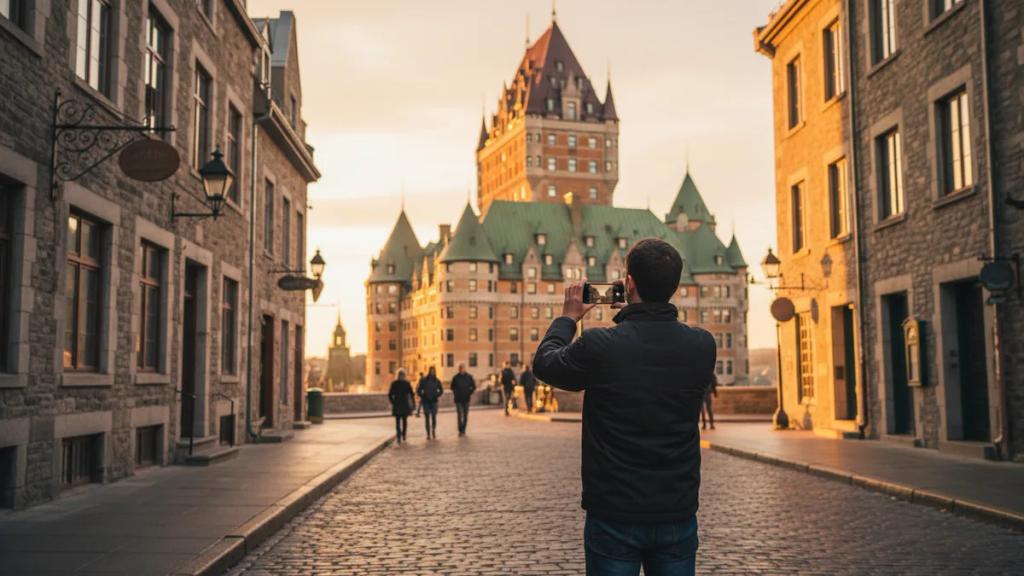
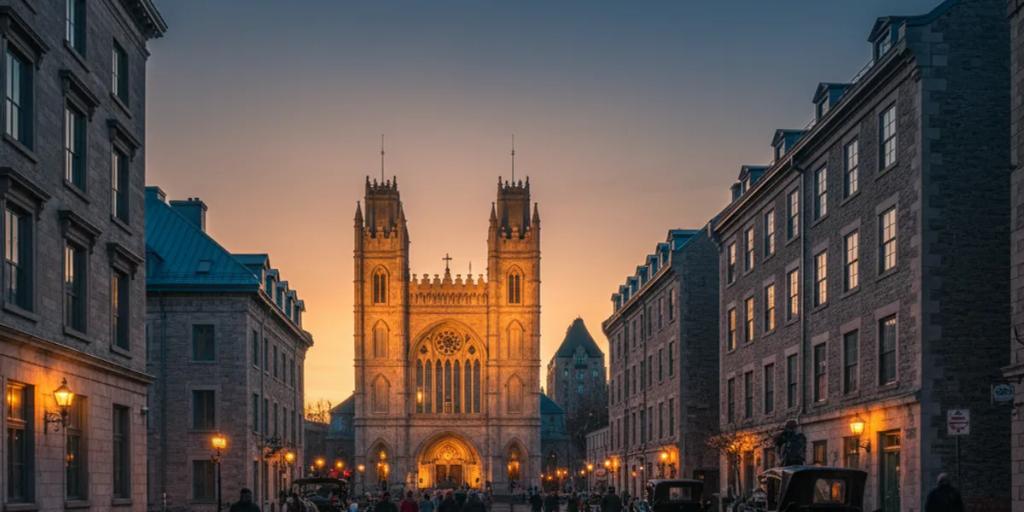
Notre-Dame Basilica's blue-lit interior is the city's signature shot - a regular visit gets it, and the AURA light show (running strong, book a week or two ahead in summer) turns the whole nave into a projection. For the skyline, the Kondiaronk belvedere on Mount Royal at dusk beats every rooftop: arrive 30 minutes before sunset and stay for the lights. Shoot Habitat 67's stacked cubes from the public riverside path at Parc de la Cite-du-Havre or across the water from the Old Port, golden hour, and respect that people live there. Fill the memory card at Jean-Talon Market's produce rows and the murals of the Plateau along boulevard Saint-Laurent.
The RESO is among the largest underground pedestrian complexes on earth - half a million people use it daily. Montreal bagels are boiled in honeyed water and baked in wood-fired ovens, and the St-Viateur versus Fairmount rivalry is a genuine local fault line. The Olympic Stadium from 1976 was nicknamed the Big Owe for a reason: the city only finished paying for it in 2006.
The Montreal International Jazz Festival (late June into early July) holds the Guinness record as the world's largest jazz festival, with hundreds of free outdoor shows. Just for Laughs is back each July after its 2024 bankruptcy year, revived under new Quebec ownership. Osheaga takes over Parc Jean-Drapeau in early August, Igloofest turns the Old Port into an outdoor rave at -20C on winter weekends (January-February), and the F1 Canadian Grand Prix now lands in late May, moved from its traditional June date as of 2026.
The love: this is the closest Europe gets to North America - a walkable, bilingual, cafe-dense city where a bagel, smoked meat and 3am poutine are civic institutions and summer is one long festival. The gripes are equally real: winter is not a visit, it is a lifestyle commitment; the orange construction cone is jokingly called the city's official bird because roadworks and detours never end; and language politics around Quebec's French-first signage laws are a live local debate you will read about in every cafe. The famous "Bonjour-Hi" greeting sums the city up - officially frowned upon, universally used.
Yes, completely - all 68 stations and the full 71 km of tunnels have had 4G LTE from all four Canadian networks since the end of 2020. Whatever host network your eSIM lands on, you stay connected on moving trains, which makes the metro one of the best-covered undergrounds in North America.
Not yet at the turnstile. Montreal still runs on the OPUS fare system; bank-card tap payment is being tested as part of the OPUS modernisation in 2026 but is not the norm. Buy an OPUS card or occasional tickets at station machines (they take cards), or watch the Chrono app, where phone-based fares are rolling out.
No - this is the most effortlessly bilingual big city in the Americas, and downtown staff flip between languages instantly. Signage is French-first by law, so maps, menus and metro announcements lean French, but you will rarely need camera translation. Install your eSIM before you fly and the answer to everything else is one search away.